Institute Paper No. 1
Institute for Craft Formation
The Craft Longevity Principle
Why Master Craftsmen Historically Maintained Cognitive Clarity Across Long Careers
Author: Stephen Critchley
Founder, Institute for Craft Formation
Across many centuries of recorded architectural history, master craftsmen often remained mentally sharp, physically capable, and professionally active well into later life. While longevity alone is not unusual, the sustained clarity of attention and judgement exhibited by many master builders, sculptors, and carvers presents an interesting pattern.
The question arises: why did craftsmen formed within traditional craft lineages appear to maintain such resilience across decades of demanding work?
The answer may lie not in genetics or social status, but in the developmental environments within which these craftsmen were formed.
The Environment of Craft Formation
Traditional craft lineages operated through structured systems of apprenticeship. Apprentices typically entered these systems at a young age and remained within them for many years under the supervision of experienced masters.
Within these environments learning occurred through continuous engagement with materials rather than through abstract instruction alone.
The apprentice spent long hours working with stone, wood, or other resistant materials while receiving direct correction from a master craftsman. Precision, patience, and accuracy were not optional qualities; they were necessary for the work itself.
Over time this process produced more than technical competence.
It cultivated a particular mode of attention.
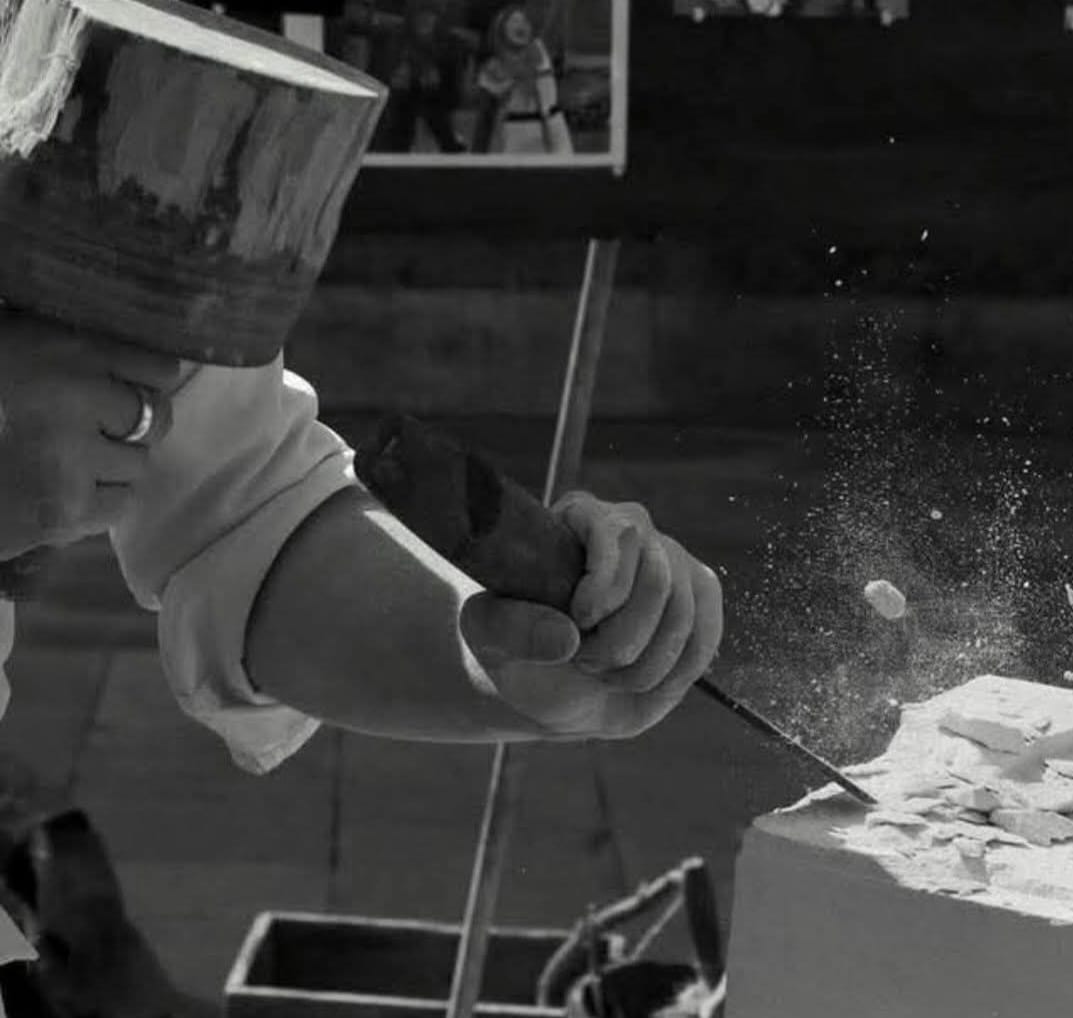
Working with stone, for example, requires the practitioner to maintain sustained concentration. A single mistake may permanently alter the material. The craftsman therefore develops the ability to regulate movement, maintain focus, and make measured decisions under constant physical feedback.
The material itself becomes a teacher.
Manual Intelligence
Modern neuroscience has increasingly recognised the importance of manual engagement in cognitive development.
The human hand occupies a disproportionately large representation within the motor cortex of the brain. This reflects the evolutionary role of the hand as the primary interface between the human organism and its environment.
Traditional craft disciplines make extensive use of this neurological architecture.
Each strike of a chisel, each adjustment of pressure, and each tactile response from the material produces feedback that must be interpreted immediately by the nervous system.
The craftsman therefore operates within a continuous loop of perception, action, and correction.
This process engages cognitive systems associated with attention, coordination, and spatial reasoning.
The Role of Material Resistance
Another important feature of traditional craft practice is the presence of material resistance.
Stone, timber, and architectural materials impose clear limits on the actions of the practitioner. They do not adapt themselves to the will of the craftsman.
Instead, the craftsman must adapt to the behaviour of the material.
This environment demands patience and careful observation.
Unlike many modern digital environments where errors can be reversed instantly, traditional materials require the practitioner to think ahead and act with precision.
Over time, this interaction with resistant material appears to cultivate a calm, measured approach to problem-solving.
Rhythm and Physiological Regulation
Traditional craft work also contains a strong rhythmic component.
Stone carving, masonry, and many forms of manual work involve repeated actions performed at a steady pace. These rhythms often synchronize naturally with breathing and bodily movement.
Such patterns may influence the body’s autonomic nervous system, which regulates stress responses and physiological balance.
Although historical craftsmen did not describe these effects in modern scientific terms, their working practices appear to have created environments conducive to nervous system stability.
The result is a mode of work that integrates mental focus with physical rhythm.
Craft and Long-Term Cognitive Resilience
Taken together, these elements suggest that traditional craft formation created a developmental environment that trained multiple cognitive systems simultaneously.
Manual precision stimulated the motor cortex.
Material resistance demanded careful judgement.
Spatial work strengthened three-dimensional reasoning.
Rhythmic physical action supported physiological regulation.
The craftsman’s intelligence therefore developed not only through abstract thought but through continuous interaction between mind, body, and material.
It is plausible that this integrated form of development contributed to the sustained clarity of attention observed among many master craftsmen.
Implications for Modern Life
Modern professional life has shifted dramatically away from these environments.
Work now occurs largely through symbolic systems: screens, documents, and digital communication. Manual interaction with materials plays a far smaller role in everyday cognition.
This transition may represent a significant change in the developmental conditions under which human intelligence operates.
Traditional craft disciplines therefore offer a valuable perspective.
They demonstrate that cognition can be trained not only through intellectual exercise but also through disciplined physical engagement with the material world.
Conclusion
The Craft Longevity Principle proposes that the long-term cognitive resilience observed among many master craftsmen was not accidental.
It was a natural consequence of the environments in which they were formed.
Through sustained engagement with resistant materials, rhythmic work, and manual precision, traditional craft lineages cultivated a form of integrated intelligence rarely encountered in modern professional environments.
Understanding these environments may provide insight into how attention, judgement, and resilience can be cultivated in contemporary life.