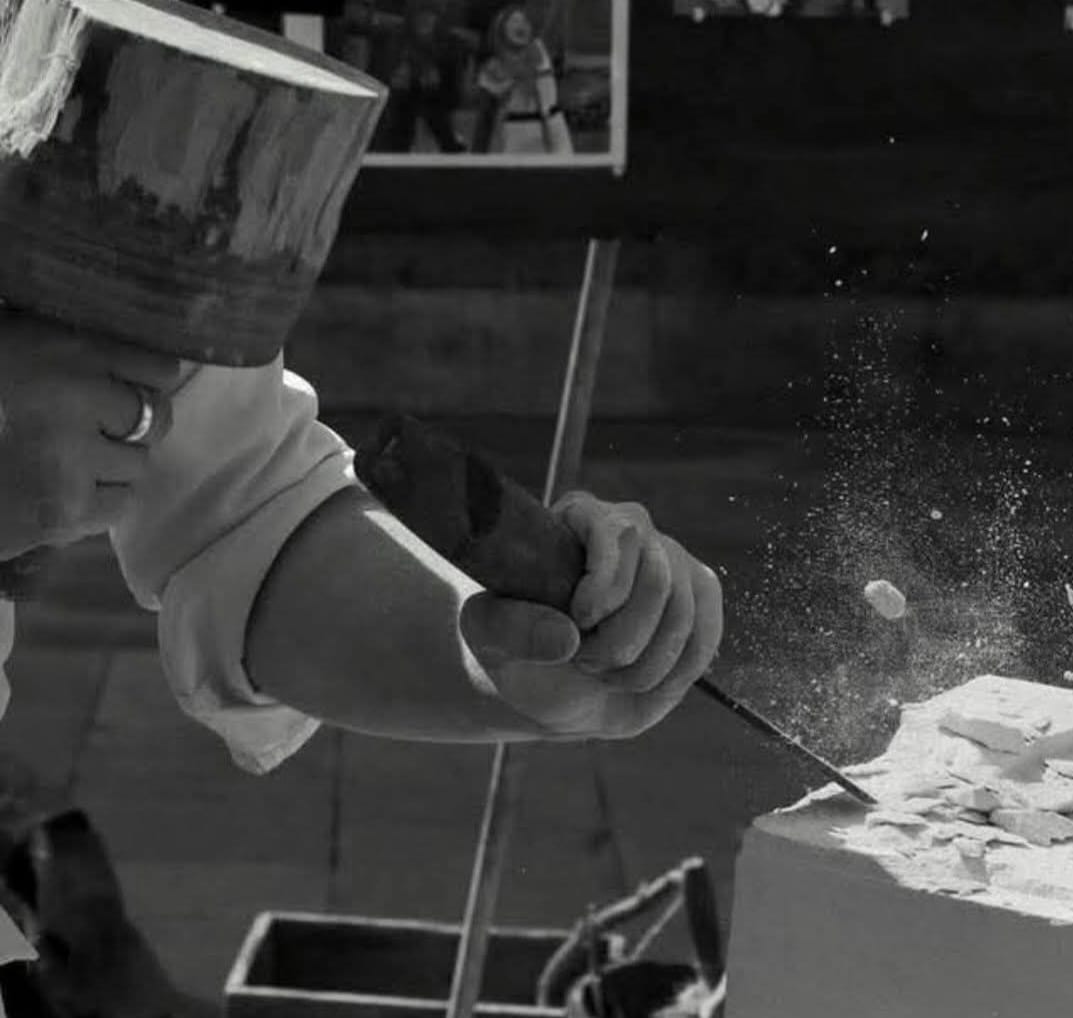
The Journey of a Court Master
(Transcript of a presentation given at The Forum, Norwich, 06/04/18)
Not everyone is suited to the lifestyle of a journeyman, and it doesn’t easily fit into the risk-averse “marshmallow world” that many people live in today. In my experience, the journey produces self-reliance, free-thinking, and the ability to listen to the points of view of others, linked with an indomitable confidence gained from most people you meet not understanding the world you inhabit and looking at you as if you are crazy. I believe I can spot those who have come through this system.
My journey began in the autumn of 1985. I set out on foot from Islington with £50 in my pocket, wearing my work clothes (hat and apron) and a Household Cavalry greatcoat, carrying a duffle bag with a change of clothes and a canvas tool bag slung over my shoulder on my hache (axe)—covered, of course.
As a North Londoner, my greatest trial came within twenty minutes when I had to cross Southwark Bridge into South London, but after a few hairy moments in the Old Kent Road, things started to look up. I travelled via Chatham and Canterbury to Folkestone and took the ferry to Boulogne. I had never been abroad besides a school day trip to Boulogne. I had no clear purpose other than the idea of reaching the birthplace of Martin Nadaud, a famous Master Mason in my own lineage.
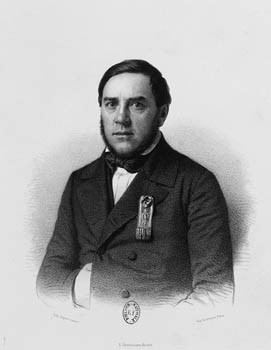
Master Nadaud rose from being a peasant boy to becoming a revolutionary and Member of Parliament. His first language was Langue d’oc, and he learned French while working in Paris as a stonemason from the age of fourteen. He escaped to England with the help of the guilds after the French Revolution of 1848 and lived here for eighteen years, becoming a schoolmaster in Wimbledon under the assumed name of Henri Geo. Martin.
As a member of the Parliament of France, he advocated for better public transport and public services; a station of the Paris Métro was named after him. Myself and the other apprentices trained by my master were all taught to be very proud of this connection, which linked in with our socialist values and the pride and worth of the working man and woman we felt.
As I didn’t smoke, I continued on foot with a giant Toblerone under my arm, and after receiving treatment to the roof of my mouth in Coutances, I walked on to Avranches, Royan, Saintes, and Abzac. I arrived at Nadaud’s former home in Soubrebost. It was in these areas that I first heard the regional Langue d’oc and Occitan patois, similar to that which Nadaud would have spoken throughout his childhood and similar to the “Bearlish” or masons’ gibberish I had learnt from older masons, mainly Irish.
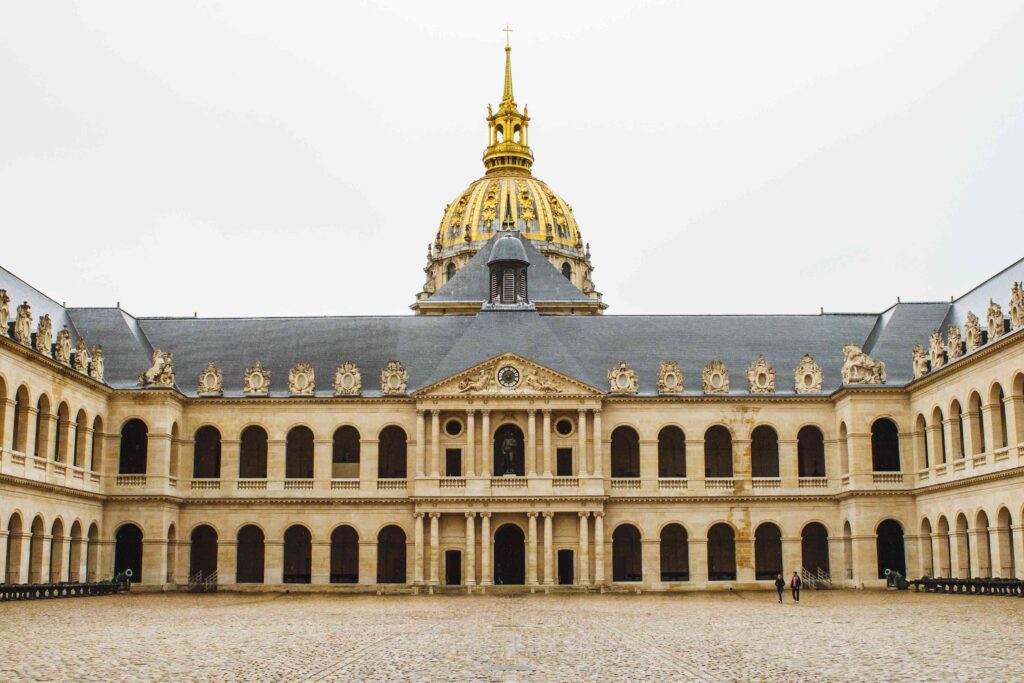
From here, I went north to Paris where I worked on the Pont Neuf and the Les Invalides complex. I continued in France through the Picardy and Somme regions, working for a while on Amiens Cathedral, Notre-Dame du Cardonnoy, Aumale, and the Collegiate Church of Saint-Vulfran in Abbeville. This was the first time I had worked with Flamboyant architecture.
Here I must have passed through Belgium, but due to bottled beer, moules-frites, and more bottled beer, I can’t recall my route. I continued into Germany, through Hamburg (where I remember sleeping near the Alster lakes one night in particularly severe cold weather) and Bremen, into Luxembourg, through Strasbourg, Liechtenstein, briefly through Switzerland, and on to Austria (Vienna). In Vienna, I had an arranged meeting with some masons from a guild linked to my own. I was in the Guild of St Stephen, and this was the Stephansdom guild; I worked for a few days on minor projects on St Stephen’s Cathedral. I heard of an opportunity to work on Dresden Cathedral as the East German government was starting a large restoration project. With the help of East German brothers, I managed to get there and spent a short time working before having to leave and return to Austria. (My short time in East Germany was the only time I didn’t wear my hat and apron while on my journey).
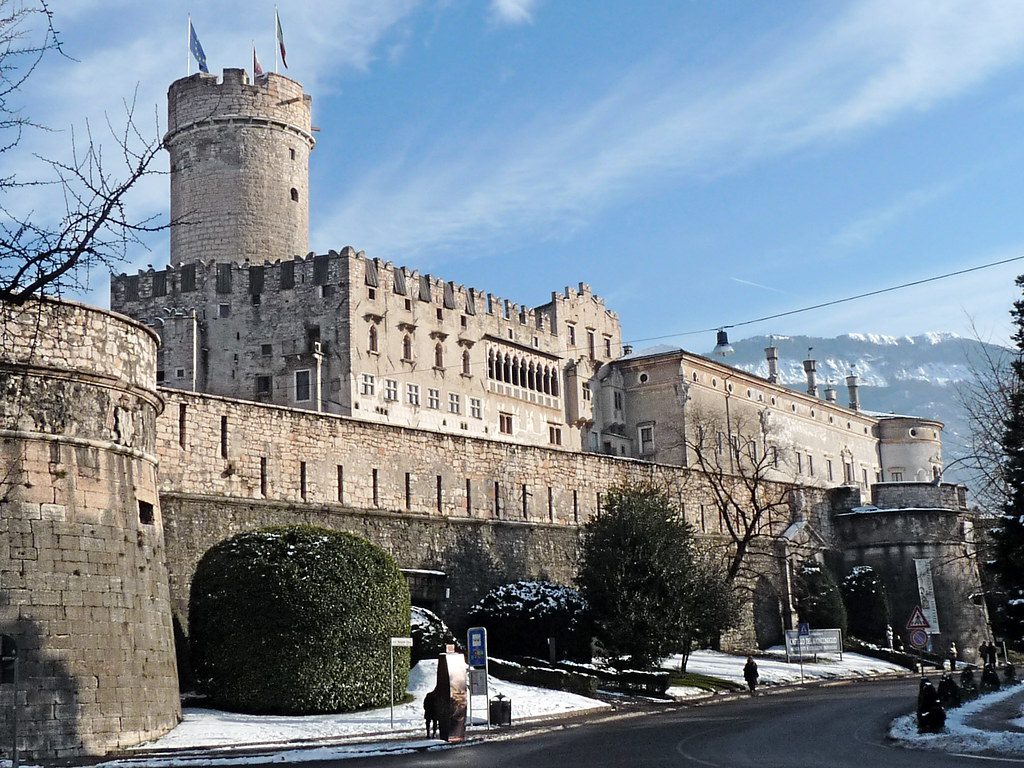
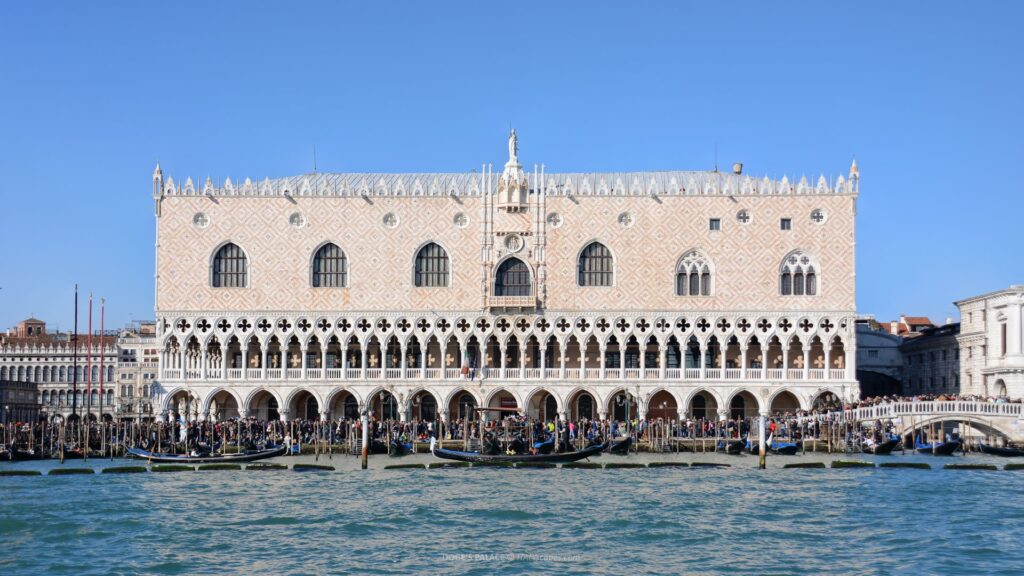
I travelled briefly to Slovenia, then to Innsbruck in the Tyrol. From somewhere in the Alps, I could see the Italian lakes and headed towards them on foot through Northern Italy to Trento, where I worked on Castello del Buonconsiglio (Buonconsiglio Castle). In Verona, I worked on a building near San Fermo Maggiore on the banks of the Adige river, then on to Padua and Venice. In Venice, I worked very briefly on the Arsenale di Venezia (Venetian Arsenal) and then the Porta della Carta on the Palazzo Ducale (Doge’s Palace) in Piazza San Marco. This was originally carved by Giovanni and Bartolomeo Bon in the mid-1400s—both members of my guild, one a Guild Master like myself. Strangely, twenty-five years later, I was Master in the same building, this time on the Scala dei Giganti (Giants’ Staircase). From Venice, I took a cheap passenger boat to Keramoti, not knowing where it was. I worked in Kavala, Greece, for a time shoring up some ancient ruins and afterwards moved on to do similar work on buildings in Tartus, Syria, taking the opportunity to visit sites such as Amrit while I was there.
Then I travelled by Land Rover to Kfar Hittim (near Tiberias and the Sea of Galilee). Temperatures here reached 40 degrees. I stopped next at Afikim Kibbutz in the Jordan Valley. There were many strict, devout Russian Jews here who disapproved of my drunkenness and I disapproved of their treatment of workers. They won; I was deported and returned to Keramoti on the boat.
I went by container ship to Alexandria, where I found some work bricklaying before journeying on to Cairo and Aswan. We were stopped at the Sudan border. (This is where I learnt an important life lesson: don’t charter a plane from a man in a bar). We then chartered a plane from a man in a bar who we thought was just—not exactly a teetotaller—but soon after take-off, it became clear he was probably dropped on his head as a child and being in a plane he was flying was probably not the best idea. I thought it would take just over half a day, and he didn’t contradict me, but apparently, that’s in a 747; it took us over two weeks. The fact that we ran out of fuel more than once and landed in what looked to me like a very big field seemingly full of things that kill you didn’t help. He flew us eventually to Kenya, then Tanzania, Zambia, and Mozambique.
Over Sudan or Ethiopia (I don’t know which), some friendly locals tried to shoot us down with rifles; the first I knew of this was when the small plane we were in started to violently climb, then bank, then drop like a stone. Luckily for us, they missed.
I was able to continue by plane to Botswana, then to Johannesburg and Durban. I stayed in Umbilo, a suburb of Durban, for six weeks or so, working on the City Hall. The City Hall in Durban was designed by Stanley G. Hudson and built in 1910. He took much inspiration from Belfast City Hall—so much so that it is hard to find any difference.
After this, I returned briefly to the UK to make further arrangements and received an offer to do training work with the Xhosa, which I took up for another year and a half. Xhosa is the European name for the people; they call themselves AmaXhosa and refer to their language as isiXhosa. I don’t know if any of you know of Zenzile Miriam Makeba and the “Click Song”—that is the same language.
I worked mainly in Natal and was based in Durban. My work with the Xhosa consisted mainly of training them to work on European-style projects, which were often totally alien to them. I worked for some time in the Transvaal near the Limpopo River. One day while having a wander, an elephant made what was apparently a false charge towards us; we ran and hid behind a very small tree which, thinking about it later, looked very much like the trees they were pulling up and eating. It was a bit like hiding from a tiger behind a goat.
I also worked with the Xhosa, mainly the AmaNdlambe and the ImiDushane tribes in their self-governed “homelands,” namely Transkei and Ciskei. The friend I travelled with married a local lady originally from Madagascar whose family had moved to Durban, and as far as I know, they are still there.
I finally came back to London in 1988 and moved from there to Gloucestershire, where I first read The Lord of the Rings and recognised the way of the journeyman in the travels of the characters.
When I set out, what seemed like a hundred years earlier, I had no plans but the thought of “get out of England” in my mind. I left unceremoniously, saying “I’m off” but little else to my family. I had heard about my Master’s journey through Europe and seen older apprentices leave and return with beards, dark skin, and interesting stories. They left at twenty-one looking like apprentices and returned looking like men. We all thought we would do the same, but not all apprentices left on the journey, and not all who journeyed returned.
Throughout the journey, I was often fed and put up in the homes or outbuildings of locals. My work uniform was conspicuous, and I was often approached with offers of work, food, and accommodation—occasionally with abuse. I liked finding statues with the compass points or diverging roads and impulsively choosing my onward route. I never made decisions based on the work I would do, but on the places I wanted to see and experience.
I was rarely alone on my journey. I met other journeymen, especially through Europe. We would share digs for a time, then one morning I’d decide to leave and be determined to be gone without a word before anyone else had woken. I would leave whistling Canned Heat’s On the Road Again.
I have a vivid memory of sharing a drink with a German journeyman in a gold miners’ snooker club in South Africa. I picked up some French, German, and Italian language as I went and could make myself understood. I drank every day and was pissed in every town I passed through, often exchanging my stories for booze. I stayed where I was until my money was almost spent and then I’d think, “Better go and find another job.” The rule of thumb is: when travelling, you must move on before the baker learns your name and local dogs stop barking at you. Always be a stranger.
I was doing very well by the time I returned, as I’d been earning “London money” working for the Szerelmey offices in Durban. My wage there was fifty times that of the locals. When I returned, there was so much work in the UK. I bought a flat in London and started working at Kew Gardens. Working in the UK after the journey left me feeling bored, and I couldn’t wait to work away again.
Throughout my career, I have continued to work all over the world, both working on the tools and in my capacity as Assistant Clerk of the Guild. When I am not actually carving, I run a department that oversees craft training and development in twenty-three countries. My latest trip to Gaziantep and Jarabulus involves getting some young people wishing to train—some of whom have long family connections to the craft—to a safe place to learn their own traditions before, at a later date, hopefully returning to a safer homeland.
FYI, the countries are: England, Wales, France, Italy, Malta, Cyprus, Turkey, Syria, Egypt, Libya, Tunisia, Morocco, Algeria, Jordan, Romania, Bulgaria, Serbia, Israel, Lebanon, Croatia, Bosnia, Macedonia, and Iraq.
On my journey, I saw great beauty and terrible suffering; I experienced acts of kindness and brutal wickedness. I don’t believe it would have been possible for me to do my job now and help the people I have without the experience I gained on my journey. I am a Guild Master now, but I am very proud to have been a journeyman and feel lucky to be part of this world still.
The Master’s Lineage: A Journey Through Stone, Wood, and Time
The Grit Behind the Lineage: Lessons from Syria
The Legacy of the Master Builder: From Knightsbridge to the Côte d’Azur
The Permanent Record: One Patron, Seven Hundred Miles of Stone
Structural Legacy: From the British Museum Great Court to the 1080 Protocol
The Gold Thread: A Discovery in a Drawer
The Itinerant Path: From Picardy’s Spires to the Soul of Stone
A Year in the Shadow of Greatness: My Tenure at Woburn Abbey
The Alchemical Stone: Lessons from a Practitioner of the Renaissance
The Start of My Philosophical JourneyThe Music of the Spheres: A Journey Through London’s Stone
The Master’s Ledger: Blood, Stone, and the Xhosa Training
Unearthing Africa’s Enduring Art: My Journey Through Stone Carving Traditions
The Travels of a Classically Trained Journeyman
Stone, Studios, and Star Power: My Days with George Michael
Embracing the Eccentricities: A Journey of Ancient Traditions and Modernity in the City of London
The Bearer of the Song: A Life in Notes and Stone
We are currently reviewing candidates for 2026-27.
Apply to Qualify for the Initiate Path | Begin Qualification
Leave a Reply