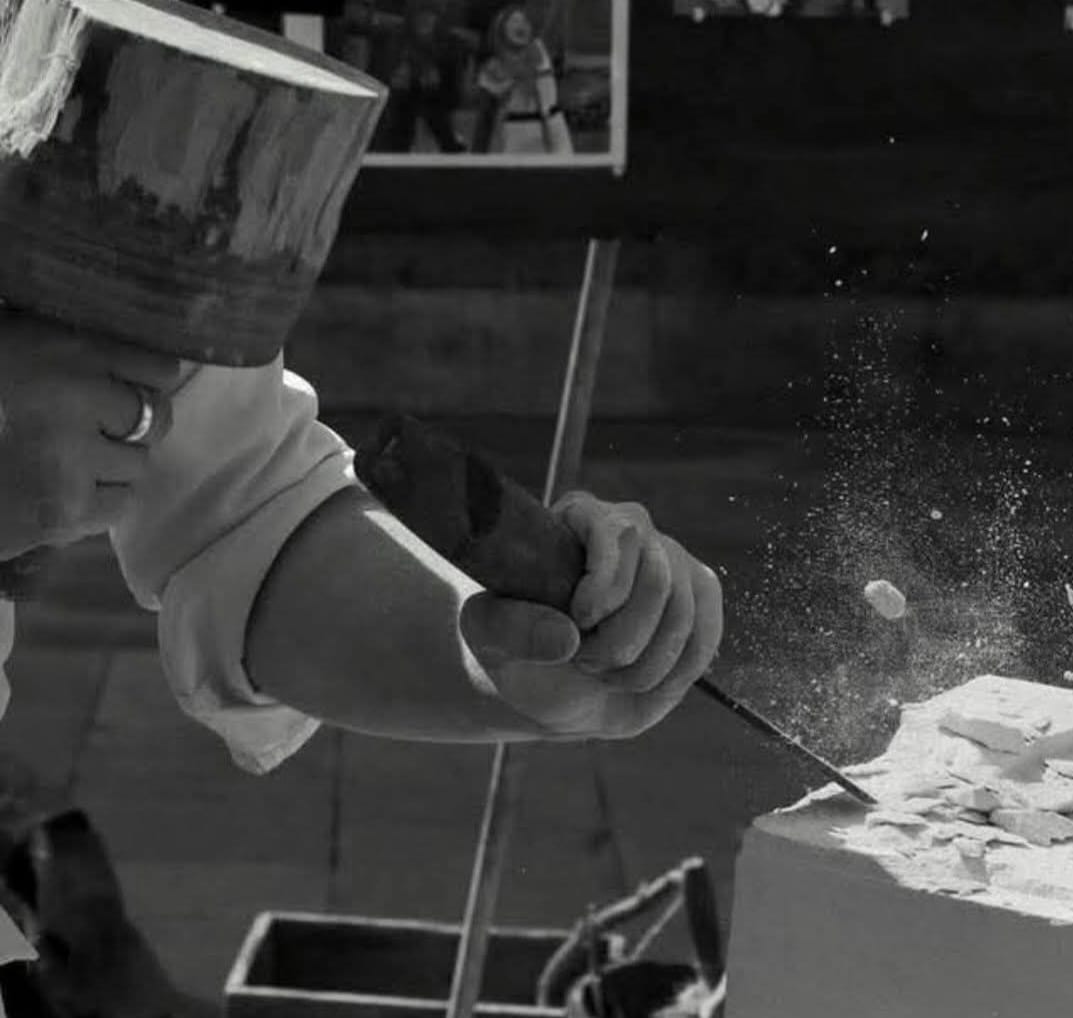
At Court Master Carving, you don’t just create; you awaken. Your philosophy, centered on a 900-year unbroken lineage, the carver as a conduit, and the profound “Spirit of the Stone,” resonates with an unexpected and powerful kinship: the ancient philosophical traditions of Africa, particularly Ubuntu and the deep-seated belief in Vitalism.
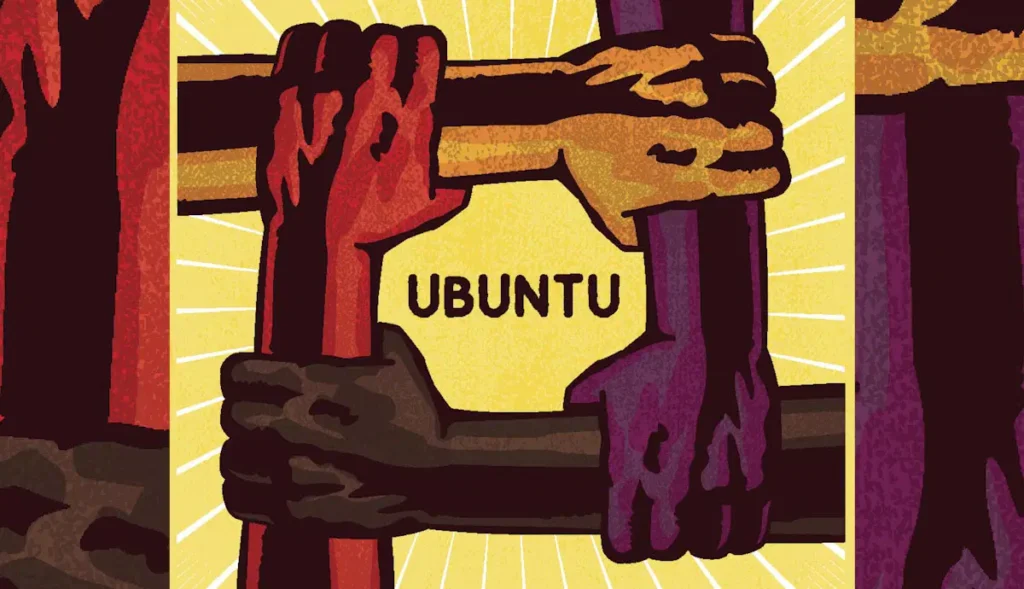
While often simplified to “I am because we are,” Ubuntu, when viewed through the lens of craftsmanship, reveals a profound, shared understanding of existence, connection, and the very essence of creation that mirrors your 1080 Protocol with striking clarity.
1. The Living Thread: Lineage and the Ancestral Hand
Your dedication to a 900-year unbroken lineage, from Master to Apprentice, is more than historical pride; it is the very bedrock of your craft. You are not merely a craftsman; you are the living embodiment of a millennium of accumulated wisdom, technique, and spirit. As you describe it, you are the “last master on the list,” a vital link in an unbroken chain.
This profound respect for lineage finds its echo in the craft philosophies of the Dogon of Mali and the Yoruba of Nigeria. For them, a craftsman never works in isolation. He is an extension of his ancestors, a physical manifestation of their ongoing presence and influence. The tools, the techniques, the very forms created are infused with the knowledge, blessings, and spiritual energy of those who came before.
Just as your work is governed by the protocols passed down through generations, ensuring each piece carries the authentic “spirit” of the craft, African artisans believe their adherence to ancestral methods ensures the work possesses Ase—the vital power to make things happen, to imbue the object with efficacy and meaning. The carver is not an inventor of tradition, but a custodian, a channel through which the ancestral spirit continues to manifest.
2. The Soul of the Material: Listening to the Stone’s Heartbeat
When you speak of “listening to the stone,” understanding its “inherent characteristics, physically and spiritually,” you are articulating the core principle of Vitalism, or the philosophy of Life Force, that pervades many African worldviews.
In numerous African traditions, materials like stone, wood, and metal are not inert. They possess a discernible life force, a spirit that must be acknowledged, respected, and even negotiated with. The act of carving is not a conquest of the material, but a collaboration. The carver does not impose his will; rather, he enters into a dialogue to uncover and release the form, the essence, the very spirit that already resides within the raw material.
This perfectly aligns with your description of the carver as a conduit—a bridge between the metaphysical intention and the physical medium. It’s about revealing, not simply creating. It’s about understanding that the beauty and power of the final piece emerge from a harmonious interaction with the material’s innate vitality.
3. “Bukë Kripë Dhe Zemër”: The Craft as a Reflection of Community and Character
Your “Bread, Salt, and Heart” philosophy—the unwavering belief that your craft is inseparable from your character, from the shared meal, and from your community—beautifully articulates the Ubuntu ethic of interconnectedness.
In traditional African guild systems, the quality of a craftsman’s work was seen as an extension of his character. Technical skill (what you term the “Carver’s Core”) was considered insufficient, even hollow, without the moral integrity, the social graces, and the communal spirit cultivated at the shared table. The artisan’s “Internal GPS” was not solely a matter of precision and geometry; it was calibrated by his standing within the lineage, his respect for elders, and his contribution to the well-being of the collective.
The idea that the “well-rounded man” is the only one capable of producing “great” art is a shared conviction. The craft becomes a holistic expression of the individual’s place within the community and the universe.
4. Harmonic Proportions and the Sacred Geometry of Existence
Your profound focus on “Harmonic Proportion” and “Symbolic Geometry” finds a striking parallel in the Dogon concept of Nommo—the “Word” or the divine ordering principle.
The Dogon believe that the act of weaving or carving is not merely an aesthetic pursuit but a cosmic one. It is a way of “clothing the world in the Word,” of manifesting the underlying mathematical and musical order of the universe. Every line, every curve, every negative space is a note in this grand cosmic symphony, maintaining balance and harmony.
This resonates deeply with your view of the “universe’s secret musical score” being played out in stone, where geometry and proportion are not arbitrary design choices but reflections of a fundamental, sacred order. The master carver, like the Dogon artisan, is not just shaping matter, but echoing the very structure of creation.
The Stone’s Enduring Legacy
Ultimately, Court Master Carving embodies a European manifestation of Ontological Vitalism. You, and the ancient African masters, share the profound conviction that a stone carving is far more than a static object. It is a living entity, infused with the energy of its creation, bearing the indelible imprint of its lineage, its material, and the profound human spirit that brought it forth.
In every curve and plane, in every whisper of the chisel against the stone, there is a dialogue, a story, a vital force waiting to be reawakened. And in that dialogue, we find the enduring connection between your modern mastery and the ancient wisdom of a continent that understood the soul of the earth long ago.
INITIATE QUALIFICATION
This is the formal point of entry for all commissions, residencies, and consultations. To discuss a project or request a place in the Yard, you must first define the scope of your intent.
Begin Qualification
Leave a Reply