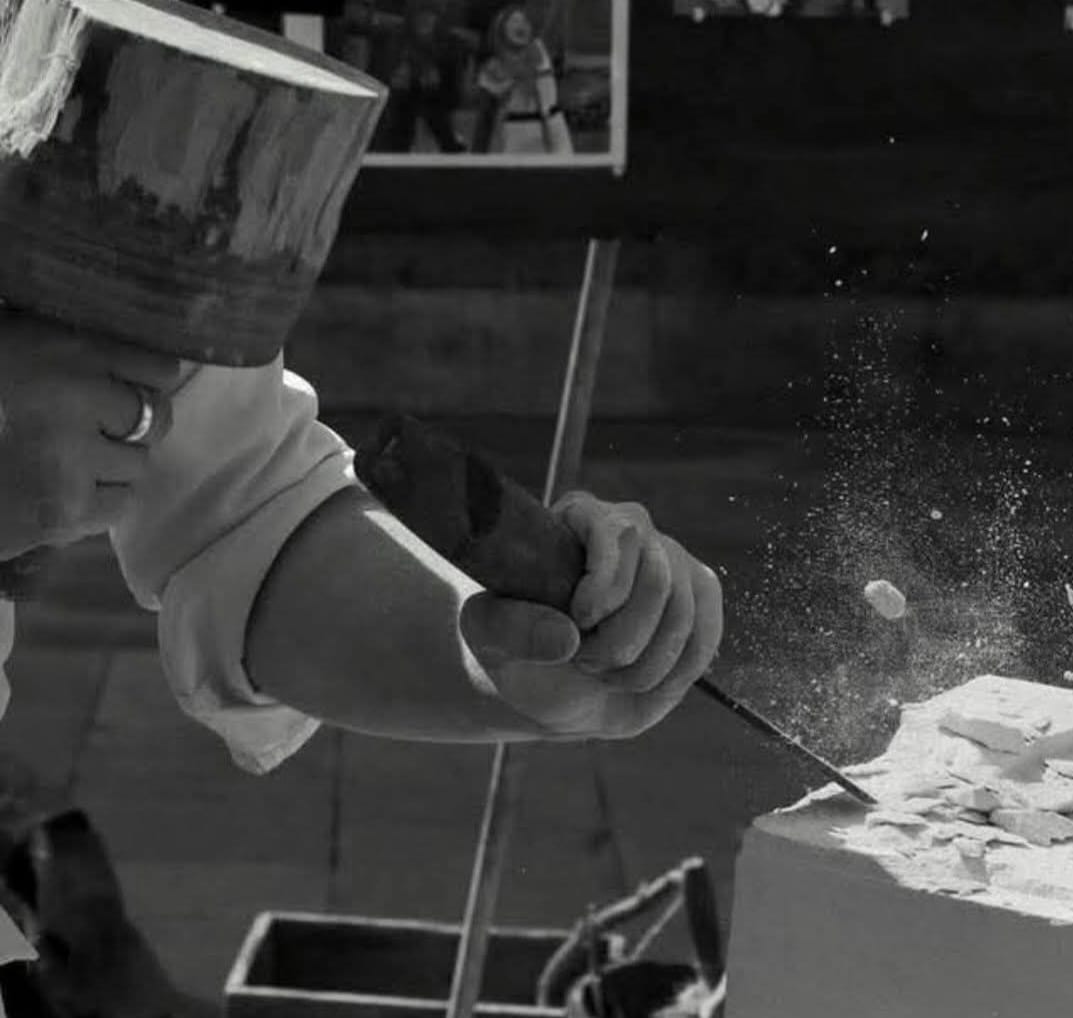
The Artisan’s Professional Veil In the early years of an apprenticeship, a craftsman’s world is narrow. Working under the banner of established firms like Drings of Bath and Szerelmey , one was rarely privy to the names or reputations of the clients. We were there to serve the building, not the biography of its owner.

The Architect of Fleet Street’s Shift In the 1990s, I was tasked with a significant project in a private residence in the Henley area. The work was of the highest order: a kitchen and swimming pool area fashioned from Veratza stone, featuring hand-carved Corinthian columns. At the time, I was simply focused on the technical demands of the stone. It was only much later that the identity of the resident became clear through public record: he was Christopher Pole-Carew, the operational mind behind the move of the national press away from Fleet Street.
For me, this realisation carried a particular sting. Having been brought up near Fleet Street, several of my uncles had lost their livelihoods during that very transition. Had I known at the time whose home I was enhancing, I would have declined the commission out of loyalty to my family. Looking back, there is a profound and uncomfortable irony: while he was dismantling one of Britain’s oldest industrial traditions—and my family’s security—I was using centuries-old techniques to bring beauty to his private sanctuary.

The Man with the Viscount Biscuits A decade earlier, a similar lesson in the anonymity of the craft occurred. We were working for a client who treated us with nothing but civil hospitality. I have a vivid memory of this gentleman offering us cups of tea and Viscount biscuits as we worked. He seemed a perfectly ordinary, if generous, patron of the craft.
The reality only broke much later. I remember the surreal experience of watching the evening news and seeing that very same man being led from court. Only then did I learn he was Mario Villamia, a figure at the centre of the international investigations in Regent’s Park.

The Evolution of the Artisan These experiences have led to the philosophy that guides Court master Carving today. I have come to realise that being a “rare commodity” in the world involves more than just the ability to strike a chisel. Having once been a young man unknowingly working on the homes of figures who impacted my own family, I now place immense value on the relationship between the artisan and the patron. I choose my projects today with the same care I apply to the stone.
INITIATE QUALIFICATION
This is the formal point of entry for all commissions, residencies, and consultations. To discuss a project or request a place in the Yard, you must first define the scope of your intent.
Begin Qualification
Leave a Reply