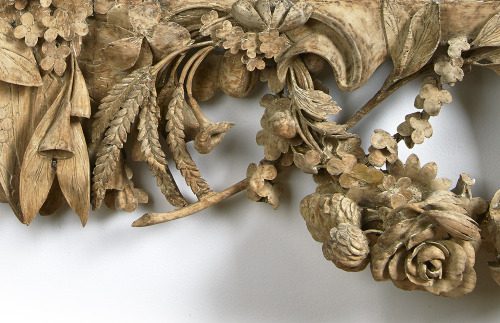
When one walks through the hushed corridors of the Ashmolean Museum, the eye is naturally drawn to the masterpieces on canvas. Yet, for a carver, the true revelation often lies at the periphery. There is a particular frame within those walls—carved by the incomparable Grinling Gibbons—that serves as a silent testament to a level of skill that has rarely been equaled in the three centuries since his passing.
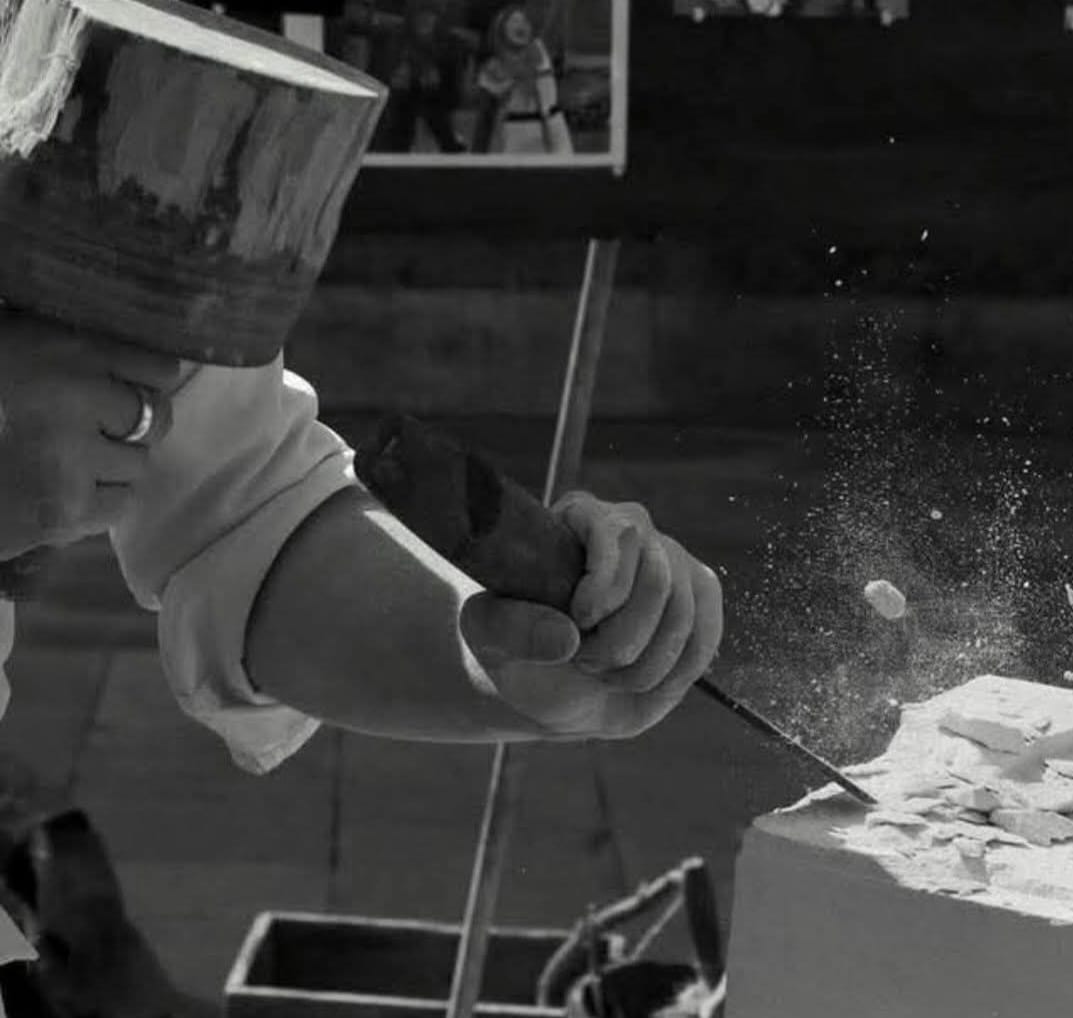
For me, this frame is more than a beautiful object; it is a mirror. As a carver who has also taught within the Ashmolean’s halls and worked the very same stones of St. Paul’s Cathedral, I find in Gibbons a predecessor whose footsteps I have followed with chisel in hand.
The Rise of the Court Master
Grinling Gibbons was the quintessential “outsider” who redefined the British aesthetic. Born in Rotterdam in 1648 to English parents, he was formed by the Anglo-Dutch tradition—a style characterized by an almost miraculous realism and a “breathing” quality in the wood.
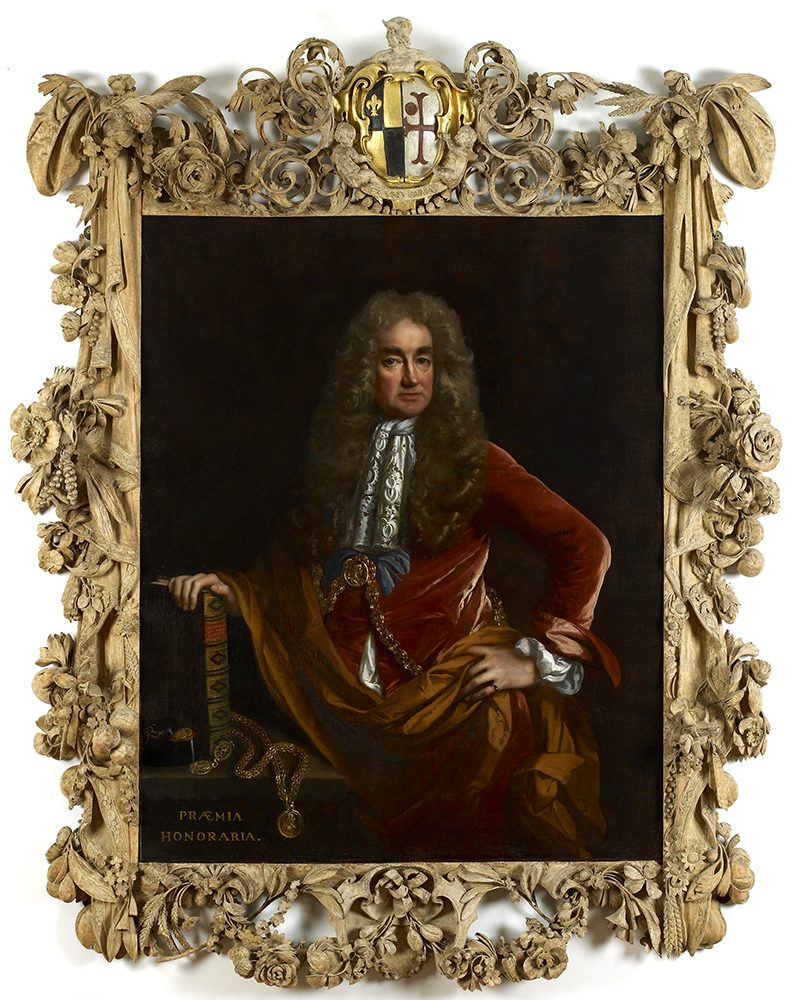
Upon his arrival in England, his talent was so undeniable that he was eventually appointed Master Sculptor and Carver in Wood to the Crown. He served four successive monarchs, from Charles II to George I. This title of Court Master was not merely a royal favour; it was a recognition of a craftsman who had reached the absolute zenith of his discipline, managing a workshop that defined the look of the English Baroque.
Beyond Wood: The Stone of St. Paul’s
While history often remembers Gibbons for his delicate limewood swags, his work in stone was equally vital to the English landscape. Under the direction of Sir Christopher Wren, Gibbons brought his fluid, naturalistic style to the reconstruction of St. Paul’s Cathedral.
It is here that our paths most physically intersect. Having had the distinct honor of carving stone for St. Paul’s, I have stood where he stood. There is a specific intimacy in working the same Portland stone that Gibbons once shaped. You learn the way the light catches the grain and how to translate the softness of a petal or a leaf into the permanence of rock.
My own background in the Anglo-Dutch-Danish style—a technical lineage that emphasizes the same clarity of form and deep undercutting found in Gibbons’ work—allowed me to approach the Cathedral’s masonry not as a stranger, but as a descendant of that same seventeenth-century school of thought.
The Ashmolean Connection
Teaching at the Ashmolean was a homecoming of sorts. To stand before his carvings with students is to realize that the “Master’s” way is not a secret lost to time, but a set of principles that can still be taught.
The Danish influence in my training adds a further layer to this history. During the seventeenth and eighteenth centuries, the Baltic and North Sea trade routes facilitated a constant exchange of craftsmen between England, Holland, and Denmark. This “Northern” style—rigorous, observant of nature, and technically fearless—is what binds my work to that of Gibbons. It is a shared language of the hand.
A Living Heritage: Join the Tradition
The title of “Master” carries with it a responsibility: the duty to ensure that the spark of the craft does not go out. The techniques I used at St. Paul’s and discussed at the Ashmolean are the very same ones I share with those who attend my retreats.
We live in an age of the ephemeral, yet the work of the carver endures for centuries. I invite you to step away from the modern rush and join me at the workbench. Whether you are drawn to the history of the Royal Courts or the quiet satisfaction of shaping stone and wood, there is a place for you in this lineage.
The Master’s Lineage: A Journey Through Stone, Wood, and Time
The Grit Behind the Lineage: Lessons from Syria
The Legacy of the Master Builder: From Knightsbridge to the Côte d’Azur
The Permanent Record: One Patron, Seven Hundred Miles of Stone
Structural Legacy: From the British Museum Great Court to the 1080 Protocol
The Gold Thread: A Discovery in a Drawer
The Itinerant Path: From Picardy’s Spires to the Soul of Stone
A Year in the Shadow of Greatness: My Tenure at Woburn Abbey
The Alchemical Stone: Lessons from a Practitioner of the Renaissance
The Start of My Philosophical JourneyThe Music of the Spheres: A Journey Through London’s Stone
The Master’s Ledger: Blood, Stone, and the Xhosa Training
Unearthing Africa’s Enduring Art: My Journey Through Stone Carving Traditions
The Travels of a Classically Trained Journeyman
Stone, Studios, and Star Power: My Days with George Michael
Embracing the Eccentricities: A Journey of Ancient Traditions and Modernity in the City of London
The Bearer of the Song: A Life in Notes and Stone
We are currently reviewing candidates for 2026-27.
Apply to Qualify for the Initiate Path | Begin Qualification
Leave a Reply