Institute Paper No. 2
Institute for Craft Formation
The Distributed Brain:Craft Practice and the Integration of Human Cognition
Author: Stephen Critchley
Founder, Institute for Craft Formation
Modern culture often assumes that intelligence resides primarily in the brain.
Within this view, thinking is treated as a process that occurs almost entirely within the cranial nervous system. Decision-making, strategy, creativity, and judgement are commonly described as functions of the brain alone, while the body plays only a secondary role.
Traditional craft disciplines suggest a different model.
Within many classical craft lineages, intelligence was not understood as something isolated within the head. Instead, cognition emerged through the continuous interaction between mind, body, and material. Attention, perception, movement, and physiological regulation operated together as a single integrated system.
This perspective can be described as a distributed model of intelligence.
Manual Intelligence and the Human Hand
The human hand occupies a remarkably large representation within the brain’s motor cortex. This disproportionate neurological investment reflects the evolutionary importance of the hand as the primary interface between human beings and their environment.
Traditional craft disciplines make extensive use of this neurological architecture.
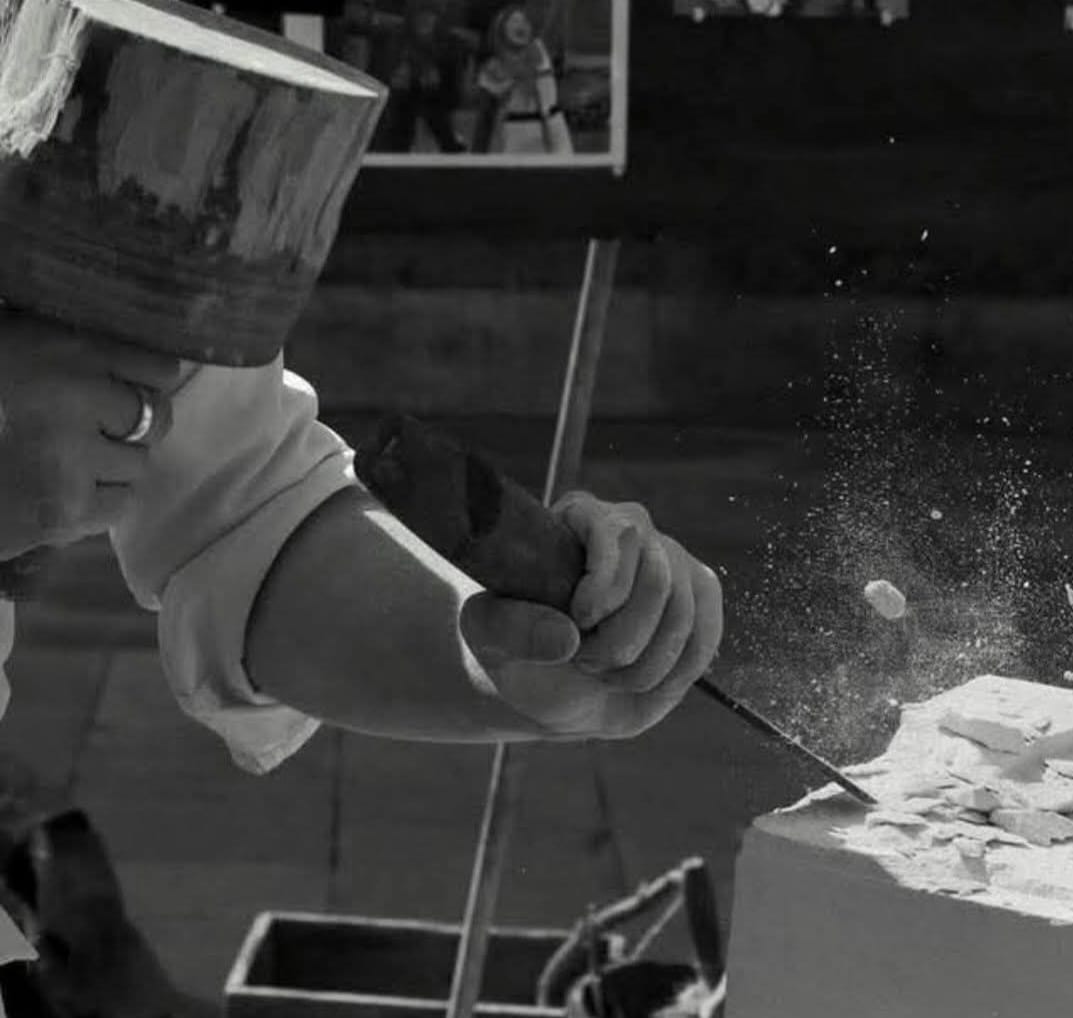
In stone carving, the craftsman’s hands constantly receive tactile feedback from tools and material. Small variations in pressure, angle, and vibration must be interpreted instantly. The practitioner adjusts movement in response to this feedback while maintaining awareness of the larger structure being formed.
The brain, the hands, and the material therefore operate as a single perceptual loop.
Rather than issuing abstract commands, the nervous system remains in continuous dialogue with the physical environment.
Over time this process appears to cultivate forms of attention and judgement that differ from purely abstract problem-solving.
The Enteric System and Embodied Judgement
Human cognition also involves a second neurological network located within the gastrointestinal system, often referred to as the enteric nervous system.
This system contains millions of neurons and communicates continuously with the brain through complex biochemical and neural pathways. Modern research increasingly recognises its role in mood regulation, stress response, and decision-making processes.
Traditional craft environments often supported this system indirectly through the rhythms of craft life.
Manual work, steady physical movement, and regular daily routines produced conditions that helped regulate physiological balance. Craftsmen did not separate mental clarity from bodily stability; the two were understood to be interconnected.
Judgement was therefore not treated as purely intellectual.
It was considered to arise from the integrated functioning of the entire organism.
Rhythm, Breath, and the Nervous System
Many craft practices also incorporate a natural rhythm of movement.
In stone carving, experienced practitioners frequently synchronize physical strikes with breathing and body movement. Actions are deliberate rather than impulsive, and the body remains aligned with the resistance of the material.
This rhythm appears to influence the autonomic nervous system through activation of the vagus nerve, a key regulator of stress and recovery.
When breathing, movement, and attention become synchronized, the practitioner enters a state of concentrated calm in which the nervous system remains stable even during demanding work.
Such states are often described within craft traditions as moments of deep focus in which action and perception operate together without distraction.
Material Resistance as Cognitive Training
A defining feature of traditional craft disciplines is the presence of resistant material.
Stone does not adapt to the will of the craftsman. It responds only to precise force applied at the correct angle and position. A mistake cannot easily be undone.
This environment requires the practitioner to regulate movement, maintain concentration, and think ahead.
Material resistance therefore functions as a form of cognitive training.
The craftsman must continuously integrate perception, physical control, and strategic judgement while interacting with a substance that provides immediate feedback.
Over time this environment strengthens the connection between mental intention and physical action.
Distributed Cognition
When these elements are considered together, traditional craft disciplines appear to cultivate a distributed form of cognition.
The brain processes perception and intention.
The hands interact directly with the material world.
The body regulates rhythm, breath, and physiological balance.
Rather than operating as separate systems, these elements function as a single integrated circuit.
The craftsman’s intelligence therefore emerges from the interaction between neural activity, bodily regulation, and material engagement.
This stands in contrast to many modern forms of work, which emphasize abstract reasoning while minimizing direct interaction with the physical environment.
Implications for Modern Professional Life
Modern professional environments often isolate cognitive activity from bodily engagement.
Work is conducted through screens, digital symbols, and abstract models. The hands perform repetitive micro-movements on keyboards and touchscreens rather than interacting with resistant materials.
While these environments allow rapid information processing, they may reduce the forms of feedback that historically supported integrated cognition.
Traditional craft disciplines therefore offer an alternative perspective.
They demonstrate that human intelligence develops most fully when the brain, the body, and the material environment operate together.
Conclusion
The Distributed Brain framework proposes that cognition is not confined to the brain alone.
Instead, intelligence emerges from the interaction between neural systems, manual engagement, physiological regulation, and environmental resistance.
Traditional craft disciplines provide one of the clearest historical examples of this integrated form of cognition.
Through sustained engagement with materials such as stone, craftsmen develop attention, judgement, and resilience through the coordinated activity of the entire organism.
Understanding this distributed system may offer valuable insight into how human cognition can be cultivated in modern life.