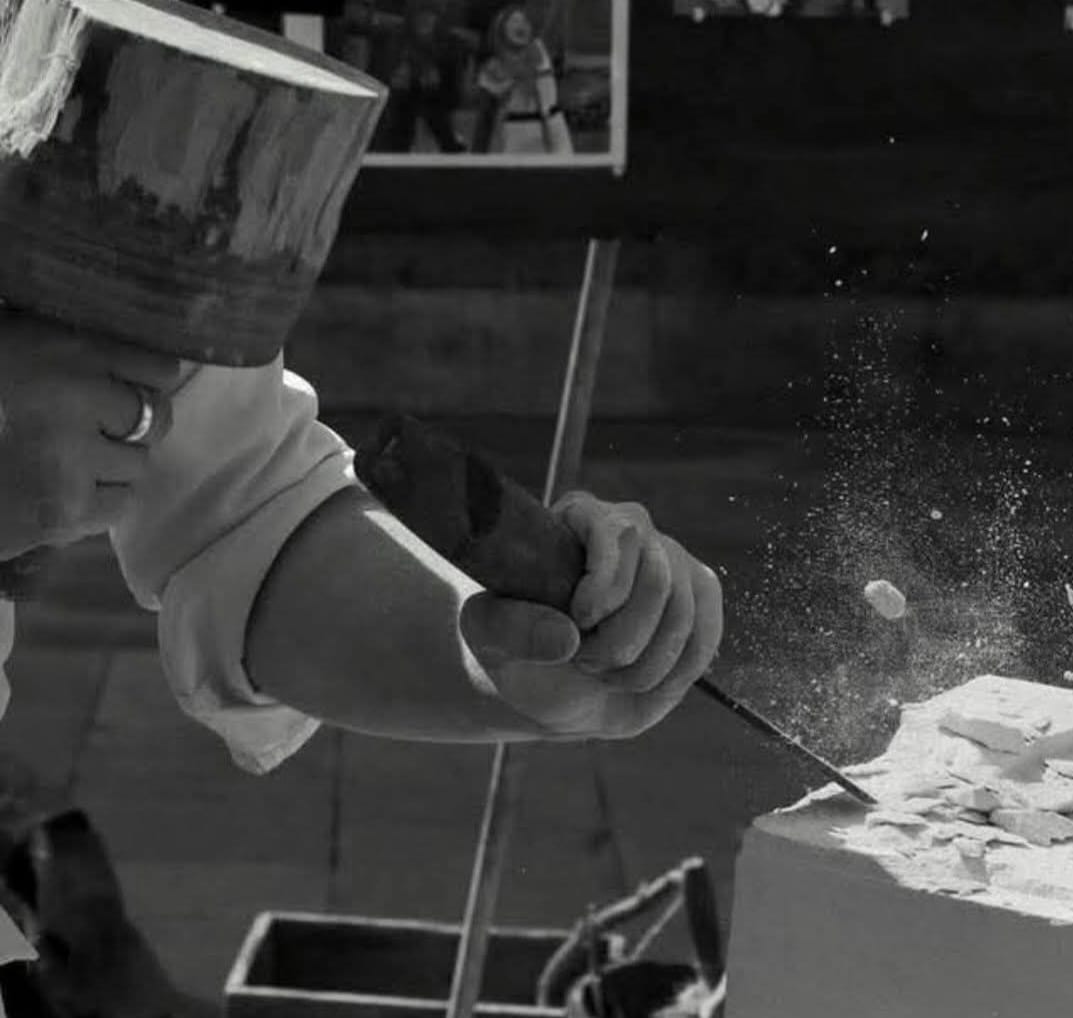
As a child in the aftermath of the Second World War, my world was defined by the jagged geometry of the City’s bomb sites. To most, these were merely ruins; to me, they were my first playgrounds. I climbed through the exposed foundations and scorched timbers of a London that had stood since the Great Fire. I did not realize then that I was walking through a shattered timeline, but those skeletal remains planted a seed: a lifelong obsession with how a thing is made, and more importantly, why it was made so.
When I eventually began my work as a journeyman, I entered a London that was still heavy with the scent of old lime and ancient dust. Much of the fabric I touched had not been disturbed since before the war. Because there was an immense volume of work, I chose to be selective. I did not want the easy tide of modern reconstruction; I set out to curate my career as one might collect rare volumes for a library. I sought an apprenticeship with the ghosts of the great designers, seeking to learn what the ancients called Musica Universalis—the Music of the Spheres.
My pilgrimage began in the 1610s. At Audley End House and The Queen’s House, Greenwich, I encountered the “Visible Music” of Inigo Jones. To the Renaissance mind, there was no distinction between a musical chord and a well-proportioned room. I learned that when Jones designed a room with the ratio of one to two—the Double Cube—he was striking an octave in stone. A room with the ratio of two to three was a perfect fifth.
Implicit in this work was a deeply held belief in alchemy—not merely the pursuit of gold, but the philosophical transformation of the self and the world. The designer was an alchemist of space, taking the base, chaotic materials of the earth—stone, timber, and lime—and refining them through sacred geometry into a “noble” form. To build with these ratios was to participate in the Great Work, creating a vessel that could transmute the leaden spirit of man into something enlightened.
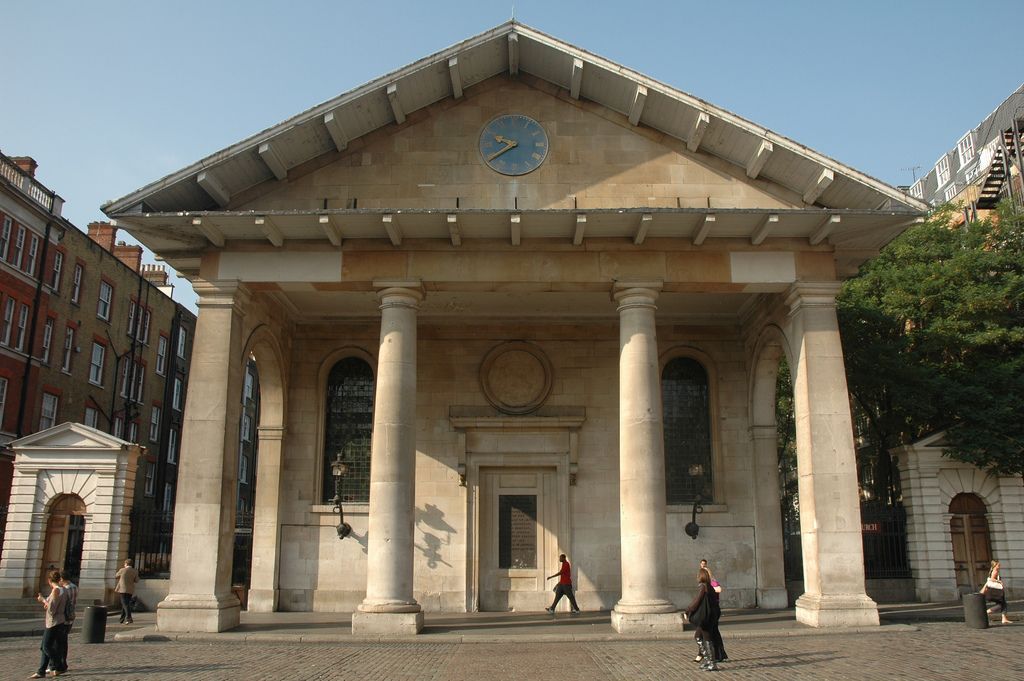
As the seventeenth century progressed, I followed this thread through the work of Sir Balthasar Gerbier at the York Watergate and into the “Acoustics of Reason” established by Sir Christopher Wren. At St. Paul’s, Covent Garden, St. Edmund, King and Martyr, and St. Peter upon Cornhill, I saw the influence of the Royal Society at work. Wren and his colleague Robert Hooke treated architecture and music as branches of natural philosophy, understanding that the physics governing a vibrating string also governed the clarity of a voice within a vaulted ceiling.
It was in the 1980s that I had my first real taste of what would become the direction of my whole career. I began to perceive how proportion, sound, colour, light, and energy affect all of us on a visceral level. I realized that the “heavy” masters of the early eighteenth century—Nicholas Hawksmoor at St. Mary Woolnoth and St. Luke’s, or Thomas Archer at Heythrop Park—were not just arranging masonry; they were manipulating the energy of a site. I followed this study through the Palladian refinements of Henry Flitcroft at Woburn Abbey, the rural elegance of Painswick House, and the quiet dignity of Southam Manor.
By the time I reached the nineteenth-century refinements of Sir John Soane at the Dulwich Picture Gallery, I had transitioned from the learning years of a journeyman to the understanding of a Master. Yet, I realized my education required one final return to the source. I went back to the foundations of antique classical art, philosophy, and architecture. This sparked two decades of international travel and work across ten countries, moving beyond the preservation of facades to the study of how stone interacts with the human nervous system.
I am a Master now, but my work remains an act of restoration. I carry the memory of those London bomb sites with me, reminding me that while stone may fall, the harmonic proportions—the silent music of our craft—are indestructible. My path was an intentional journey to find those frequencies, ensuring that the techniques of the 1610s and the 1730s remain a living language. I have learned that the carver’s role is to act as a custodian of order, using material and mathematics to recalibrate the internal GPS and harden the proprioception of those who seek absolute structural legacy.
There will be a follow-up blog focusing specifically on how I apply these “musical” proportions to the retreats I am now giving.
The Master’s Lineage: A Journey Through Stone, Wood, and Time
The Grit Behind the Lineage: Lessons from Syria
The Legacy of the Master Builder: From Knightsbridge to the Côte d’Azur
The Permanent Record: One Patron, Seven Hundred Miles of Stone
Structural Legacy: From the British Museum Great Court to the 1080 Protocol
The Gold Thread: A Discovery in a Drawer
The Itinerant Path: From Picardy’s Spires to the Soul of Stone
A Year in the Shadow of Greatness: My Tenure at Woburn Abbey
The Alchemical Stone: Lessons from a Practitioner of the Renaissance
The Start of My Philosophical JourneyThe Music of the Spheres: A Journey Through London’s Stone
The Master’s Ledger: Blood, Stone, and the Xhosa Training
Unearthing Africa’s Enduring Art: My Journey Through Stone Carving Traditions
The Travels of a Classically Trained Journeyman
Stone, Studios, and Star Power: My Days with George Michael
Embracing the Eccentricities: A Journey of Ancient Traditions and Modernity in the City of London
The Bearer of the Song: A Life in Notes and Stone
We are currently reviewing candidates for 2026-27.
Apply to Qualify for the Initiate Path | Begin Qualification
Leave a Reply