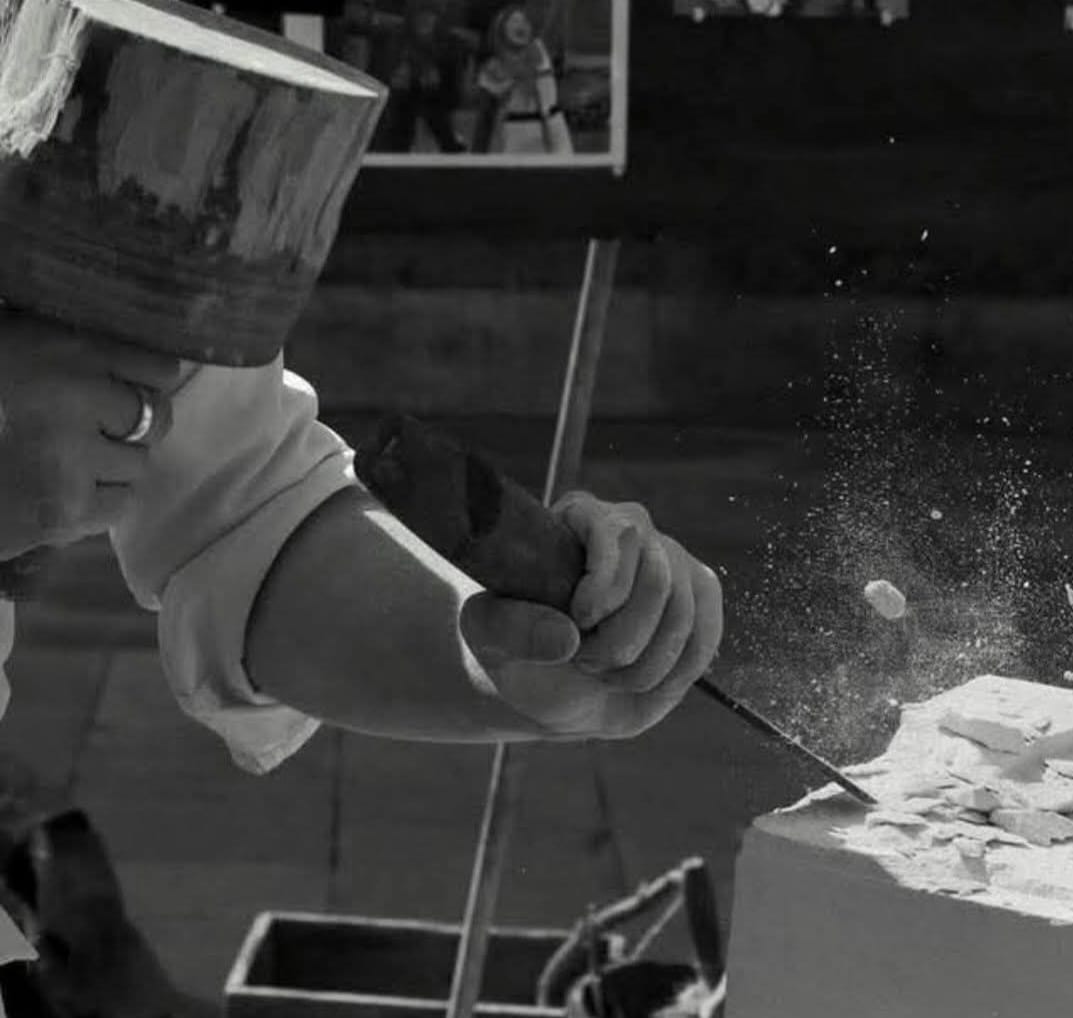
In the carving studio, there is a moment when the world falls away. There is only the carver, the stone, and the vast silence of potential. To understand this “Sublime” state of being—a core pillar of the Court master Carving experience—we must examine Caspar David Friedrich’s Monk by the Sea.
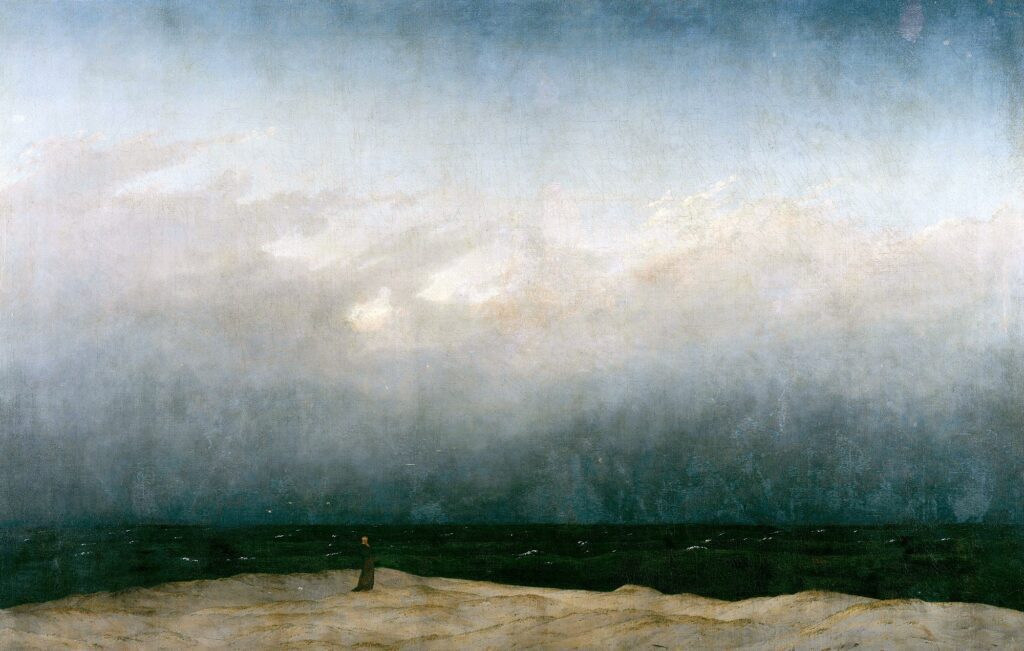
The Radical Erasure: A Technical Void
When Friedrich first unveiled this work in 1810, it was met with profound bewilderment. He had broken every rule of traditional landscape painting. He removed the “repoussoir”—those familiar framing elements like trees or cliffs that typically “guide” the viewer safely into the picture. Instead, he presented a stark, three-tiered void: the dark shore, the black water, and the vast, grey sky.
Modern X-ray analysis reveals an even more intentional decision. Friedrich originally painted two small sailing ships on the horizon. He chose to paint over them, realizing that the ships gave the viewer a “way out”—a reminder of commerce and human society. By erasing them, he forced the viewer to stand on the shore in absolute solitude, facing the infinite.
The Practice in Legacy
This radical minimalism mirrors our philosophy of A Practice in Legacy. In life and leadership, we often surround ourselves with “framing elements”—titles, accolades, and busywork—that prevent us from facing the fundamental questions of our existence.
At our retreats, the stone serves as your “Sea.” It is an element that measures its age in millions of years. When you place your chisel against a block of limestone, you are entering into a dialogue with deep time.
- Facing the Infinite: By removing the “extra” noise of digital life, you are forced to confront your own internal architecture. What remains when the distractions are gone?
- The Scale of the Soul: Friedrich’s monk is tiny compared to the sky. This is the Humility of Material. We learn that we are not the masters of time, but participants in it. Our legacy is not measured by how much we “own,” but by the clarity of the mark we leave behind.
Translating the Tool: The Solitude of the Strike
In the rhythmic labour of carving, you find that solitude is not loneliness; it is a high-value state of reformation.
- The Architecture of the Self: You are not just sculpting a form; you are sculpting the “architect” of your own character.
- Enduring Perspective: The permanence of stone provides a powerful lesson. Like Friedrich’s horizon, it reminds us to separate the fleeting from the fundamental.
Leave a Reply