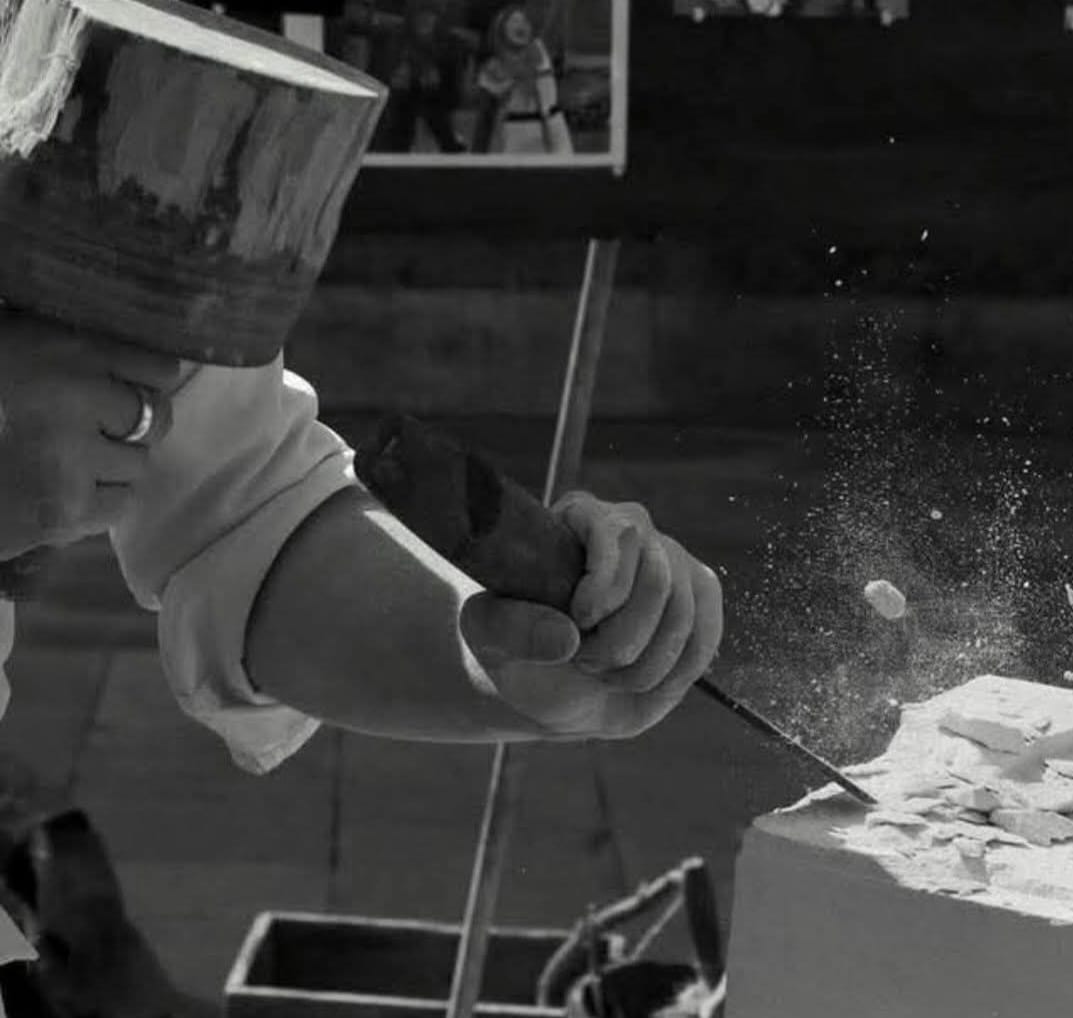
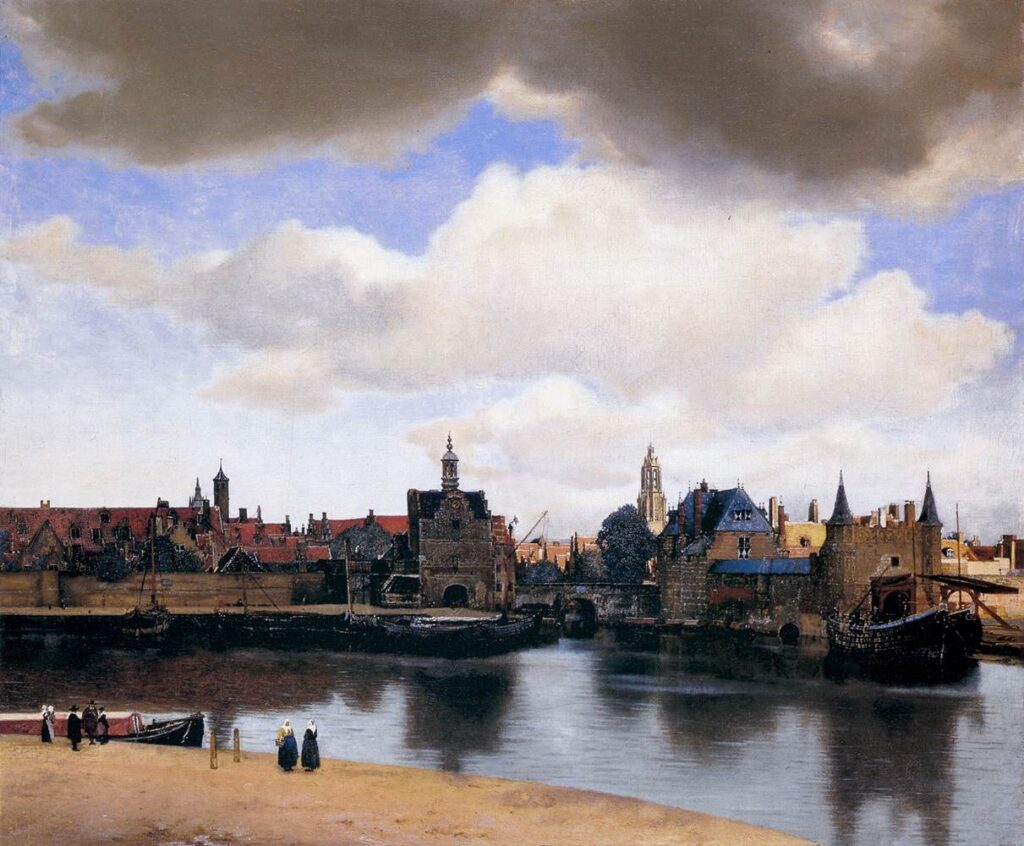
In an era of “disposable” culture and digital ephemera, Courtmaster Carving stands for the enduring. We believe that a life well-crafted must be built on a foundation of substance. To understand how an artist can imbue a flat surface with the physical gravity of stone, we look to Johannes Vermeer’s View of Delft.
The Secret of the Sand: A Granular Reality
Vermeer was not content with the mere “appearance” of his home city; he wanted to capture its physical essence. To replicate the tactile reality of sun-drenched brick and weathered stone, Vermeer performed a feat of painterly alchemy.
He was known to mix ground glass and sand into his lead-tin yellow and ochre pigments. This created a “granular” surface that caught the actual light of the room, making the painted buildings feel as heavy and permanent as the real ones. Furthermore, he used Lapis Lazuli—a pigment made from ground semi-precious stones—not just for blue sky, but mixed into the shadows of the walls to give them a “stone-like” depth and coolness.
The Materiality of Truth
This reflects our core pillar: The Materiality of Truth. In leadership, words are often fleeting and “flat.” But actions—and the work of one’s hands—have “grain.”
At our retreats, we move beyond the flat world of screens. When you handle a piece of Portland stone or Cotswold limestone, you are engaging with a “granular” reality. You learn that truth is found in the resistance of the material.
- The Weight of Character: Vermeer’s city feels permanent because he respected the physics of light and texture. Similarly, your leadership gains “weight” when it is anchored in the physical discipline of a craft.
- Refining the Architect: Vermeer used a Camera Obscura to study reality, but he famously moved the buildings slightly in his painting to create a more “harmonious” composition. He understood that the “Inner Architect” must sometimes refine reality to reveal a deeper truth.
Translating the Tool: The Chisel as an Anchor
In the carving shed, you do not just think about excellence; you give it a physical form that can be touched and proven.
- Texture to Thought: As you move from the roughing out to the fine finishing, you are giving “texture” to your thoughts. You are learning that a well-executed decision has a physical presence.
- A Practice in Legacy: Stone is the language of permanence. By mixing the “sand” of discipline into your daily practice, you create a legacy that, like a Vermeer, speaks across centuries.
Leave a Reply