Institute Paper No. 7
Institute for Craft Formation
The Craft Longevity Principle
Material Resistance and the Discipline of Attention:Why Stone Creates a Unique Cognitive Environment
Author: Stephen Critchley
Founder, Institute for Craft Formation
Among the materials historically used in traditional craft disciplines, stone occupies a distinctive position. It is one of the most resistant and unforgiving materials with which human beings regularly work. Unlike softer substances that can be reshaped easily, stone demands precision, patience, and deliberate action.
This characteristic creates a working environment in which attention becomes essential.
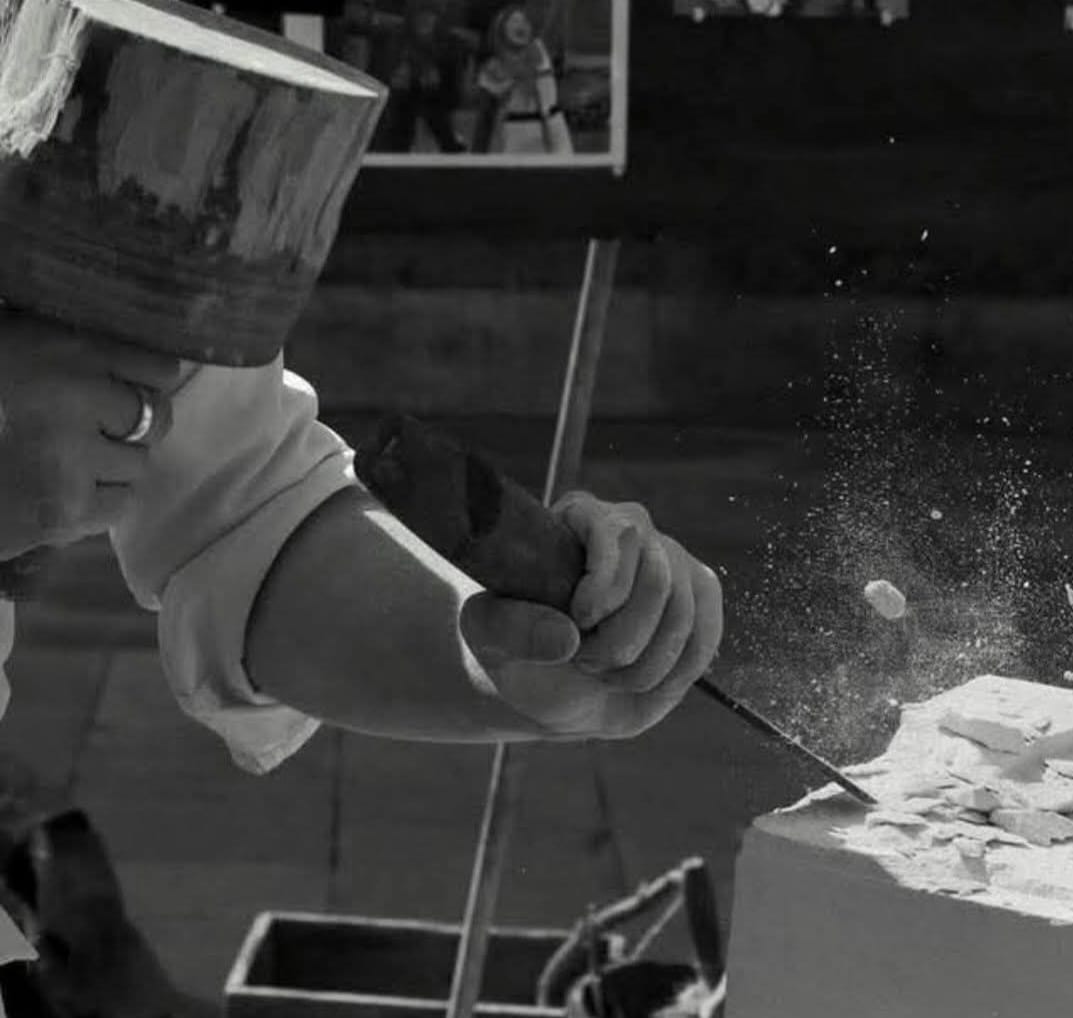
Traditional stone carving does not permit careless movement. Each strike of the tool removes material permanently, altering the structure of the object being formed. The craftsman must therefore maintain continuous awareness of both the immediate action and the larger form emerging from the material.
Stone, in this sense, functions not only as a medium for artistic expression but also as a training ground for disciplined attention.
Irreversibility and Decision-Making
One of the defining characteristics of working with stone is irreversibility.
Once material has been removed, it cannot be replaced. Errors cannot easily be concealed or undone. This condition fundamentally shapes the behaviour of the practitioner.
Before each action, the craftsman must examine the surface of the material carefully, assess the position of the tool, and anticipate the likely outcome of the strike. The decision to remove material is therefore preceded by a moment of evaluation.
This repeated cycle of observation, judgement, and action cultivates a particular mode of thinking.
The craftsman learns to slow the impulse to act and to replace it with a habit of careful assessment. Decisions become deliberate rather than reactive.
Over time, this process strengthens the practitioner’s ability to maintain attention under conditions where mistakes carry real consequences.
Sensory Feedback and Perception
Stone carving also provides a continuous stream of sensory feedback.
When the tool strikes the surface of the stone, vibration travels through the chisel, the mallet, and the bones of the hands and arms. The sound produced by the strike reveals information about the density and structure of the material. Even slight changes in resistance can indicate the presence of internal variations within the stone.
Experienced craftsmen learn to interpret these signals.
Through repeated interaction with the material, they develop an acute sensitivity to subtle variations in texture, resistance, and sound. These cues allow the practitioner to adjust technique in response to the behaviour of the stone.
This feedback loop strengthens perceptual awareness.
The craftsman does not simply impose form upon the material; the material participates in guiding the process.
Attention Across Multiple Scales
Another distinctive feature of stone carving is the need to maintain attention across multiple scales simultaneously.
At the smallest scale, the craftsman focuses on the precise placement of the tool and the quality of each individual strike. At a larger scale, the practitioner must maintain awareness of the overall form emerging from the material.
These two levels of attention operate together.
A single strike may affect the balance of the entire composition. The craftsman therefore alternates constantly between close observation of detail and broader evaluation of the structure.
This dynamic encourages the development of flexible attention.
The practitioner learns to shift focus smoothly between local precision and global awareness.
Resistance as a Cognitive Environment
The resistance of stone also imposes a particular rhythm of work.
Because the material responds only to controlled force applied at specific angles, the craftsman must regulate movement carefully. Excessive force may fracture the material, while insufficient force may produce no effect.
The practitioner therefore develops a measured and economical approach to movement.
Each action is calibrated to the behaviour of the material. This calibration strengthens the connection between perception and motor control.
Over time the craftsman’s movements become precise, efficient, and deliberate.
The material itself shapes the discipline of the practitioner.
Attention in the Modern Context
Many modern environments differ significantly from the conditions created by resistant materials.
Digital systems allow rapid revision and correction. Errors can often be undone instantly, and tasks can be interrupted without permanent consequence. While these features provide flexibility and efficiency, they also reduce the immediate feedback that encourages sustained concentration.
Stone carving represents a contrasting environment.
Because the material demands attention and does not tolerate careless action, it naturally discourages distraction. The craftsman must remain present within the task in order to work effectively.
Such conditions appear to cultivate habits of concentration that become characteristic of experienced practitioners.
Conclusion
Stone provides a uniquely demanding environment for the development of attention.
Its resistance requires the craftsman to regulate movement, observe carefully, and anticipate the consequences of each action. Through repeated engagement with this material, the practitioner develops a disciplined relationship with perception and decision-making.
The interaction between tool, hand, and stone creates a continuous feedback loop that strengthens both sensory awareness and cognitive focus.
In this way, traditional stone carving functions not only as a craft practice but also as a powerful environment for training attention.
Understanding the cognitive effects of such environments may offer valuable insight into how sustained concentration and disciplined judgement can be cultivated in contemporary life.