The Michelangelo Paradox: Why the Great Carvers Outlived Kings
The Court Master’s Paradox | Active Longevity | Court master Carving
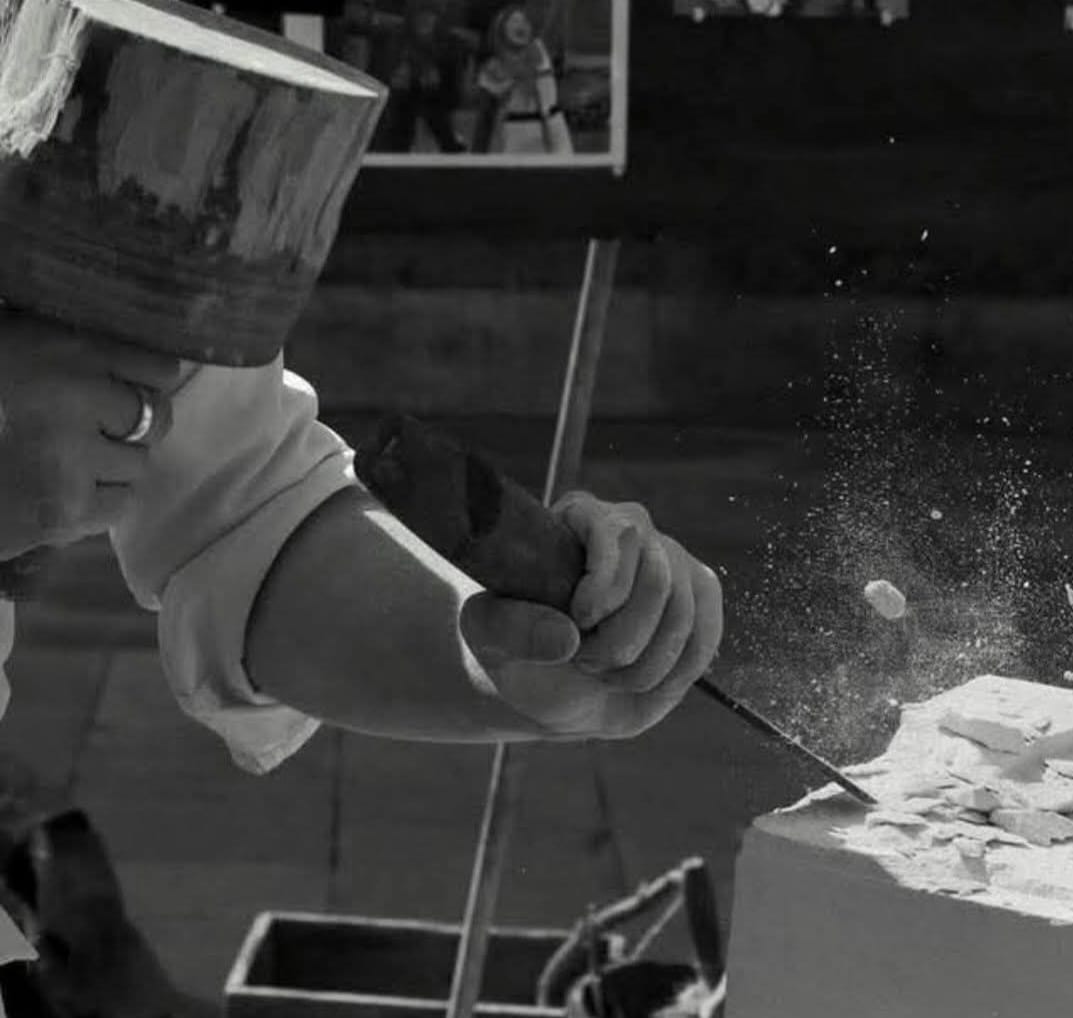
History is written in stone, but it is lived by the carver. When we examine the 900-year history of our craft, a startling biological truth emerges. While the kings and commoners of the past were claimed by the hazards of their eras, the Masters of the “Silent Language” remained. They did not merely survive; they thrived into their eighth and ninth decades with their faculties and physical strength intact.
These people were not just geniuses; they were biological outliers. History’s greatest stone carvers lived twice as long as their contemporaries. We teach you the sensory and physical discipline that made them outliers. As Court Craftspeople trained in the lineage, we are the custodians of this investigation into the “Sculptor’s Outlier”—the reason why masters of this 900-year tradition consistently outlived the kings they served.
The Outlier Phenomenon: The Masters of the Long Line
In the modern landscape of high-stakes performance, the search for “grounding” has led many to the yoga studio or the meditation app. Yet, there exists a protocol for neurological resilience that predates modern wellness practices by over 1,500 years. It did not originate in a search for relaxation, but in the practical, metabolic necessity of the Master’s Workshop. For the Principal—the individual navigating the digital overload of the 21st century—the “Michelangelo Paradox” offers a startling revelation: the very act of transforming raw stone is the ultimate technology for biological and cognitive longevity.
The Renaissance Pillars
- Donatello (1386–1466): In a century where a survivor’s average age was 42, Donatello reached 80 years. He spent nearly seven decades in a state of constant physical and cognitive engagement, outliving his peers by nearly 40 years.
- Luca della Robbia (1399–1482): Reaching the age of 83, Luca was obsessed with durability—both in his patented glazes and his own physical discipline. He lived 41 years beyond the life expectancy of the 15th-century man.
- Michelangelo Buonarroti (1475–1564): The ultimate outlier. Dying at 88, he lived an incredible 43 years past the average. He was actively carving the Rondanini Pietà just days before his passing, a testament to the “Inner GPS” sustaining the body until the very end.
The Baroque and Enlightenment Guardians
- Gian Lorenzo Bernini (1598–1680): Bernini dominated the Roman landscape for over 60 years. He died at 81, having lived 33 years beyond the expectations of the 17th century. His longevity allowed him to serve eight popes.
- Jean-Antoine Houdon (1741–1828): In the chaos of the French Revolution, Houdon maintained the stillness required for high-precision portraiture until the age of 87, outliving the average survivor by 35 years.
The Modern Bridge
- Auguste Rodin (1840–1917): Even as the world became industrialized and “hollow,” Rodin’s commitment to the tactile and physical demands of sculpture carried him to 77, a nearly 20-year gap over his contemporaries.
- Daniel Chester French (1850–1931): The master of monumental scale. Working with the massive weights of the Lincoln Memorial, French maintained his vitality until 81, proving the craft’s protective power well into the modern age.
The Anatomy of the Outlier: The Metaphysics of Resistance
The longevity of these Masters was not a matter of luck; it was a result of the Classical Craft System. As Court Craftspeople, we understand that this protocol operates on a fundamental duality: the merger of Consciousness and Nature. While modern exercise often seeks to distract the mind, stone carving demands total integration.
Stone provides a unique “honest feedback” loop. To shape it, one must engage in Equilibrioception—a sophisticated state of physical balance where the core, the breath, and the chisel move as a single unit. This isn’t merely “well-being”; it is a recalibration of the body’s Inner GPS.
The Neurological Reset: Proprioception and Flow
The “hollow” nature of digital life stems from a lack of resistance. When we interact only with screens, our Proprioception—the brain’s ability to map itself in physical space—begins to atrophy. In the Court Master tradition, we utilize the “Silent Language of Stone” to reverse this decline through three primary pillars:
- Cognitive Continuity: The constant mapping of 3D space (The Inner GPS) prevents the neurological decline associated with aging.
- Proprioceptive Integrity: The physical resistance of stone carving acts as a lifelong “Biological Anchor,” maintaining core strength and equilibrium.
- Chronoceptive Reset: The rhythmic strike of the tool forces a mastery of time. Entering the “Flow State” of the craft regulates cortisol and resets the nervous system, moving the brain from the frantic “ping” of digital notifications into deep, sustained focus.
- Tactile Engagement: Research into the Bardic Tradition shows that manual mastery combined with narrative storytelling triggers the production of oxytocin and strengthens social and cognitive connections.
The Principal’s Conclusion: An Invitation to the Zenith
The data is undeniable. The masters of the lineage lived up to 40 years longer than the average survivor of their era. They were not merely “artists”; they were practitioners of a daily protocol that maintained cognitive sharpness and physical strength into their ninth decade. They understood that the “Well-Rounded Man” required more than just thought; he required the resistance of the earth to anchor his consciousness.
We have moved into an era where productivity is prioritized over presence, leaving the modern leader physically and mentally unmoored. The Master Craftspeople of the past have not vanished; their knowledge has simply retreated into the Private Office.
At Court Master, we do not teach a “hobby.” As Court Craftspeople trained in the lineage, we initiate you into a 900-year-old system of resilience. Stone carving is the only discipline that offers a tangible transformation of both the material and the maker. By qualifying for the Initiate Path, you are not just learning a craft; you are adopting a proven protocol for cognitive and physical resilience. By engaging with the stone, you are not merely creating a monument to the past. You are carving a more permanent, grounded, and resilient version of yourself.
Every stroke of the chisel is an investment in the longevity of the self. The stone is waiting. Are you ready to qualify?
Precision in craft requires precision in biology. We establish the neurological foundation for our carvers through the ritual of the Moot. Learn about the Moot & Microbiome Management
Technical Menu: Cortical Stability & Microbiome Protocol
The Distributed Brain: Why the 1080 Protocol is a Biological Hardware Upgrade
We accept four Initiates per annum. This limitation is not a marketing choice, but a biological one. The oversight required to manage the Mechanical Loading and the Moot Ingestive Discipline necessitates total focus.
We are currently reviewing candidates for 2026-27.
Apply to Qualify for the Initiate Path | Begin Qualification