Institute Paper No. 8
Institute for Craft Formation
The Craft Longevity Principle
Craft Formation and Human Development: The Psychological Dimensions of Traditional Craft Training
Author: Stephen Critchley
Founder, Institute for Craft Formation
Traditional craft disciplines have historically been understood primarily in terms of skill: the ability to shape materials with precision, to construct durable structures, or to produce objects of aesthetic and functional value. Yet within lineage-based craft traditions, the purpose of training extended beyond the transmission of technical ability.
Craft formation also shaped the psychological development of the practitioner.
Within these environments, the apprentice gradually acquired habits of attention, patience, responsibility, and disciplined judgement. These qualities were not taught through abstract instruction alone. They emerged from the conditions of the work itself.
The apprentice was required to interact with materials that responded directly to action. Success depended on observation, restraint, and careful decision-making. Over time these requirements influenced not only technical competence but also the character of the practitioner.
Traditional craft systems therefore functioned as environments of human formation as much as technical education.
Discipline and the Regulation of Attention
One of the first psychological qualities cultivated within craft training is disciplined attention.
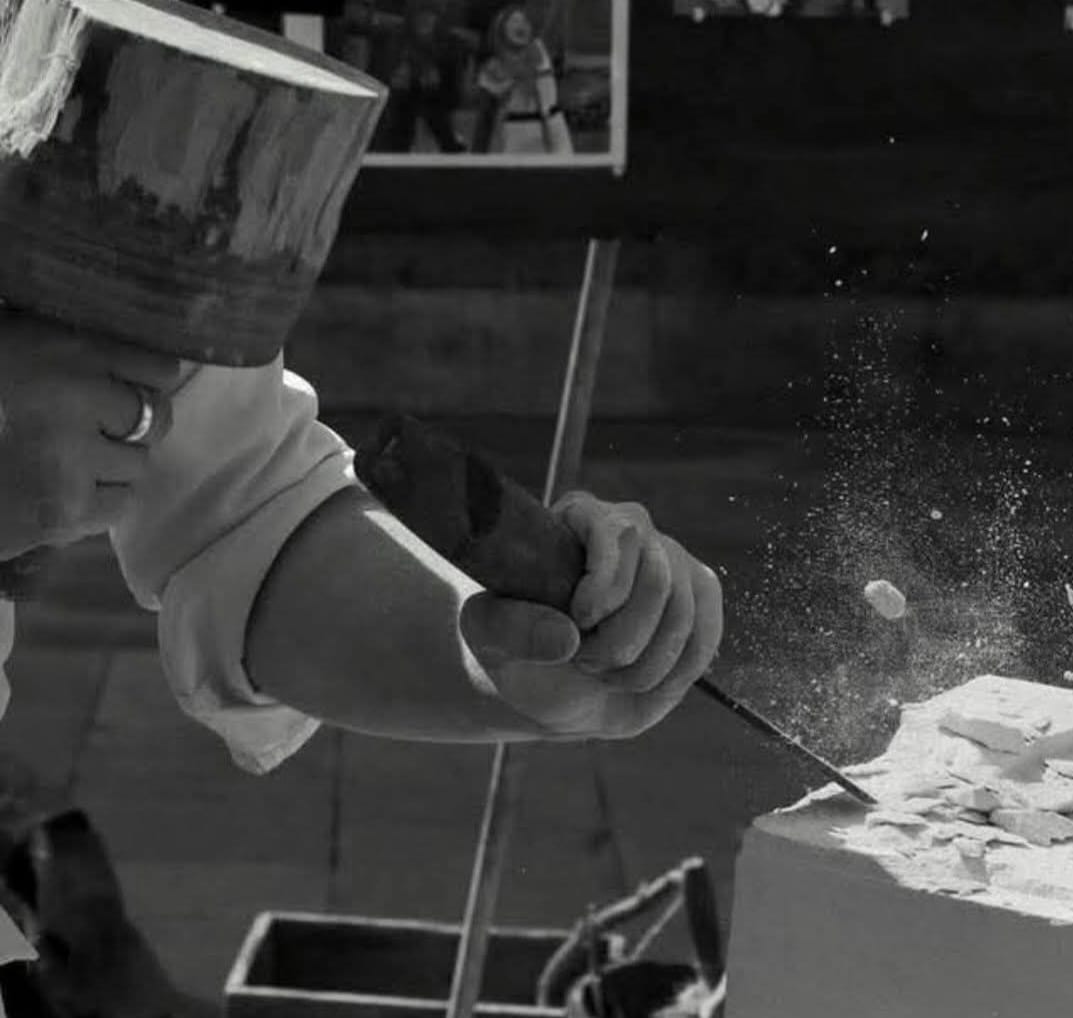
Working with materials such as stone or timber demands continuous concentration. The practitioner must remain aware of the behaviour of the material, the position of the tool, and the emerging form of the work.
Moments of distraction can produce visible and permanent errors.
As a result, the apprentice learns to regulate attention deliberately. Focus becomes a practical necessity rather than an abstract virtue.
This process differs significantly from environments in which mistakes carry little consequence. In craft practice the relationship between attention and outcome is immediate and visible.
Through repeated experience the practitioner develops a habit of sustained concentration.
Patience and Temporal Awareness
Traditional craft disciplines also cultivate patience.
Complex works often require extended periods of careful labour. Architectural carvings, for example, may take weeks or months to complete. Progress occurs gradually as small portions of material are shaped and refined.
The practitioner therefore becomes accustomed to working within long time horizons.
Rather than seeking immediate results, the craftsman learns to value incremental improvement. Each stage of the process contributes to the eventual outcome, and progress depends upon steady effort rather than rapid execution.
This temporal awareness shapes the practitioner’s relationship with work.
Patience becomes integrated into the rhythm of activity rather than imposed as an external discipline.
Responsibility and Consequence
Craft training also introduces the apprentice to responsibility through direct engagement with consequence.
Because materials cannot easily be restored once damaged, the practitioner must take ownership of each action performed. The outcome of the work reflects the quality of judgement exercised during the process.
This condition fosters a sense of accountability.
The apprentice gradually recognizes that careful preparation and thoughtful decision-making are essential to producing reliable results. Responsibility is not enforced primarily through rules but through the nature of the work itself.
Each completed piece becomes evidence of the practitioner’s judgement.
Over time this relationship between action and outcome strengthens the craftsman’s ability to evaluate decisions with clarity and honesty.
Humility Before Material
Another psychological dimension of craft training is humility before material.
Natural materials possess their own structures, strengths, and limitations. Stone may contain hidden fractures, variations in density, or unpredictable grain patterns. The craftsman must therefore learn to observe and respect these characteristics rather than attempting to dominate them.
This relationship encourages a posture of attentive cooperation with the material.
The practitioner recognizes that mastery does not consist solely in imposing form but in understanding how the material behaves and working within those constraints.
Such humility fosters careful observation and openness to learning.
Even experienced craftsmen remain attentive to the behaviour of each new piece of material they encounter.
The Integration of Skill and Character
Within traditional craft lineages, technical skill and personal character were often considered inseparable.
A craftsman capable of precise work required not only physical coordination but also patience, discipline, and judgement. These qualities supported the development of reliable craftsmanship.
The training environment therefore shaped both ability and disposition.
As the apprentice matured, technical competence became accompanied by a distinctive mode of conduct: calm attention, measured action, and careful evaluation of outcomes.
These qualities were valued not only within the craft itself but also within the broader social roles that craftsmen occupied.
Craft and Modern Professional Life
Modern professional environments often emphasize intellectual and analytical abilities. While these capacities are essential, they do not always cultivate the same habits of attention and responsibility that emerge from direct engagement with material consequences.
Digital systems frequently allow rapid revision and correction. Actions may be modified or reversed without lasting impact.
Traditional craft environments operate differently.
The presence of irreversible consequence encourages practitioners to slow their actions, evaluate conditions carefully, and accept responsibility for the results of their work.
These conditions shape psychological development in ways that may be increasingly rare within contemporary contexts.
Conclusion
Traditional craft formation demonstrates that environments of disciplined making can influence human development in profound ways.
Through sustained engagement with materials, the practitioner learns to regulate attention, exercise patience, accept responsibility for outcomes, and approach work with humility and care.
These qualities emerge gradually through the structure of the work itself rather than through abstract instruction alone.
Understanding the psychological dimensions of craft training reveals that traditional craft systems functioned not merely as technical schools but as environments in which skill and character developed together.
In this sense, craft formation represents a model of human development in which the cultivation of attention, judgement, and responsibility arises naturally from purposeful engagement with the material world.