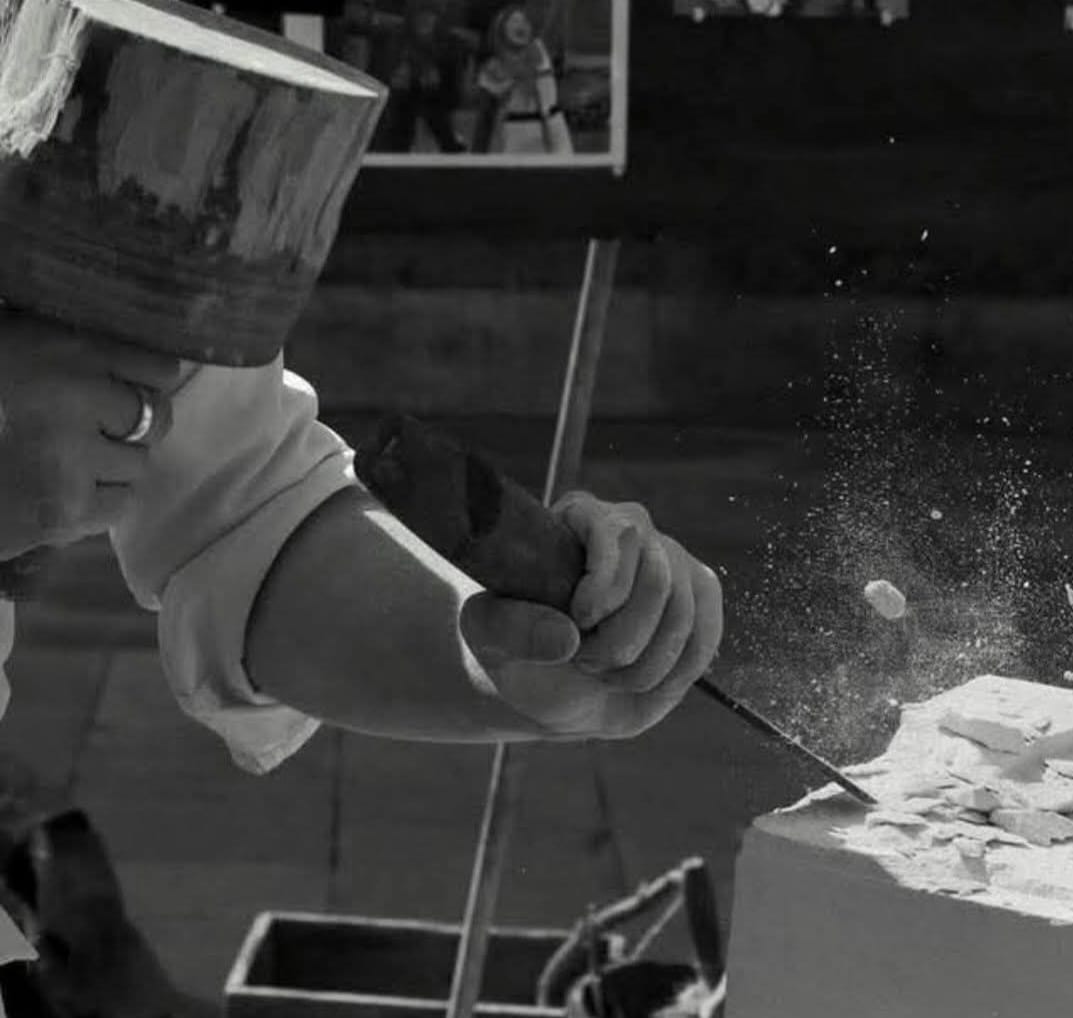
In the craft of stone carving, we often say that the sculpture is defined by the stone that is removed. The “negative space” is what allows the form to exist. This concept is a pillar of Court master Carving, and there is no greater allegory for this in the art world than the missing panel of the Ghent Altarpiece: The Just Judges.
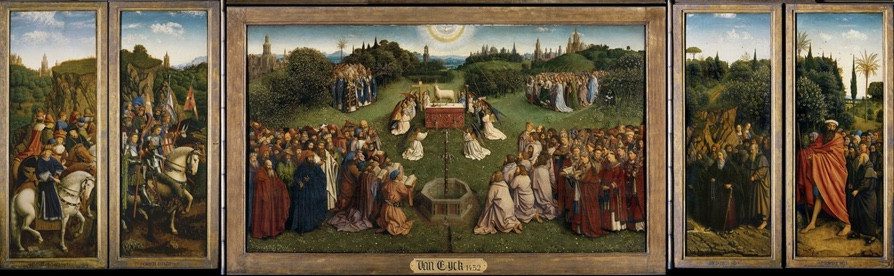
The Ransom of the Ghost: A Technical Mastery
Painted by the Van Eyck brothers in 1432, the Ghent Altarpiece is widely considered the first great oil painting. The Just Judges panel was a technical marvel of “glazing”—the application of up to thirty layers of translucent oil paint. This created a depth of field so profound that the horses’ eyes seemed to follow the viewer, and the velvet robes of the judges possessed a tactile, heavy realism.
In 1934, the panel was stolen from Saint Bavo’s Cathedral in Belgium. Despite decades of investigation and deathbed confessions, the original has never been found. Today, a modern copy sits in its place—a “ghost” in the frame.
The Philosophy of the Missing
For the philosophical artisan, the absence of the Just Judges is as powerful as its presence. It has created a “cultural negative space.” Because it is missing, it is more discussed, more contemplated, and more “present” in our minds than any of the panels that remain safely in the cathedral.
This mirrors our approach to Leadership and Legacy. A Master knows that their greatest influence often occurs in the spaces they leave for others to fill.
- The Ghost in the Block: In carving, you must respect the void. You are not just making a mark; you are deciding what not to leave behind.
- The Discipline of Consequence: The theft of the panel reminds us of the fragility of the physical. It forces us to ask: What is the “priceless intention” of our work if the work itself were to vanish? The answer lies in the reformation of the carver, not just the stone.
Translating the Tool: The Master of Absence
At a Courtmaster retreat, we use the hammer and chisel to strip away the “superfluous material” of your life.
- Removing the Noise: Just as the missing panel draws the eye, the “spaces” you create in your life through active contemplation—the digital detox, the silence of the workshop—become the most defining parts of your character.
- The Inner Architect: You learn to value the “unseen” work: the patience, the humility, and the focus that go into the stone, even if the final form is eventually reclaimed by time.
Leave a Reply