
There are certain journeys that remain etched in the mind, not merely for the destination, but for the manner in which one arrives. In 1986, my path to the ancient wonders of Alexandria began on the waters, departing from the small port of Keramoti. To approach Egypt by sea is to witness the horizon slowly yield to the silhouette of a city that has served as the world’s intellectual beacon for centuries.
The Depths of Kom El Shoqafa
Upon arrival, my work led me into the cool, silent depths of the Catacombs of Kom El Shoqafa. This multi-level necropolis is a profound example of ancient engineering, where Egyptian, Greek, and Roman styles coalesce in the shadows.
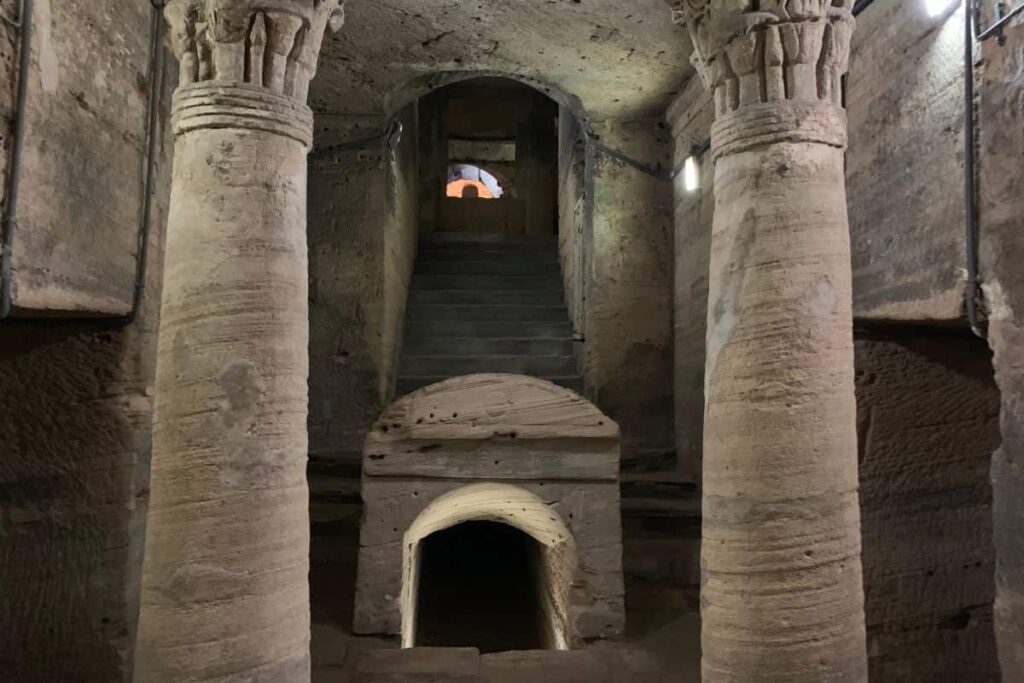
In the mid-1980s, our presence there was often a matter of preservation as much as study. The rising water levels were a constant companion, threatening the intricate reliefs and the integrity of the three-tiered structure. It was a delicate balance—honoring the dead while modern engineering struggled to keep the encroaching tides at bay.
The Heights of the Serapeum
From the subterranean silence of the catacombs, the project transitioned to the windswept plateau of the Serapeum. Standing beneath Pompey’s Pillar, one feels the weight of lost knowledge.
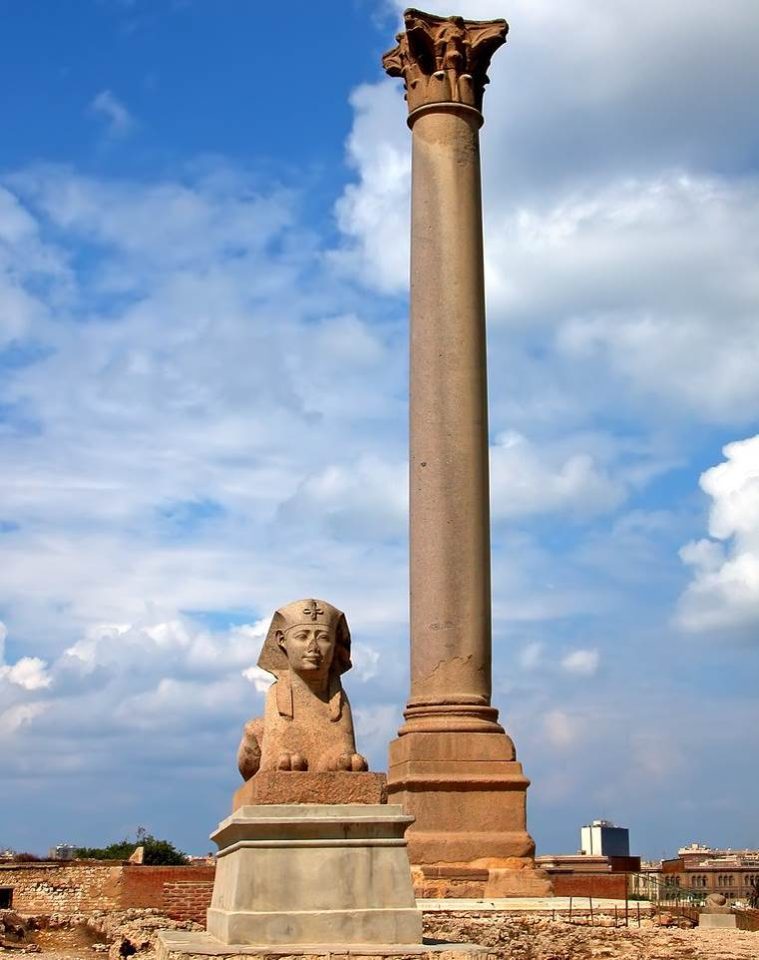
In 1986, we were particularly captivated by the foundations. This site once housed the “daughter library,” a sanctuary for scrolls when the Great Library of Alexandria faced its decline. Walking among the ruins of the red Aswan granite, one could almost hear the echoes of the scholars who once sought refuge and wisdom within these walls.
A Legacy in Stone
Looking back forty years, the memories of Alexandria are defined by this duality: the vertical descent into the earth at Kom El Shoqafa and the soaring height of the pillar at the Serapeum. It was a privilege to contribute to the stewardship of these sites, ensuring that the stories carved into the stone in antiquity would endure for another generation.
Leave a Reply