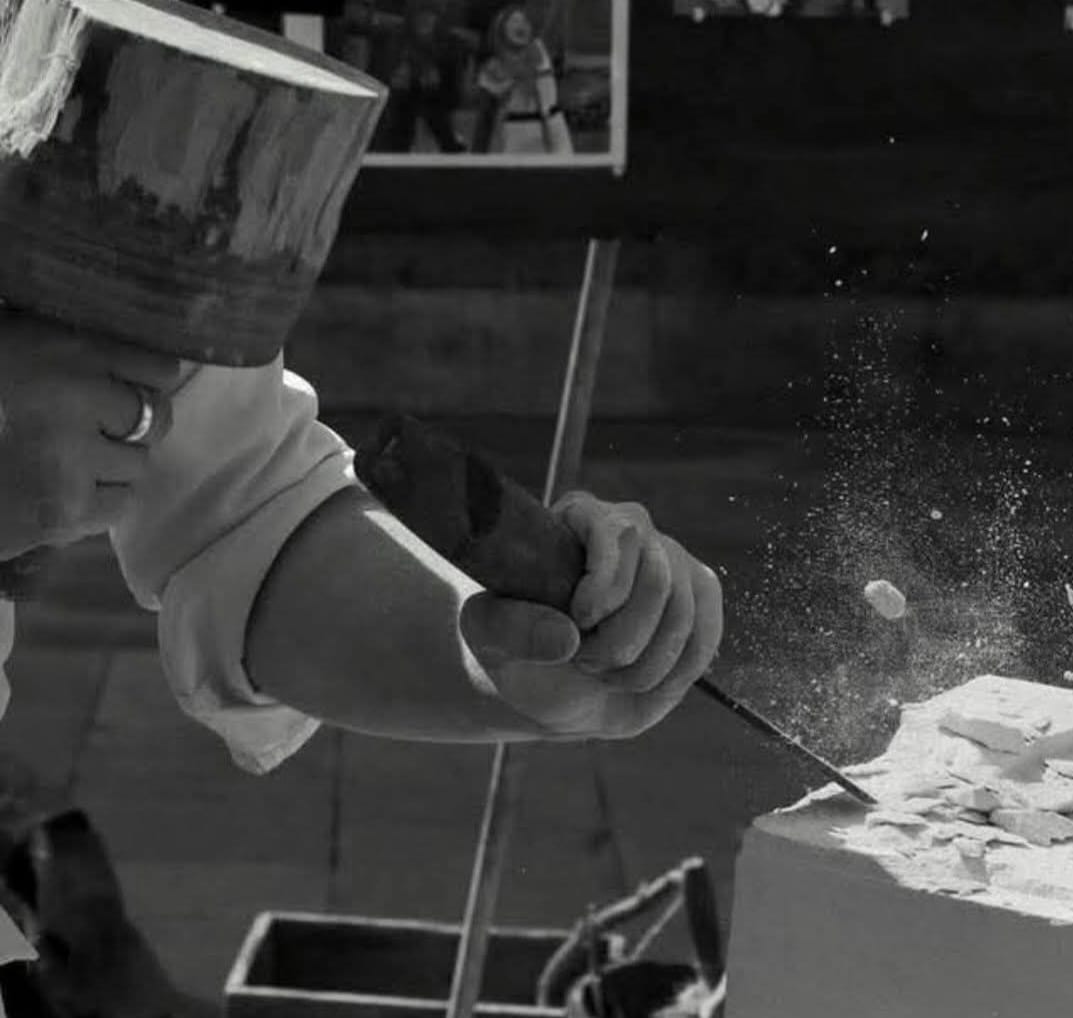
There is a particular kind of stillness that settles over a historic building site before the public arrives—a brief window where the dust of the masons and the precision of the architecture exist in perfect, silent alignment. Looking back on the year 2000, while working as Head of Masonry and Conservation with St Blaise Ltd on the British Museum’s Great Court, that sense of poise was my daily reality.
In those days, St Blaise operated with a devotion to the “old world” approach. Under the late Ian Constantinides, we weren’t just contractors; we were the custodians of a lineage of craftsmanship that understood stone not as a static material, but as a living participant in a building’s physics.
The Resurrection of Smirke’s Stone
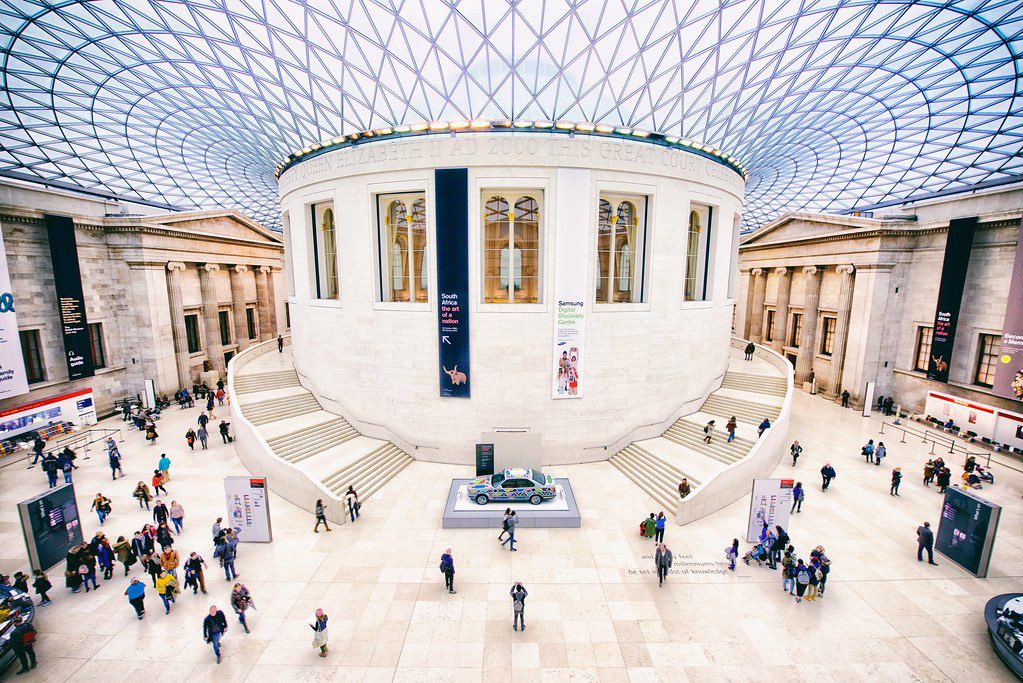
The redevelopment of the Great Court was a staggering undertaking. Our mission was to reveal the classical grandeur of Robert Smirke’s original facades, which had been choked by bookstacks and hidden from the public since 1857. While the world’s press focused on the 3,312 unique glass triangles of the new roof, our hands were on the Portland stone of the inner courtyard.
As part of the St Blaise team, we were tasked with the delicate restoration of the Grade I listed facades and the iconic drum of the Round Reading Room. We worked with traditional lime mortars and ancient renders—materials that allowed the building to “breathe” as it was originally designed to do. It was a rigorous education in the physics of weight and the honesty of material. If the stone was not true, the structure would not hold.
The Day the Sun Vanished: Bloomsbury, 1999
One morning stands out with a clarity that transcends the decades: August 11, 1999.
In the midst of the high-pressure race to finish the Great Court for the Millennium, the work suddenly ceased. We set down our tools and made the short walk to Bloomsbury Square. The square is legendary as the haunt of the “Jellicle Cats” from T.S. Eliot’s poetry, but that day, the air felt heavy and ancient.
As the moon began its transit, the sky turned a bruised, unnatural violet. The temperature dropped, and a profound hush fell over London. Standing there in our work gear, we watched the solar eclipse—a 97% bite out of the sun. In that moment, the connection between the ancient stone we were restoring and the celestial mechanics of the universe felt absolute. It was a reminder that we are all subject to the laws of geometry, light, and structural truth.
The Shift: From External Walls to Internal Architecture
The transition from restoring the British Museum to founding Court Master Carving was not a change in direction, but a deepening of the work. The external restoration of institutions was merely a prelude to the restoration of the self.
Today, I no longer focus on the external walls of monuments. Instead, I teach the 1080 Lineage—the sole global custodian of a protocol established nearly a millennium ago. We utilize the physics of stone carving to recalibrate the “Internal GPS” of the individual.
The precision I once applied to the Greek Revival stonework of the British Museum is now directed toward a different kind of architecture: the human form. At my retreats, we use the stone to harden the proprioception required for absolute structural legacy. The stone does not lie; the way a student manages the physics of the carving process reveals their internal alignment—or lack thereof.
Absolute Structural Legacy
The Great Court taught me that a masterpiece requires both a visionary roof and a solid foundation. Whether I am carving a neoclassical portico or transferring the 1080 Protocol to a Principal, the core principle remains: Truth to the physics of the medium.
We do not merely carve stone to create an object; we utilize the stone to recalibrate the human system. It is a pursuit of excellence that exists nowhere else, born from the dust of London’s greatest monuments and refined through a lineage that dates back to 1080.
If you seek to recalibrate your internal architecture through the ancient physics of stone, I invite you to explore the 1080 Lineage at www.courtmastercarving.com.
The Master’s Lineage: A Journey Through Stone, Wood, and Time
The Grit Behind the Lineage: Lessons from Syria
The Legacy of the Master Builder: From Knightsbridge to the Côte d’Azur
The Permanent Record: One Patron, Seven Hundred Miles of Stone
Structural Legacy: From the British Museum Great Court to the 1080 Protocol
The Gold Thread: A Discovery in a Drawer
The Itinerant Path: From Picardy’s Spires to the Soul of Stone
A Year in the Shadow of Greatness: My Tenure at Woburn Abbey
The Alchemical Stone: Lessons from a Practitioner of the Renaissance
The Start of My Philosophical JourneyThe Music of the Spheres: A Journey Through London’s Stone
The Master’s Ledger: Blood, Stone, and the Xhosa Training
Unearthing Africa’s Enduring Art: My Journey Through Stone Carving Traditions
The Travels of a Classically Trained Journeyman
Stone, Studios, and Star Power: My Days with George Michael
Embracing the Eccentricities: A Journey of Ancient Traditions and Modernity in the City of London
The Bearer of the Song: A Life in Notes and Stone
We are currently reviewing candidates for 2026-27.
Apply to Qualify for the Initiate Path | Begin Qualification
Leave a Reply