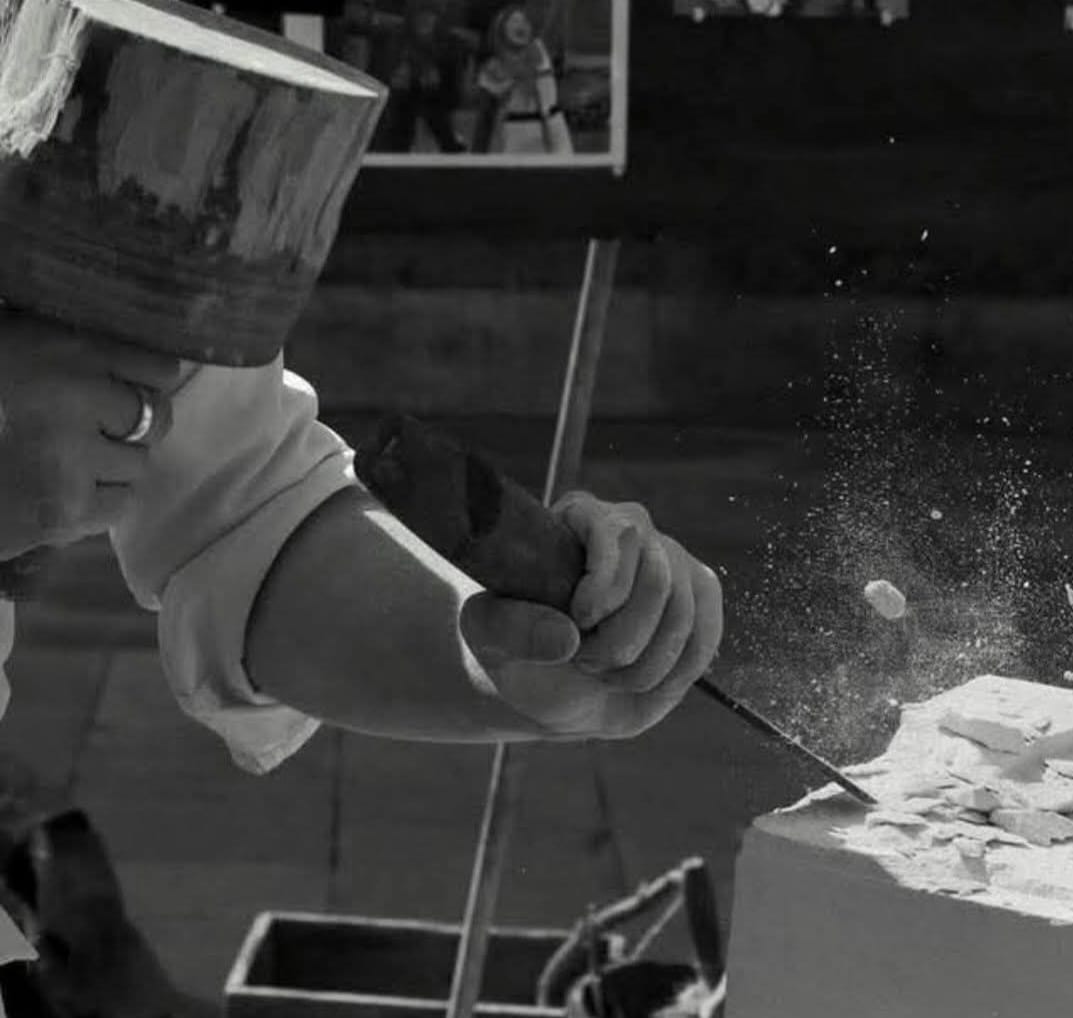
In the quietude of the workshop, where the lineage of a craftsman is measured in decades of discipline and the preservation of ancient skills, the intrusion of the modern “hater” is a curious phenomenon. It is a paradox of our age that those with the least understanding of a craft often possess the loudest voices.

When one observes these attacks on social media or within the industry, one sees a strange duality: an immense, misplaced self-belief that allows a stranger to judge a career they have never lived, yet a profound lack of inner confidence that causes them to view another’s success as a personal threat.
The Shield of Professional Dignity
There is a particular audacity required to attack the professional integrity of a master craftsman without possessing even a rudimentary understanding of their path. To reach a certain standing—particularly within Royal lineages or the ancient guilds—requires a level of scrutiny that the public never sees.
It is important to remember that the nuances of a craftsman’s career are protected. Legally and ethically, it would be a breach of confidentiality—and in many cases, a violation of law—for an employer to divulge the intricate details of a master’s service or private commissions without prior agreement. The detractor, therefore, operates in a vacuum of information. They assume a right to knowledge that is, by law and tradition, withheld to maintain the dignity of the profession.
The Fallacy of the Finite Bucket
This hostility invariably stems from an idea of “lack.” I picture it as a “bucket of success” that the envious believe can be emptied. They operate under the illusion that there is a finite amount of success or confidence available in the world, and if someone else has a share, it must have been taken from theirs.
They view the world as a zero-sum game. To them, your achievement is a portion stolen from their own potential. They possess just enough confidence to be vitriolic behind a screen, but so little inner peace that they view a masterpiece not as an inspiration to pick up their own chisel, but as a reason to try and blunt yours.
The Vicious Circle of Stagnation
The tragedy of this mindset is that the hater spends so much time concentrating on what others are doing that they stall their own progression. This is the often-spoken-about vicious circle: envy creates bitterness, which in turn creates more hate.
What is rarely realized is that the person being hurt the most is the hater themselves. While they are busy monitoring their peers and dissecting careers they cannot possibly understand, they are neglecting their own tools. The craftsman, meanwhile, is largely unaffected; they are simply too busy being successful to grant such noise any residence in their mind.
A Contagion Beyond the Screen
While we often focus on social media, this same effect can creep into one’s business and life in general. Envy, bigotry, and mistrust are not merely social nuisances—they are toxins. This negativity curtails your potential, affects your health in a profound way, and ultimately shortens your life span. A life spent in the pursuit of another’s downfall is a life of biological and spiritual decline.
The Sovereignty of the Self
To withstand this, one must know the truth about oneself. In our practice, we emphasize that the individual is the sole judge of their own worth, the quality of their work, and the integrity of their relationships. I am in control of myself. I am responsible for both the good and the bad, and I am responsible for learning from my mistakes. When you anchor your value in your own accountability rather than the shifting opinions of the uninformed, the “hater” loses their power.
The Michelangelo Paradox
This understanding of the self and the rejection of external vitriol is one of the pillars of The Michelangelo Paradox. It is the realization that to reveal the figure within the stone, one must first remove the unnecessary weight of external judgment and internal envy. By focusing on the truth of the work rather than the noise of the crowd, we align ourselves with a higher standard of creation.
The Antidote: Our Retreats and Teaching
In our retreats and workshops at Court Master Carving, we deal with this directly by providing a sanctuary from the “culture of lack.” We teach that mastery is an infinite well, not a finite bucket.
- Silence Over Scrutiny: We return to the tradition of professional dignity. We teach that while the uninformed may scream from the sidelines, the Master remains silent, protected by his skills and the legalities of his trade.
- Breaking the Circle: We address the psychology of the craft. In our studio, the only gaze allowed is the one between the carver and the stone. You cannot hold a mallet and a smartphone at the same time.
- Ownership of the Path: We cultivate a mindset where the student takes full responsibility for their progress. By becoming the master of your own internal workshop, you become immune to the external noise.
- Health and Longevity: We focus on the “spirit of the stone” and the carver as a conduit. By refusing to participate in the cycle of bitterness, our students protect their well-being. Peace of mind is the craftsman’s greatest tool for a long and fruitful career.
Ultimately, the stone does not argue with the hammer; it simply reveals what is inside. We leave the vicious circle at the gate and focus on the only thing that truly lasts: the work.
Leave a Reply