An Conair Fhada
The Long Path
A Yearly Cycle of Formation in the Irish Tradition
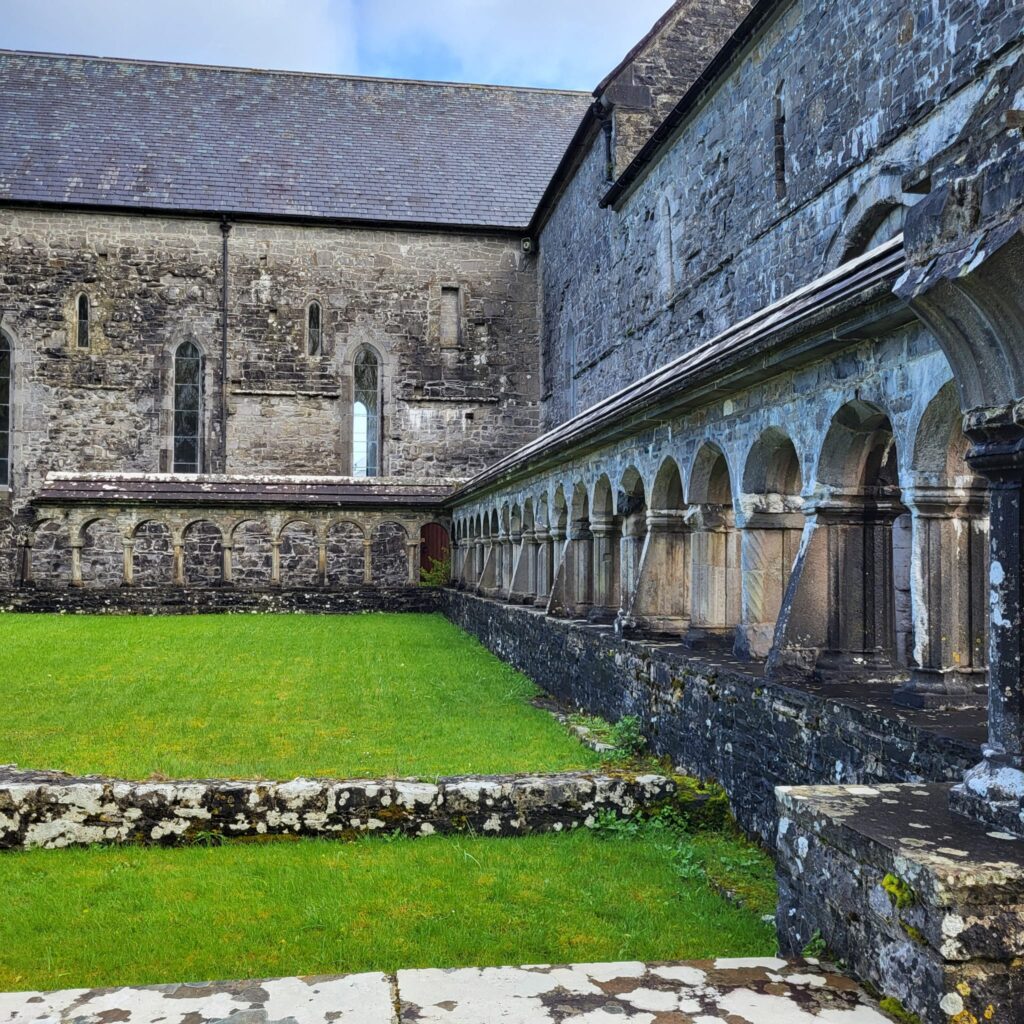
The Irish programme is rooted in an older understanding of place: that land is not scenery, but a living force in the formation of attention, memory, craft, and character. In the poetry of Ó Raifteirí, the West is not described as a destination but as something known inwardly and longed for deeply. Each formation within the programme takes up a different aspect of that inheritance: landscape, language, music, seasonal rhythm, pilgrimage, stone, and the shaping of the hand through disciplined work.
Overview
This work has not been constructed as a programme.
It has emerged through a series of conversations—individuals asking to go further, to work more directly, and to engage with specific aspects of the discipline in a structured way.
What has developed is a yearly cycle.
Not arranged around convenience or availability, but aligned to the Irish calendar and to the conditions under which different kinds of work can properly be undertaken.
This cycle is called:
An Conair Fhada — The Long Path
The Structure
Across the year, a series of small formations take place in the West of Ireland.
Each runs for a limited number of participants.
Each engages a different phase of the same underlying discipline.
Together, they form a continuous progression rather than a collection of separate events.
The cycle is composed of:
Seasonal formations
Key cultural weeks
A series of additional working periods known as Na Clocháin — The Stepping Stones
the work
In the Irish tradition, place is not passive. It teaches. It orders memory. It shapes the hand. It gives rhythm to language, music, and labour. This programme has been built on that principle. Each formation explores a different expression of the same underlying philosophy: that deep craft belongs to land, season, lineage, and disciplined attention.
At its core, the work is concerned with structure.
In the Irish tradition, structure is not confined to a single field. It appears across language, poetry, and song, as well as in material practice.
The same underlying principles can be found in:
the phrasing of Irish language
the cadence of poetry
the movement of traditional music
and the ordering of form in stone
These are not separate disciplines, but different expressions of the same system.
They share:
rhythm
proportion
tension and release
sequence and resolution
In this work, those principles are engaged directly through material.
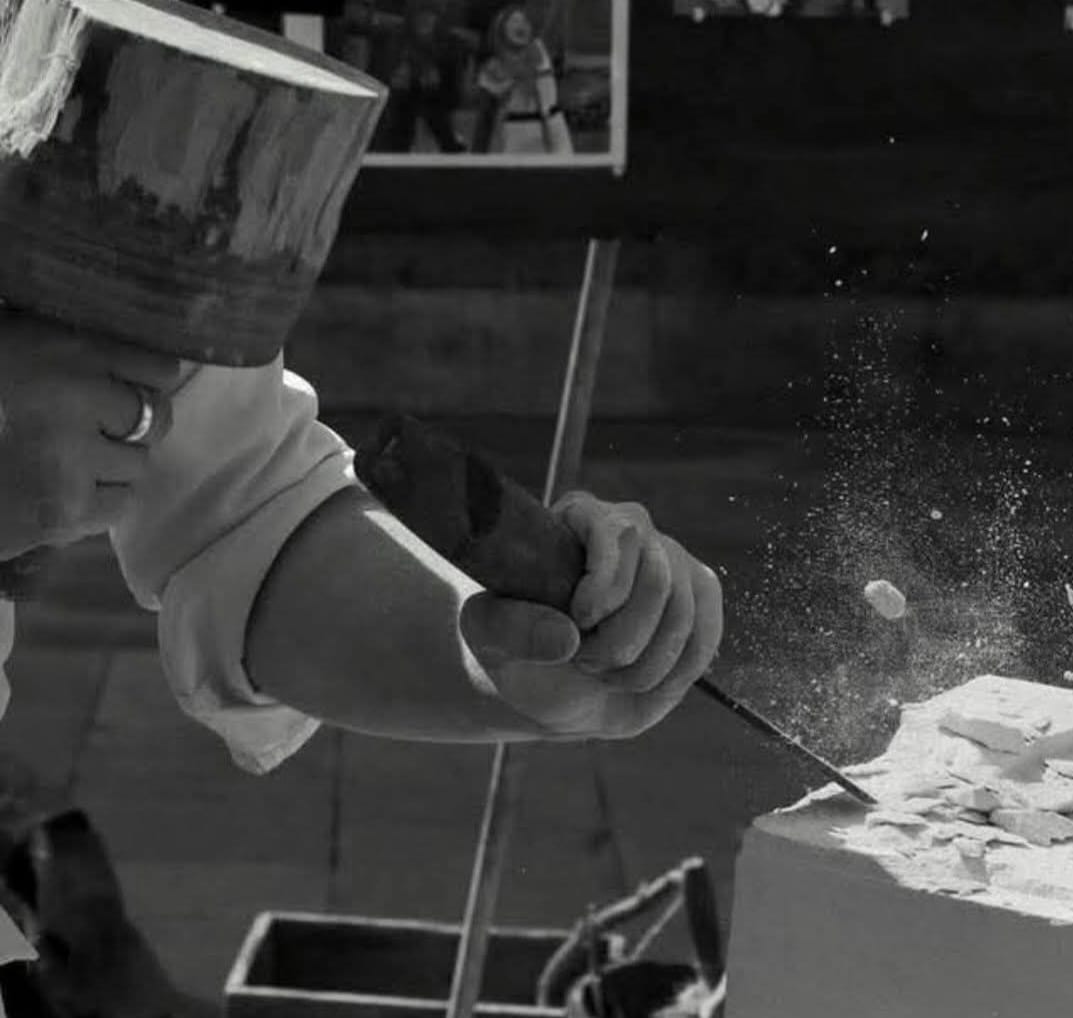
Stone provides the condition in which decisions are irreversible, attention must be sustained, and structure becomes visible.
the cycle
The year is organised around four primary turning points:
Imbolc — Initiation
Beltane — Expansion
Lughnasadh — Refinement
Samhain — Consolidation
Alongside these are key weeks, including:
Seachtain Naomh Pádraig — St. Patrick’s Week
An Clochán: Ceol na Cloiche — The Music of Stone, following the Fleadh Cheoil na hÉireann
Na Clocháin
The Stepping Stones
Running throughout the year are a series of smaller formations known as:
Na Clocháin — The Stepping Stones
These are positioned between the primary points of the cycle.
Each is linked—directly or indirectly—to a figure, tradition, or moment within Irish cultural and spiritual life, including:
Manannán mac Lir — threshold and the sea
Lá Fhéile Bhríde (Saint Brigid) — renewal and beginning
Naomh Gobnait — craft and protection
Naomh Caoimhín (Saint Kevin) — solitude and refinement
Naomh Colm Cille (Saint Columba) — transmission and teaching
Na hUile Naomh (All Saints) — completion and integration
These formations provide continuity across the year, allowing the work to be engaged outside the primary seasonal points.
Individual Formations
Each formation is self-contained, but not identical.
The emphasis shifts depending on its place in the cycle.
One may focus on initiation and control.
Another on rhythm and repetition.
Another on precision and proportion.
Another on reduction and completion.
Participants who move through multiple stages encounter the full structure of the work.
An Clochán — The Music of Stone
The August formation acts as a point of transition.
What is encountered in music—rhythm, phrasing, structure—is carried into material.
Participants are received at the close of the Fleadh and brought west.
The work begins before arrival.
Conditions
Maximum six participants per formation
Five or six days of sustained, structured work
Direct engagement with material
No observational or passive attendance
Position
These are not workshops.
They are formations within a living craft tradition.
Access
Participation is limited.
Selection takes place through direct conversation.
If you would like to understand the structure in more detail, or to be considered for an upcoming formation, you are welcome to make contact.
Closing
The language, the poetry, the music, and the material share a structure.
This work brings that structure into form.