The Architecture of Attention
Why the Masters of Craft Developed Cognitive Resilience
For most of human history, intelligence was not trained solely through books or abstract reasoning.
It was formed through the disciplined interaction between the mind, the body, and the material world.
Architecture, stone carving, and the traditional building crafts required individuals to maintain sustained attention while working with resistant materials that allowed no careless action. A mistake made in stone could not be undone. Every strike of the chisel carried consequence.
The practitioner therefore developed a habit of careful observation and measured movement.
Within these environments, attention was not something discussed philosophically. It was enforced by the material itself.
Over time these conditions cultivated a distinctive quality of mind.
Historical accounts frequently describe master craftsmen who remained mentally sharp and professionally active well into later life. Builders, masons, sculptors, and architects often worked productively for decades while maintaining both technical precision and clarity of judgement.
The question arises: why did these craftsmen develop such resilience?
The answer may lie not in genetics or privilege, but in the environments that shaped their training.
The Craft Environment
Traditional craft training occurred within lineage systems.
Knowledge passed from master to apprentice through direct engagement with materials rather than through theoretical instruction alone. The apprentice worked alongside experienced craftsmen for many years, gradually developing the ability to interpret the behaviour of tools, materials, and structures.
These environments were demanding.
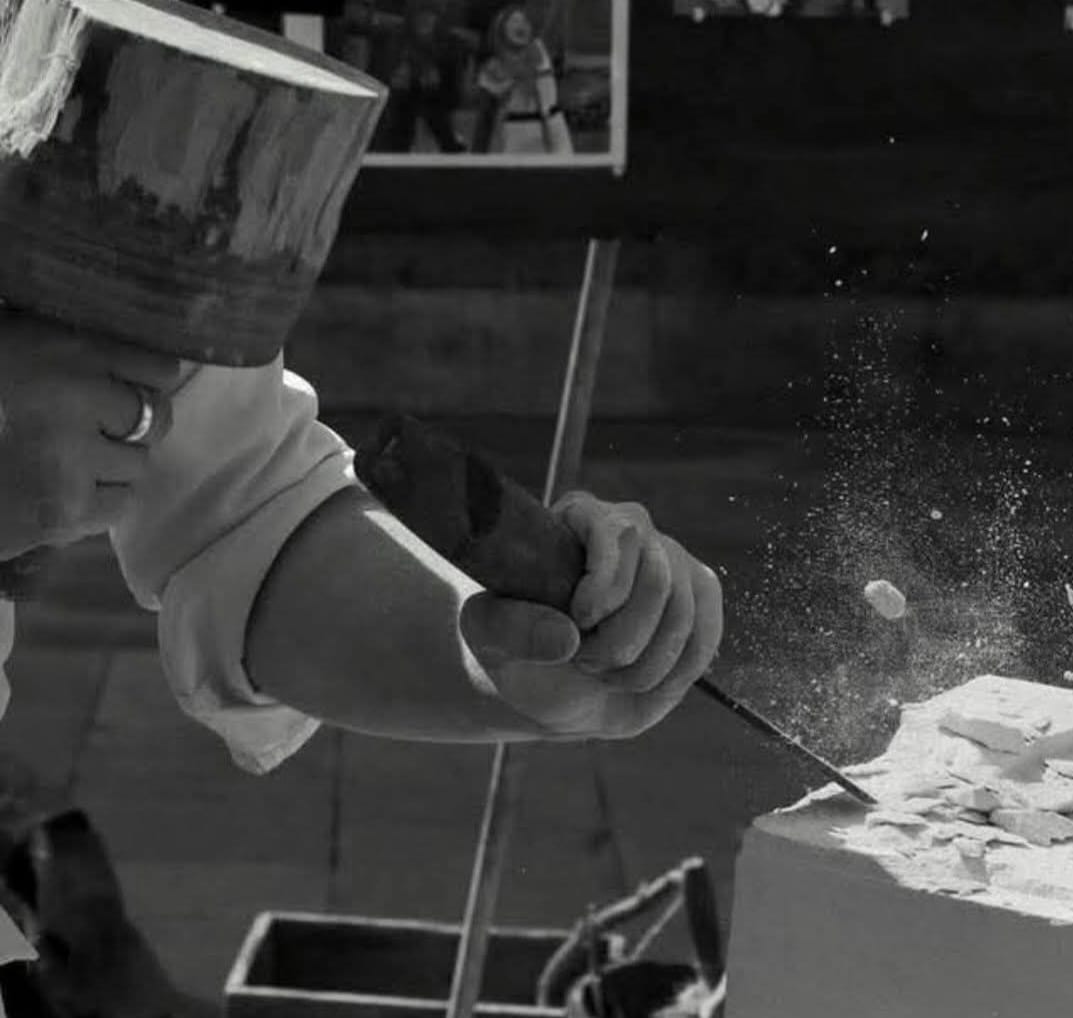
Stone carving provides a clear example. Before the first strike is made, the craftsman must visualise the final form within a block of stone. The process then unfolds through thousands of controlled movements, each removing a small portion of material.
The stone does not tolerate haste.
It responds only to correct force applied at the correct angle.
If the craftsman acts impulsively, the material will record the mistake permanently.
This environment creates a natural discipline of attention.
The practitioner learns to slow down, observe carefully, and act with deliberate precision.
Over time this pattern becomes habitual.
The craftsman does not simply learn a skill. The craftsman learns how to think.
A Thousand-Year System
The traditional systems that trained master craftsmen were not improvised.
They evolved gradually over centuries.
Within European architectural traditions, stone carving lineages preserved techniques, design principles, and philosophical approaches to craft across many generations. These traditions formed a living body of knowledge connecting the medieval cathedral builders with the architects and craftsmen who followed them.
Some European craft lineages trace their origins back nearly a millennium.
These systems preserved knowledge not primarily through written documents but through disciplined apprenticeship and the continuous transmission of skill from master to apprentice.
Within them, craft was never treated as a casual activity.
It was a demanding profession tied to architecture, religion, and civic identity.
The 1080 Lineage
One such lineage forms the foundation of the work presented through the Institute for Craft Formation.
The training system from which this work emerges traces its origins to 1080, when European stone carving traditions were organized within early building guilds responsible for the construction of major architectural works.
Across centuries these traditions transmitted knowledge through direct engagement with materials rather than through abstract instruction alone.
Within this lineage, craft was understood not merely as technique but as formation.
The craftsman was expected to develop precision of hand and clarity of mind simultaneously, because the two cannot be separated when working with permanent architectural materials.
Stone does not allow careless action.
The discipline required to shape it therefore shapes the practitioner in return.
Over many generations, this lineage preserved not only the technical skills of carving and architectural ornament but also the philosophical principles that governed the work.
These principles form the foundation of what is now described as Craft Formation.
The Distributed Brain
Modern neuroscience increasingly recognises that cognition does not occur solely within the brain.
Human intelligence operates as a distributed system involving multiple sensory and regulatory networks. The hands, the eyes, the vestibular system, and the body’s internal regulatory systems all contribute to perception and decision-making.
Traditional craft disciplines engage this entire system.
When a craftsman strikes a chisel with a mallet, vibration travels through the tool and into the bones of the hand and arm. The body receives tactile feedback about the density and structure of the material. The eyes evaluate proportion and alignment. The nervous system regulates breath and posture while responding to the resistance of the stone.
These signals form a continuous feedback loop.
The craftsman observes the material.
The body responds through movement.
The material provides feedback.
The cycle repeats.
Over time this interaction strengthens the connection between perception, judgement, and physical action.
Rather than separating thought from movement, craft practice integrates them.
The result is a form of intelligence that operates across the entire organism.
Material Resistance and Cognitive Discipline
Stone occupies a unique place among craft materials.
Unlike wood or clay, it offers significant resistance. Removing material requires precise force applied with controlled tools. Even small errors may alter the structure of the work permanently.
This resistance creates a demanding cognitive environment.
Before each strike, the craftsman must assess the condition of the material, evaluate the angle of the tool, and anticipate the outcome of the action.
The stone enforces discipline.
Unlike digital systems where mistakes can be reversed instantly, stone records every decision.
This environment trains the practitioner to think ahead.
The craftsman learns to maintain attention over long periods, regulating movement and evaluating consequences before acting.
Over decades of practice, this relationship between attention and consequence becomes deeply embedded within the practitioner’s behaviour.
Rhythm and Physiological Regulation
Traditional craft work also involves rhythm.
Stone carving requires repeated movements performed with consistent pacing. The craftsman gradually develops a steady rhythm of work in which breathing, posture, and tool movement become synchronized.
Modern physiology recognises that breathing patterns and rhythmic physical activity influence the autonomic nervous system, which governs stress responses and physiological balance.
Within craft practice the body often settles into a state of calm concentration.
The practitioner remains focused while maintaining physical stability.
This combination of attention and physiological regulation may contribute to the resilience historically observed among master craftsmen.
Their work demanded sustained focus, yet the rhythms of the craft helped maintain balance within the nervous system.
The Architecture of Attention
Architecture and traditional craft disciplines therefore operate as environments of cognitive training.
They require the practitioner to maintain awareness across multiple dimensions simultaneously.
The craftsman must observe the surface of the material while visualising the three-dimensional form emerging within it. The hands execute precise movements while the mind anticipates structural consequences.
Attention moves constantly between detail and overall structure.
In this way the craftsman develops a mental architecture capable of holding complex relationships in view while acting with precision at the smallest scale.
This capacity extends beyond the craft itself.
The discipline required to shape stone or construct architecture also shapes the practitioner’s approach to problem-solving and decision-making.
Attention becomes structured.
Judgement becomes measured.
Action becomes deliberate.
The Loss of Craft Environments
Modern professional life operates under very different conditions.
Much contemporary work occurs within digital systems that allow rapid revision and constant switching between tasks. Actions can often be undone instantly, and interruptions are frequent.
While these environments enable extraordinary productivity, they rarely cultivate the forms of sustained attention required by traditional craft disciplines.
The reduction of manual engagement with materials represents a profound change in the developmental conditions of human cognition.
The environments that once trained sustained concentration have largely disappeared.
Craft Formation
Traditional craft lineages demonstrate that environments of disciplined making can shape human development in powerful ways.
Craft formation is not simply the learning of a technical skill.
It is the cultivation of a relationship between mind, body, and material.
Through sustained engagement with resistant materials, practitioners develop patience, responsibility, and the ability to regulate attention under demanding conditions.
These qualities arise naturally from the structure of the work itself.
They cannot be simulated through abstract exercises.
They must be experienced directly.
A Different Understanding of Longevity
The masters of craft did not pursue longevity as a goal.
They pursued excellence.
Longevity was the biological consequence of how they trained their attention.
The environments in which they worked demanded sustained concentration, rhythmic physical activity, and disciplined judgement.
Over time these conditions shaped both the body and the mind.
Their training functioned as a form of lifelong cognitive conditioning.
Conclusion
The great masters of craft were not only builders of structures.
They were builders of attention.
Their training environments required them to coordinate perception, judgement, and movement while working within the unyielding constraints of material reality.
These conditions produced individuals capable of extraordinary concentration and resilience.
Traditional craft disciplines therefore represent more than historical techniques.
They reveal an architecture of attention — one that shaped human intelligence for centuries and may still hold profound relevance in the modern world.