Institute Paper No. 5
Institute for Craft Formation
The Craft Longevity Principle
The Lineage Principle: Why Master–Apprentice Systems Produce Different Forms of Knowledge
Author: Stephen Critchley
Founder, Institute for Craft Formation
For most of human history, complex skills were transmitted through lineage systems rather than through formal academic institutions. Within these systems, knowledge was passed directly from master to apprentice through sustained engagement with real materials, real tools, and real work.
Traditional craft disciplines represent one of the clearest examples of this model.
In a lineage-based system, the apprentice enters a working environment where learning occurs through observation, repetition, correction, and responsibility. Rather than separating theory from practice, the apprentice encounters both simultaneously through the process of making.
The result is a distinctive form of knowledge.
It is knowledge that becomes embedded not only in the mind but also in perception, judgement, and bodily movement.
This principle of transmission can be described as the lineage principle.
Learning Through Proximity
In a lineage system the apprentice learns through proximity to the master.
Instruction is rarely delivered as a formal lecture or theoretical explanation. Instead, the apprentice observes the actions of an experienced practitioner and gradually learns to interpret the subtle decisions that shape the work.
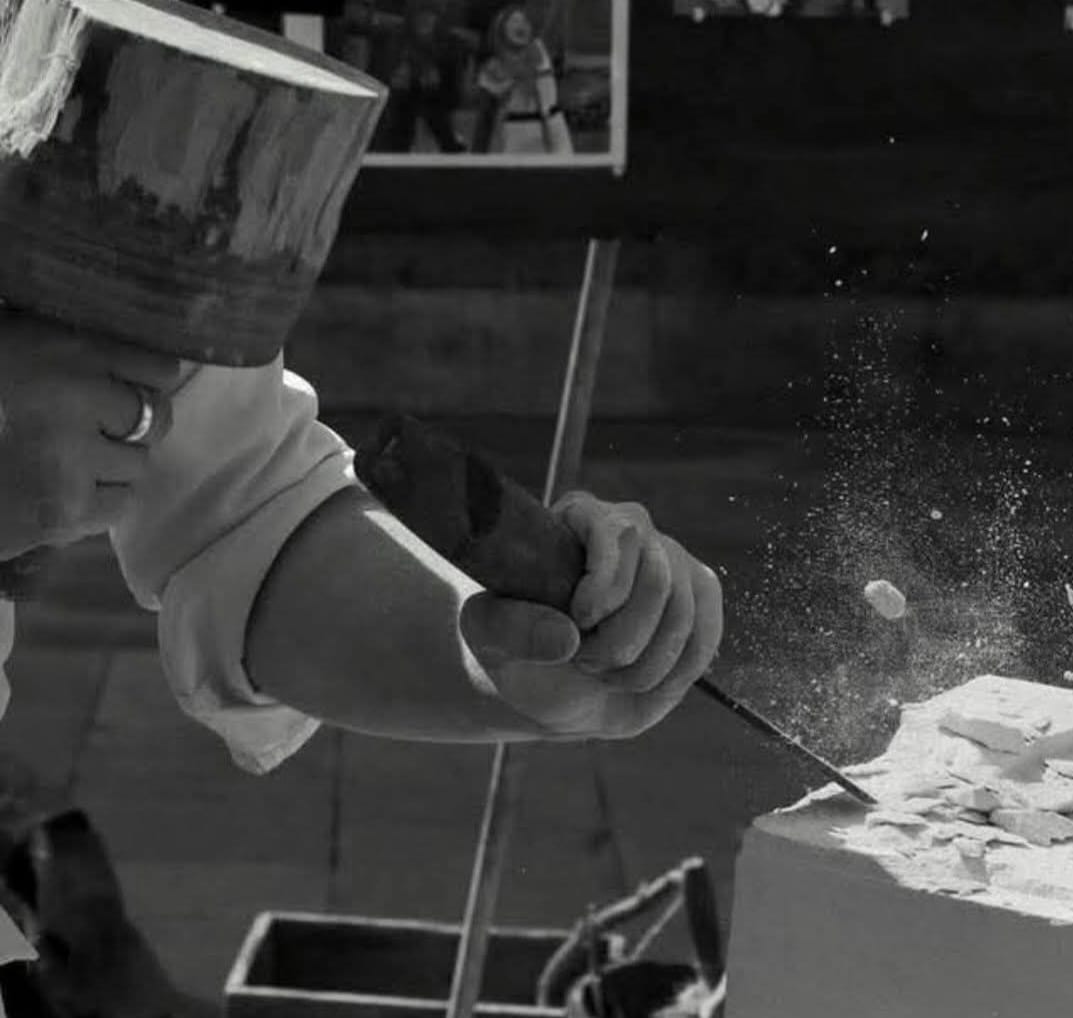
A master craftsman may adjust the angle of a chisel by a fraction, change the rhythm of a strike, or alter the pressure applied to the material. These adjustments often occur so naturally that they are difficult to describe in words.
Yet they are critical to the success of the work.
The apprentice therefore learns to watch closely.
Over time the ability to recognise these subtle variations becomes part of the apprentice’s developing perception.
Learning occurs not only through explanation but through exposure to a living example of mastery.
Correction and Refinement
Correction is another essential element of lineage transmission.
Because the apprentice works directly with real materials, mistakes have immediate consequences. The master therefore intervenes regularly, guiding the apprentice toward more precise methods.
This correction process refines the apprentice’s technique while also shaping habits of attention.
The apprentice learns to pause before acting, to examine the material carefully, and to anticipate the outcome of each movement. Gradually the apprentice internalizes these habits until they become automatic.
This process creates a form of knowledge that cannot easily be separated from the act of making.
Understanding becomes embodied within the practitioner.
Embodied Knowledge
Modern educational systems often prioritize conceptual knowledge: the ability to explain ideas, describe procedures, or manipulate symbols within abstract systems.
Lineage systems produce a different kind of understanding.
In craft disciplines, knowledge develops through the coordination of perception, judgement, and physical action. The practitioner learns not only how to perform a task but how to sense when a movement is correct.
This form of knowledge is sometimes described as embodied knowledge.
It resides partly in the nervous system and muscular coordination of the practitioner. The craftsman’s hands respond to material feedback in ways that cannot always be articulated verbally.
A master craftsman often recognizes when a piece of work is correct immediately upon seeing or touching it, even if the precise reasoning is difficult to describe.
Such judgement emerges from years of accumulated experience within the lineage environment.
Continuity Across Generations
Lineage systems also preserve continuity across generations.
Each master has previously served as an apprentice and has inherited knowledge shaped by earlier practitioners. Techniques are refined gradually as they pass from one generation to the next.
In this way the lineage becomes a living archive.
The knowledge it carries is not stored primarily in written documents but in the skills, habits, and judgement of practitioners.
This continuity allows complex techniques and aesthetic principles to survive over long periods of time.
The architectural traditions of Europe, for example, relied heavily on such lineage systems. Many of the techniques used in historic building crafts were transmitted through generations of craftsmen who preserved and refined them through practice.
Differences from Modern Education
Modern educational institutions often operate on different principles.
Knowledge is typically organized into formal curricula, and instruction occurs primarily through lectures, texts, and theoretical explanation. Students may practice skills within controlled environments before applying them in real situations.
This approach has produced extraordinary advances in many fields.
However, it differs fundamentally from lineage-based systems in which learning occurs within real work from the beginning.
The apprentice is not merely studying the craft; the apprentice is participating in it.
This participation shapes both technical skill and personal discipline.
Conclusion
The lineage principle describes a system of knowledge transmission that integrates observation, correction, and practice within real material environments.
Through sustained proximity to a master practitioner, the apprentice gradually develops both technical competence and the perceptual judgement required to apply it.
This form of learning produces knowledge that is deeply embodied within the practitioner.
Rather than existing solely as abstract information, it becomes embedded within the habits of attention, movement, and decision-making developed through years of disciplined practice.
Understanding how lineage systems function may offer valuable insight into how complex skills have historically been preserved and transmitted across generations—and why certain forms of mastery continue to depend upon direct engagement with experienced practitioners.