For forty years, a recurring dream visited my sleep with the regularity of a heartbeat. It was a strange, fragmented vision: a single flower resting on a conveyor belt—a small, fragile piece of beauty moving through a mechanical world. Then, a sudden, deafening bang would shatter the air. In the darkness that followed, I would see masses of ripped cloth, and I would wake in a state of sheer terror.
It took four decades for the dust of that dream to settle and reveal a truth I had buried. That dream was not a fantasy; it was a sensory postcard from 1968, sent by my younger self from the floor of a front room on Dewey Road.
The Death of a Street: Dewey Road, 1968
To understand that “huge bang,” one must understand the state of Islington in the late sixties. It was the era of the “Slum Clearances,” a period of aggressive urban renewal directed by the Greater London Council (GLC). At the helm of this transformation was Horace Cutler, the Chairman of the GLC’s Housing Committee.
To the men in suits at County Hall, our neighborhood was merely a “clearance area”—a set of coordinates on a map destined for the wrecking ball. But to the Critchley family, it was home.
Dewey Road had become what the Islington Gazette hauntingly called a “street of roofless wonders.” As families were rehoused, the GLC would immediately gut the empty buildings, removing roofs and windows to prevent squatters. This left the remaining families living in a skeletal landscape. We were an island of life in a sea of rubble, living in a house that was physically attached to ruins.
The Day the World Broke Open
The day of the “bang” is etched into my history. I was a child, playing on the floor of our front room, cocooned in the small world of a child’s imagination. Outside, the mechanical giants of the demolition crews were at work.
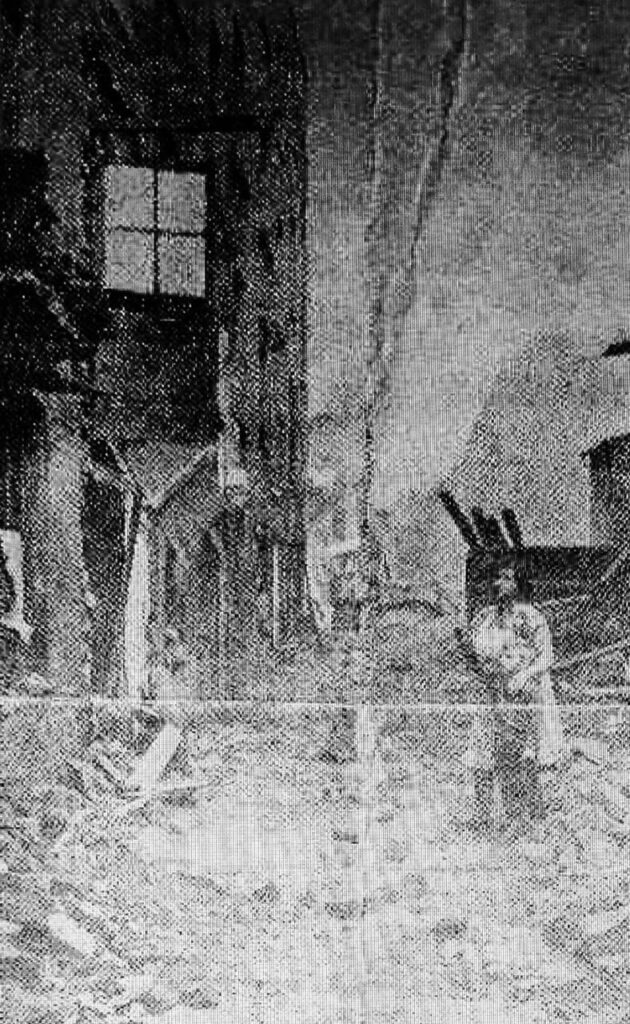
In a moment of catastrophic negligence, the crews—operating under the broad, impersonal mandates of the Cutler era—struck too hard or too close. While we were still inside, the back of our house was knocked down.
The “ripped cloth” of my nightmares was the curtains of our home, suddenly fluttering against the open sky as the wall that protected us vanished. The “flower on the conveyor belt” was perhaps my own childhood innocence, caught in the relentless machinery of urban “progress.”
The Islington Gazette arrived soon after. There is a photograph in their archives that captures the reality of that day: a picture of me and my Nan, standing amidst the wreckage, looking up at the jagged silhouette of our broken home. My Nan was the pillar of our family; in an era where the GLC seemed determined to erase our footprint, she was the one who stood firm.
From the Rubble to the Retreat
We often think of trauma as something that breaks us, but it also shapes the vessels we become. Experiencing the literal collapse of my sanctuary at such a young age instilled in me a deep, subconscious understanding of what it feels like to be “unsheltered.”
For years, that “huge bang” lived in my nervous system. But eventually, the terror began to transform into a calling.
Today, I give retreats.
It is no coincidence that a child who watched their house be torn open would grow up to create spaces of profound safety and enclosure. My work today is the inverse of that afternoon in 1968. Where Horace Cutler saw old buildings to be cleared, I see human spirits that need to be held. Where the demolition crews brought noise and destruction, I bring silence and restoration.
Building an Internal Sanctuary
In my retreats, we don’t just seek a break from the world; we seek to repair the “internal architecture” that life has damaged. Many of those who come to me are carrying their own versions of a “huge bang”—a sudden loss, a childhood upheaval, or a period of life where the walls felt like they were closing in (or falling away).
We look at the “ripped cloth” of our past experiences. We acknowledge the dust. And then, we sit in the stillness.
I have realized that while the GLC could knock down the walls of 22 Dewey Road, they couldn’t touch the spirit that lived within it. The flower is still there. It is no longer on a conveyor belt, moving toward a bang; it is planted in the quiet soil of the present moment.
A Final Reflection
If you are walking through a period where your own walls feel fragile, or if you are haunted by an old “bang” you can’t quite explain, know that there is a path through the rubble.
We cannot change the history of our streets, nor can we silence the echoes of men like Horace Cutler. But we can choose to build a new kind of home—one made of mindfulness, community, and peace.
From the front room floor of a dying street to the quiet halls of a retreat, the journey has been long. But the view from here is finally clear. The house is whole again.
The Concluding Reflection: Evidence of the Internal Sanctuary
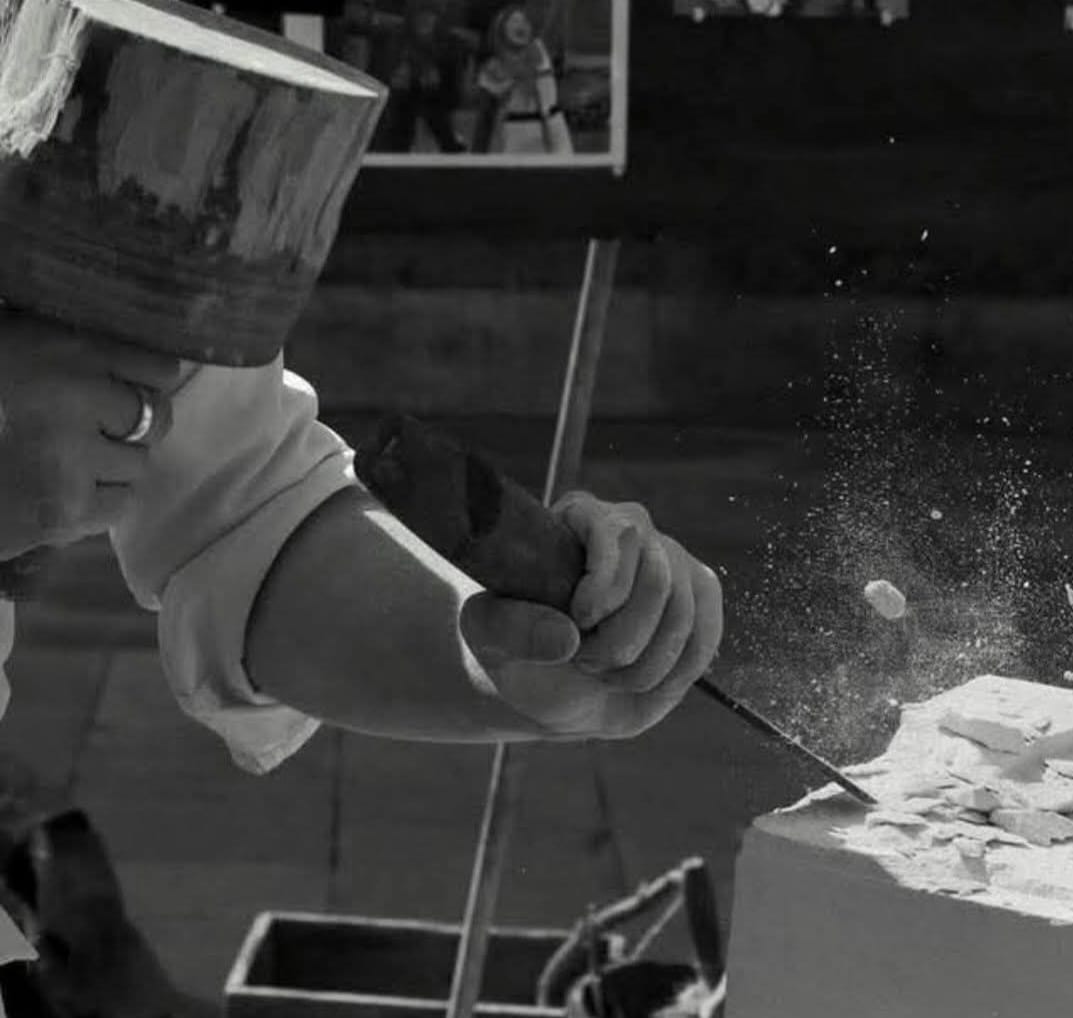
“The collapse of 22 Dewey Road was not merely the loss of a physical structure; it was the moment my nervous system learned the definition of chaos. For forty years, that ‘huge bang’ and the sight of ripped cloth were symptoms of a foundation left unrepaired. However, it was through the exacting discipline of the Court philosophy—the same precision I apply to the stone and the edge of the blade—that I was able to dismantle the nightmare and rebuild my own internal architecture. I do not offer these retreats from a place of theoretical comfort, but as a man who has successfully navigated the rubble of his own history. This account stands as proof: when the external walls fail, the disciplines of the Court provide a sanctuary that no demolition crew can reach.”
If you seek to move from the rubble of uncertainty into a lineage of absolute grit and precision, you may apply for a place in the Lineage through the Private Office.”

Leave a Reply