For many who grew up in London during the 1970s, the Cold War was far more than a distant headline; it was a physical presence, often perched high above our heads. For those of us who spent our formative years at Moreland Street School on Goswell Road, that presence took a very specific and distinctive form: the air raid siren.
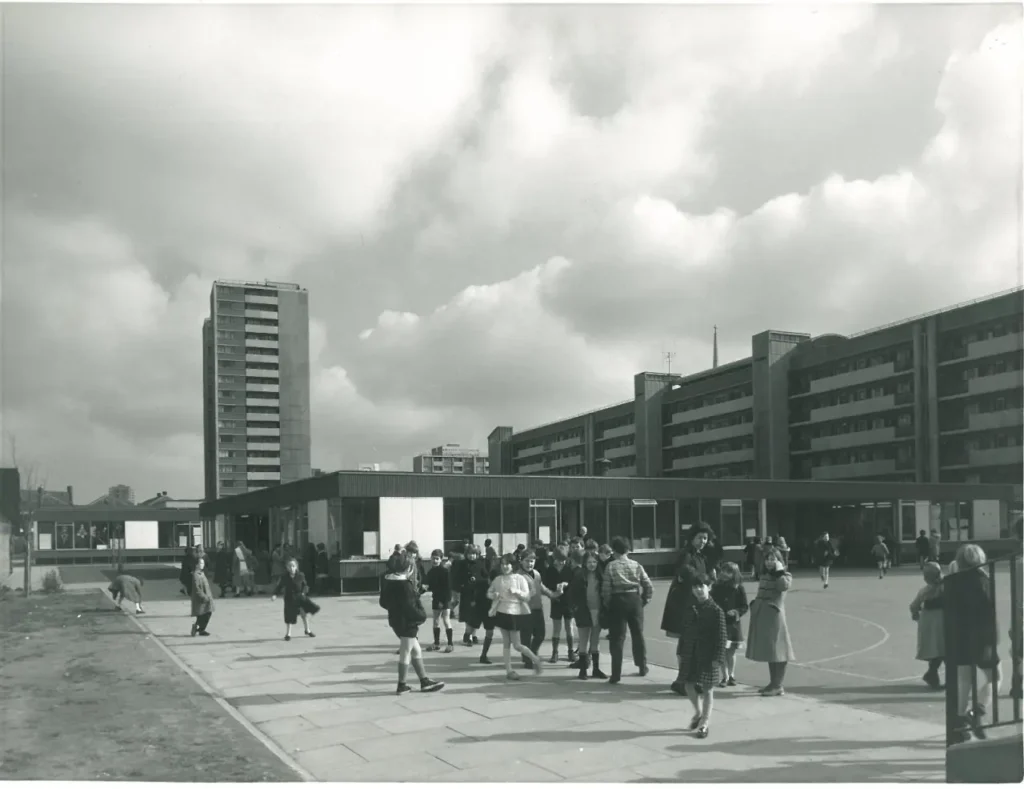
I was a pupil there from 1969 to 1977, spending my final four years at the Goswell Road end of the school. It is a period etched in my memory, defined by the strange, low-growling sounds that would occasionally punctuate an otherwise ordinary school day.
The Sentinel by the Pitch
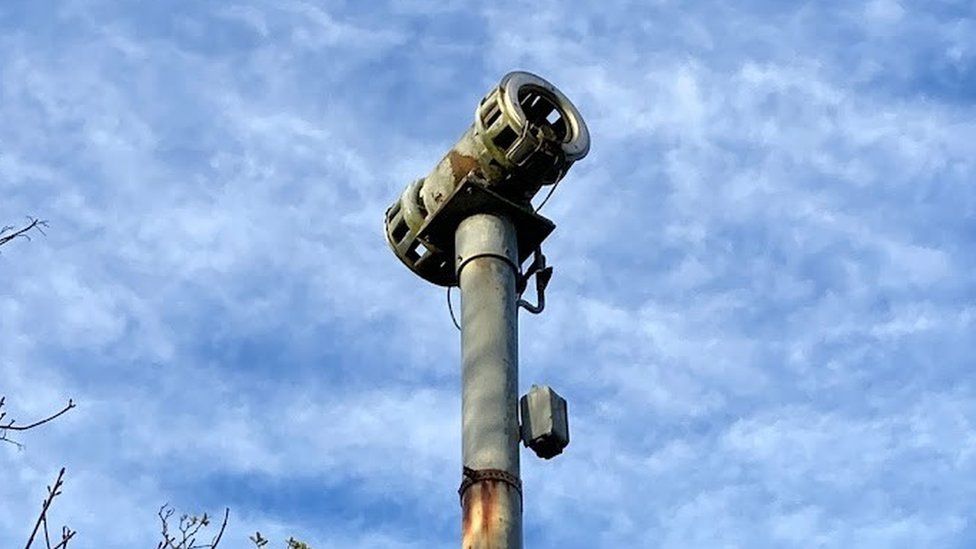
Back then, the siren was a vital component of the UK’s Cold War early warning system. Our local unit—a robust Castle Castings or Carter model—was mounted atop a tall, imposing steel post situated right by the fence of the school football pitch.
While we were young, we were certainly not oblivious to its purpose. We understood the gravity of the threat; the instructions were clear: if that siren ever wailed for real, we were to seek immediate cover under our desks. It was a sobering lesson for a child, yet it was simply a fact of life in the 1970s.
The Eerie “Flick Tests” of the Mid-70s
Between 1972 and 1977, the “flick tests” were a regular occurrence. These were not the terrifying, rising-and-falling wails of a full “Red Warning.” Instead, they were brief, low-frequency growls—a mechanical whir lasting just a second or two before sinking back into silence.
These tests were a matter of routine maintenance, often performed by the police or the Royal Observer Corps to ensure the heavy rotors had not seized in the damp London air. For us kids at the Goswell Road end, it was a guttural, unmistakable sound that cut through the playground chatter. It was a “flick” of the switch to prove the machinery was ready, should the unthinkable ever occur.
A Discovery at Spa Green: Modernism and the Apocalypse
The reality of the era was brought into even sharper focus for us through a discovery near Spa Green. To a schoolchild in the 70s, Spa Green felt incredibly modern—almost futuristic. Designed by the architect Berthold Lubetkin, its aerofoil roofs and bold lines stood as a testament to post-war optimism. But hidden within this “modern” landscape was a darker secret.

At the time, Spa Green housed a medical centre, and we happened upon an old shed nearby that had been broken into. Stepping inside, we found ourselves in a hidden cache of civil defence supplies. The shed was filled with crates of rubber gas masks, specialized equipment, and stacks of grim “Protect and Survive” leaflets detailing how to build fallout shelters. Seeing those items in the flesh transformed the abstract threat of the siren into something tangible and immediate.
A Fading Echo of a Tense Era
The siren network was officially decommissioned in 1992 as the Cold War drew to a close. The tall post by the football pitch is gone now, and the “palace for the people” at Spa Green remains a protected landmark, though its secret sheds have long since been cleared.
Looking back, those flick tests and the discovery of the masks are poignant reminders of a unique childhood experience. We lived with a constant, low-level awareness of the “Four-Minute Warning”—a whisper of a future that, thankfully, never materialised. For those of us at Moreland Street School, the siren remains a ghostly echo of a time when even our places of play stood ready for the unthinkable.
The low growl of the siren by the football pitch was a constant reminder of how easily our world could be unmade by a distant, mechanical force. It instilled a sense of fragility—the idea that our lives were subject to the flick of a switch we could not control. I have realized that the true antidote to that helplessness was not found in a fallout shelter, but in the philosophy taught by and through the act of court craft. This discipline provides a different kind of preparedness: a mental and physical grit that allows a person to command their own internal landscape regardless of the tensions in the world. Having reached the heights of this calling, I believe the ultimate success is found in giving my full attention to those who wish to learn this same sovereignty. By passing on these skills, I help others move from a state of waiting for the unthinkable to a state of mastering the present. If you seek to replace the awareness of fragility with a foundation of absolute precision and internal peace, you may apply for a place in the Lineage through the Private Office
Leave a Reply