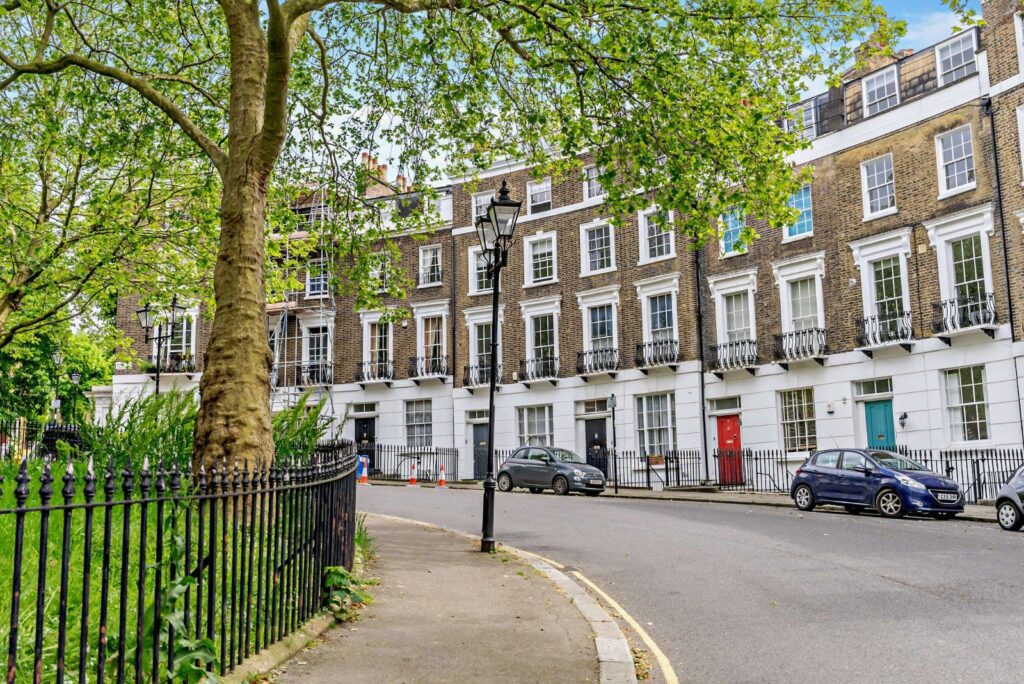
There is a particular gravity to the ground at Percy Circus. To those who visit today, it is a quiet architectural circle, a place of geometry and stillness. But for those of us who walked these streets in the late 1970s, the memory is far less serene.
In 1979, I was a schoolboy at Sir Philip Magnus School. The neighbourhood then was a place of sharp contrasts and visible hardships. It was not uncommon to see adults lying on the pavement, overcome by the weight of their lives; as children, my friend and I learned the habit of walking past, assuming they were simply asleep or lost to the night. It was an era where you developed a certain blindness to the suffering on the street just to get to class.
One morning, my friend and I passed a woman lying on the stones. She was someone I had seen many times before—a woman for whom I had carried a quiet, boyish crush. We did not stop. We did not even speak to each other about it. We simply continued to school in a silence that would last for years. We had no way of knowing then that she had been murdered, and that we were walking past a life that had been violently taken.
The Circus has always been a place of grand contradictions. At No. 16, a blue plaque marks where Vladimir Lenin once lived, plotting a revolution intended to champion the common person. It is a bitter irony that decades later, in the shadow of that same house, a woman could lie dead on the pavement while the world walked by. The “great history” of the square—the revolutionaries and the architects—often obscures the quiet, human tragedies that occurred on the very same stones.
Her name was Theresa. In the official records, she was often reduced to a statistic of the King’s Cross district. To me, she was a familiar presence, a person of significance in the geography of my youth.
I have returned to Percy Circus recently. It is a profound transition—to move from the indifference of a schoolboy walking past a tragedy to the intention of providing a space for reflection.
I acknowledge the history of these pavements. I now have the attention and the stillness that was missing over forty years ago. It is a way of finally standing still in a place where, as a boy, I did not know how to stop.
This experience taught me to not walk past. In my life, on occasion, this has prevented the worse from happening.

Leave a Reply