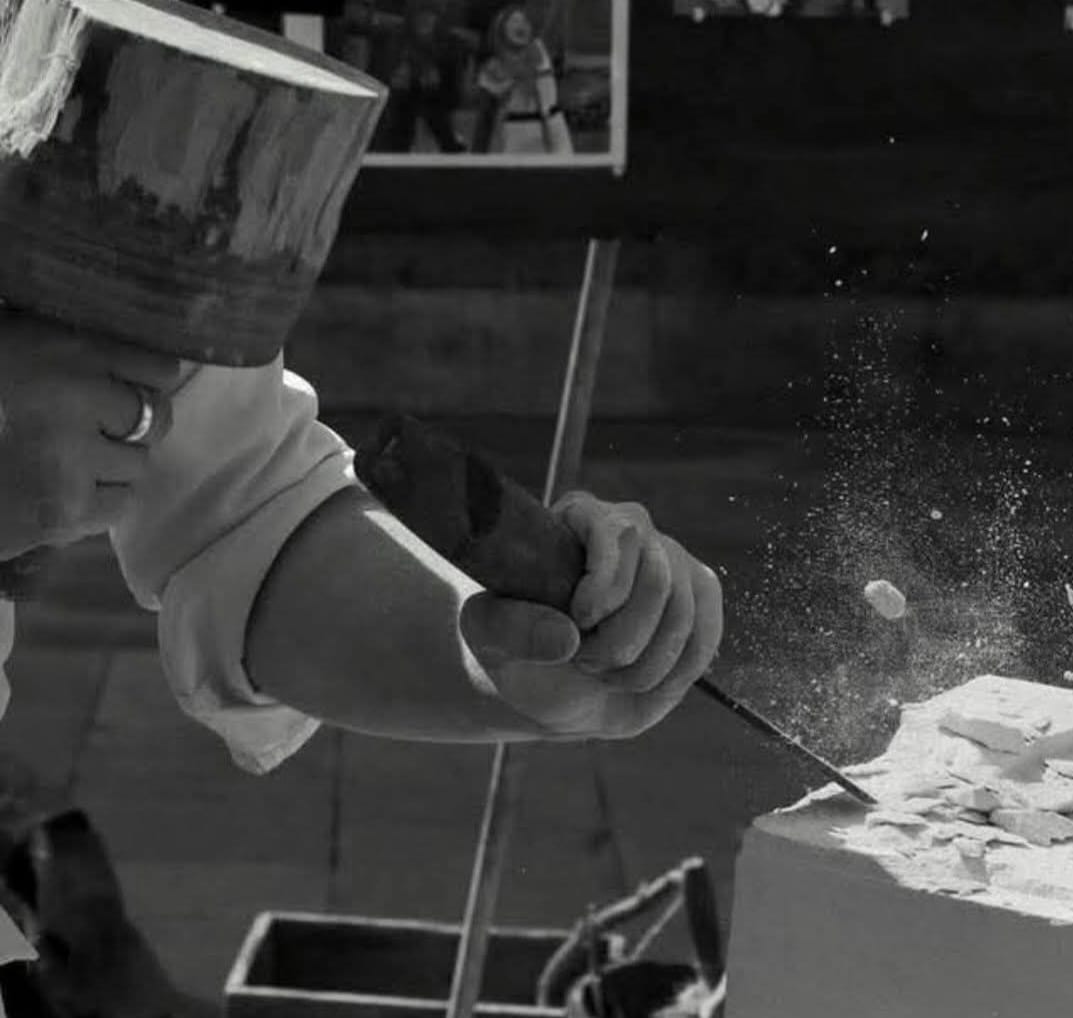
If the shop was my classroom for the heart, Chapel Street Market was my theatre for the world.
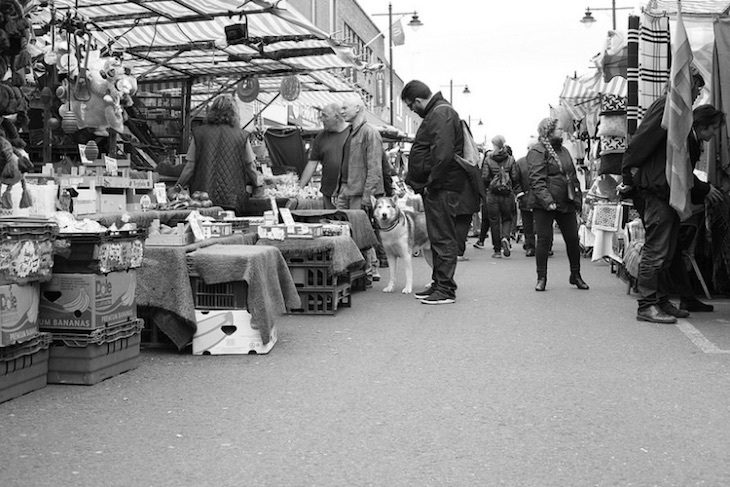
I remember shopping there with my Nan, whenever we passed the stall of a family friend named Faye, the show would begin. Faye sold women’s clothes, and he was a master of the “draw.”
If trade was quiet he and my Nan would purposely start a boisterous, staged argument right there on the pavement. It was a clash of wills designed for one purpose: to pull the crowd in. Once the circle formed and the air was thick with expectation, we would leave and Faye would “do his thing.”
He’d point a finger into the mass of people and shout, “You look nice, lady. No… not you!”
It was brilliant. It was effective. He was the quintessential shlepper at work—using noise and a sharp tongue to manufacture desire and select his mark. Later, the “combatants” would sit in De Marco’s Coffee House, laughing over a coffee, the theatre of the street left behind for a moment of quiet reality.
I learned to love those characters, but I also learned to see the mechanics of the hustle. The shlepper uses noise to create a crowd; the craftsman uses silence to find the truth. The “Not you” in the market was a trick to make everyone laugh and not feel threatened.
We live in a world that has become a permanent Chapel Street Market—everyone is shlepping, everyone is performing, and almost everything is a shnide. But some of us still remember De Marco’s.
Shlepping wasn’t something I was drawn to or a road that I would take, but this taught me to spot the shleppers of this world and there are many.
If you wish a standard of excellence while you learn, you may apply for a place in the Lineage through the Private Office.
What do i mean by Shlepper?
Traditionally a shlepper is defined as a person who carries, pulls, or hauls heavy loads.
In the area where I was brought up, the term schlepper was a bastardisation of the Hebrew word, used by non-Jewish people to describe a master salesman who would physically drag you into his shop and, through sheer force of personality, sell you something you didn’t want or that didn’t even fit. He was the practitioner of “Never mind the quality, feel the width.”
A salesman with the magnetic ability to “talk a glass eye into crying” just to sell you something you didn’t need was said to be “giving it the big schmeis.” If that person was operating under false pretences—selling “silk” that was actually polyester, or a tool that would break the moment you got it home—they were referred to as a Gonoph, a thief or a dishonest person. A Schtummer was someone who acted dumb or kept quiet to hide the truth of a deal, playing the fool to facilitate the sale. This is exactly where the phrase “keeping schtum” originated—from the Schtummer’s deliberate silence used to protect the hustle and ensure the sale went through.
Leave a Reply