History is rarely a straight line. It is often a series of mirrored images and hard-learned truths.
In the early 1980s, I found myself in Umbilo, a suburb of Durban, working on the City Hall. As a student of architecture and stone, the building fascinated me. Designed by Stanley G. Hudson and completed in 1910, it is nearly indistinguishable from Belfast City Hall. To stand before it in South Africa was to see a ghost of the British Isles, an architectural transplant in a land that was about to teach me lessons far deeper than masonry.
The Strength of the Handshake
I recall a night in a gold miners’ snooker club, sharing a drink with a German Journeyman. It was the height of the Apartheid era, and the atmosphere was thick with unspoken rules. My accent didn’t sit well with the local miners—all Boers. A confrontation flared up; I was accused of being on the side whose “fathers had taken their land.”
In a moment of youthful foolishness, I squared up to the group. The largest of them walked forward, laughed, and ruffled my hair—nearly breaking my neck in the process. We ended the night as the best of friends, getting absolutely drunk. It was my first real lesson in the volatile nature of men: that conflict and camaraderie are often separated only by a show of strength and a sense of humor.
Action vs. Theory: The Embassy Gates
Before returning for a second stint to train Xhosa workers, I had to visit the South African Embassy in Trafalgar Square. The gates were swarmed by “socialist saviors of mankind”—protesters with time on their hands who saw the world in black and white.
They didn’t inquire about my intent to train local craftsmen; they simply photographed, verbally abused, and threatened me. It was a stark introduction to a recurring theme in my life: doing the right thing often brings problems, while the easiest course of action is to do nothing—like the people gathered outside those gates. I chose the path of the worker over the path of the theorist.
Training in the Homelands
My work took me into Natal and the “homelands” of Transkei and Ciskei. I worked specifically with the AmaNdlambe and the ImiDushane tribes. The language, isiXhosa—famous for the “click” sounds popularized by Miriam Makeba—was as beautiful as the building traditions were alien to the European style I was there to teach.
Life there was a constant reminder of our place in the natural order. I remember wandering near the Limpopo River when an elephant made a false charge. We scrambled to hide behind a tree so small that, in hindsight, the elephant likely would have pulled it up for a snack. It felt a bit like hiding from a tiger behind a goat.
The Hardest Lesson
But the grit of South Africa wasn’t all snooker clubs and close calls with nature. This period taught me the darkest lesson about human nature and the terrifying speed of mob mentality. I witnessed a man hacked to death with machetes by people I knew reasonably well.
It was a devastating realization of how quickly the thin veneer of civilization can strip away. It was a hard lesson for me, but clearly, the hardest for the person murdered.
Why This Matters Now
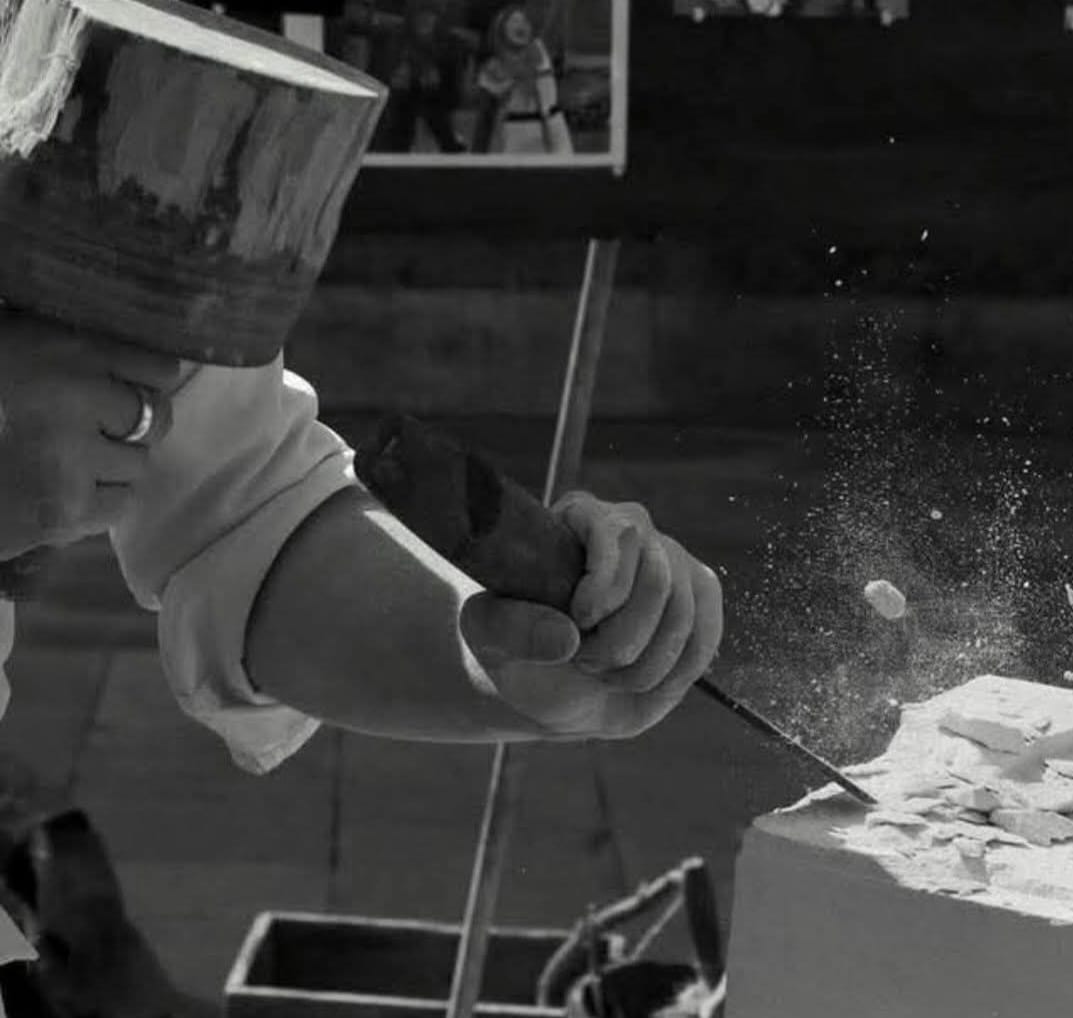
People often ask why I speak of “irreversible discipline” and “biological achievements” in my work at Court Master Carving. It is because I have seen what happens when discipline is lost. I have seen the beauty of the Durban City Hall standing firm while the streets around it were governed by chaos.
In business, as in stone, you must stand for something permanent. You must choose action over protest, and you must understand that the most valuable thing you can build isn’t a building—it’s the capability of the people within it.
The Master’s Lineage: A Journey Through Stone, Wood, and Time
The Grit Behind the Lineage: Lessons from Syria
The Legacy of the Master Builder: From Knightsbridge to the Côte d’Azur
The Permanent Record: One Patron, Seven Hundred Miles of Stone
Structural Legacy: From the British Museum Great Court to the 1080 Protocol
The Gold Thread: A Discovery in a Drawer
The Itinerant Path: From Picardy’s Spires to the Soul of Stone
A Year in the Shadow of Greatness: My Tenure at Woburn Abbey
The Alchemical Stone: Lessons from a Practitioner of the Renaissance
The Start of My Philosophical JourneyThe Music of the Spheres: A Journey Through London’s Stone
The Master’s Ledger: Blood, Stone, and the Xhosa Training
Unearthing Africa’s Enduring Art: My Journey Through Stone Carving Traditions
The Travels of a Classically Trained Journeyman
Stone, Studios, and Star Power: My Days with George Michael
Embracing the Eccentricities: A Journey of Ancient Traditions and Modernity in the City of London
The Bearer of the Song: A Life in Notes and Stone
We are currently reviewing candidates for 2026-27.
Apply to Qualify for the Initiate Path | Begin Qualification
Leave a Reply