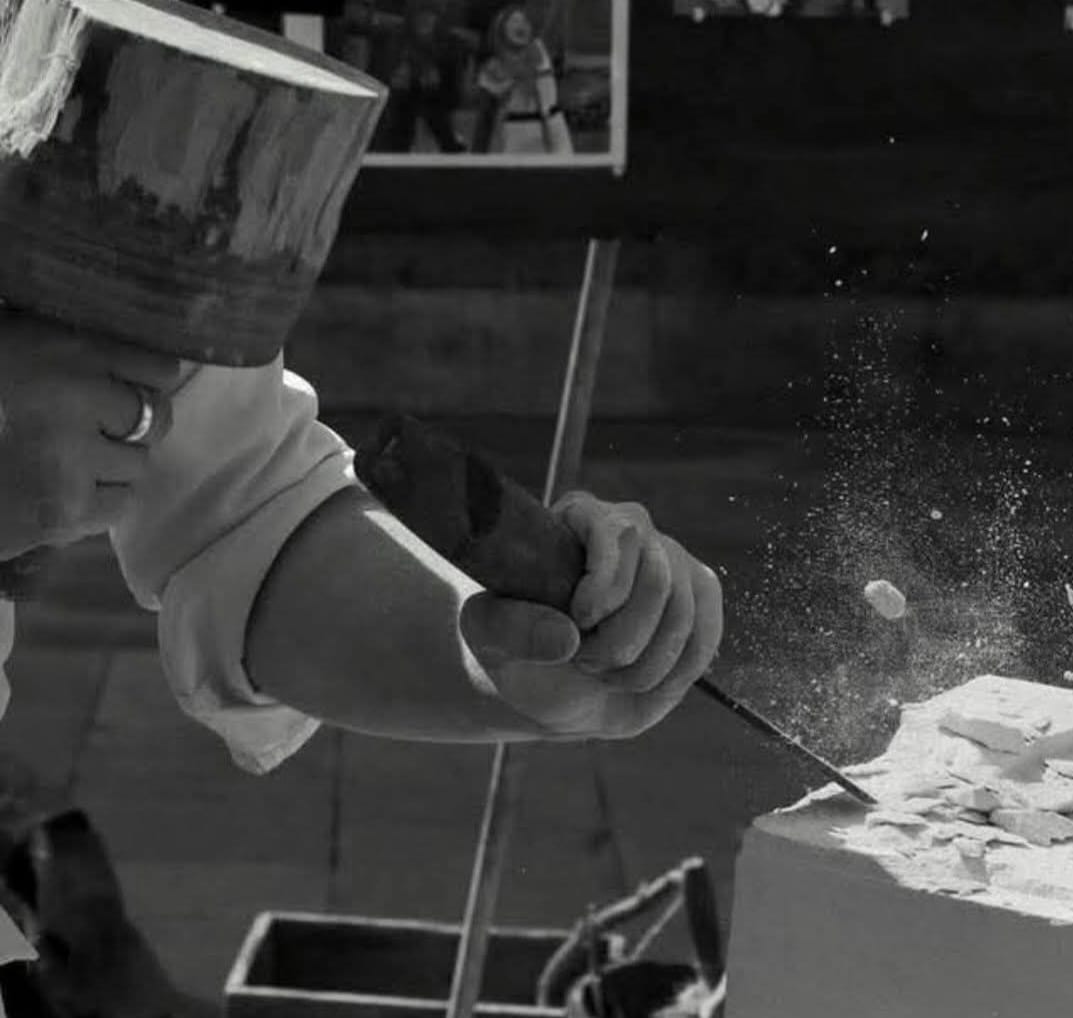
master and Founder
Stephen critchley
Founder, The Institute for Craft Formation
Guild Master | Master Stone Carver
Stephen is a master stone carver trained within the classical court craft traditions of Europe — a system of craft formation that is now close to extinction.
These traditions formed part of the architectural and ceremonial environments that produced the great civic buildings, sacred spaces, and cultural monuments of earlier centuries. Within these systems, craft was never treated simply as technique. Technical mastery was only one component of a wider formation that included philosophy, proportion, discipline of attention, and the psychological character required to work at the highest levels of architectural craft.
In this tradition the master acts as custodian of a lineage rather than simply a practitioner of a trade. The responsibility of the master is to preserve, apply, and transmit knowledge that has been refined through centuries of practice.
Stephen’s work has taken place across more than forty-seven countries and within a wide range of architectural, cultural, and historical environments. Over the course of his career he has contributed to more than eighty major projects, applying traditional craft disciplines to buildings, monuments, and restoration works across Europe, the Middle East, and beyond.
His training included formal apprenticeship with Ashby and Horner, a historic firm whose origins trace back to the seventeenth century. Through this training he developed specialised techniques associated with the English Palladian, Baroque, and Neoclassical traditions of architectural stone carving.
Stephen has worked on major historic and national sites including:
The British Museum — Master Mason, Great Court
The Palace of Westminster — Master Mason, Westminster Hall
Windsor Castle — Master Mason
The Doge’s Palace, Venice — Master Mason
In addition to public works, his practice has often operated within environments requiring a high degree of discretion. Clients have included members of royal households, heads of state, diplomatic institutions, and private cultural patrons.
Within these contexts craft practice required not only technical mastery but clarity of judgement, disciplined attention, and the psychological steadiness necessary to work within environments of high responsibility.
Through decades of work within traditional craft lineages Stephen observed a recurring pattern.
Craftsmen formed within these systems frequently retained exceptional clarity of attention, careful judgement, and mental resilience even after many years of demanding physical and intellectual work. These qualities did not arise from occasional craft activity but from the structured developmental environments through which craft knowledge had historically been transmitted.
This observation became the foundation for the Institute for Craft Formation.
The Institute was established to study, articulate, and explain principles that have already been formed within traditional craft lineages — systems refined across centuries of disciplined practice.
The philosophical foundations of this work draw upon classical ideas such as Arete, the lifelong pursuit of excellence in both craft and character, and Eudaimonia, the concept of human flourishing achieved through purposeful creation and mastery.
The Institute does not attempt to reinvent these traditions. Its purpose is to observe, preserve, and clearly explain the principles embedded within them, and to examine how those principles cultivate attention, perception, and judgement in ways that remain profoundly relevant to contemporary life.
Engagement with the Institute normally begins through the Founder’s Private Office. Because the work continues to operate within the traditions of lineage governance, participation is limited and all enquiries are handled through confidential correspondence.